 Retro Replay Retro Gaming History, Reviews & Emulation

Retro Replay Review
Gameplay
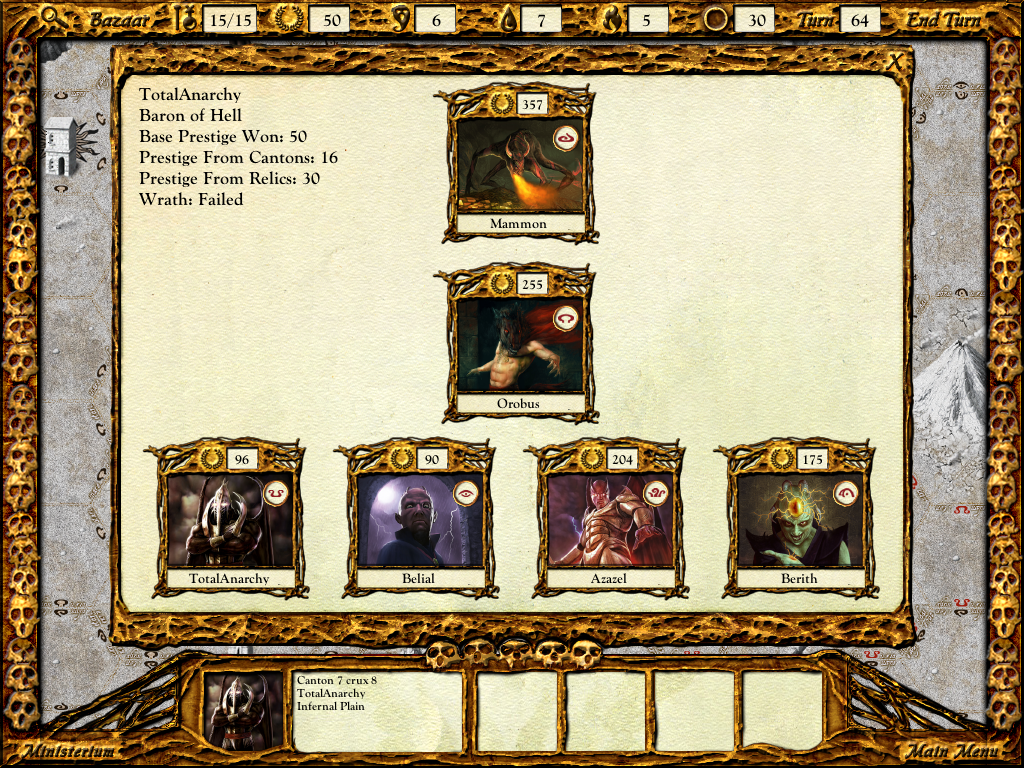
The first hour of Solium Infernum asks you to think like an aspiring tyrant rather than a conventional battlefield commander. You are not simply trying to paint the map with your color. Prestige matters, and it can come from Cantons, Places of Power, personal objectives, battles, relics, rituals, and diplomatic victories. That breadth gives every turn a welcome sense of possibility: an opponent can be a military threat, but they can also be a rival to outmaneuver in the political race.
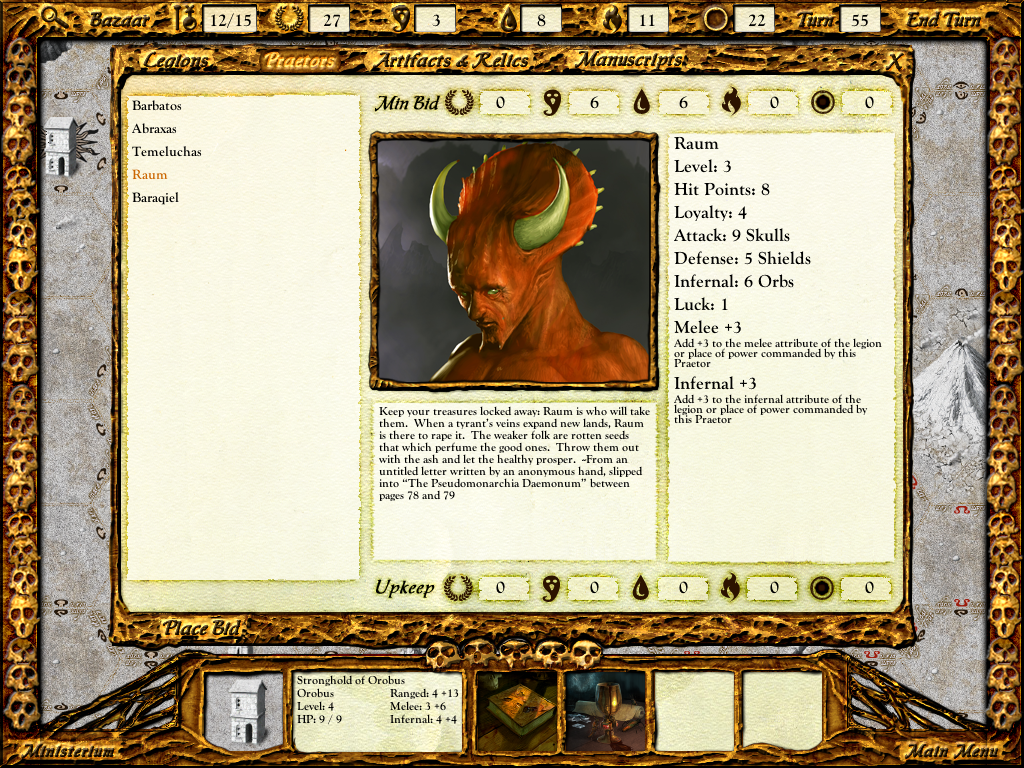
The limited order slots are where the game’s pressure starts to click. Demanding Tribute cards from minions, building your attributes, purchasing assets, and pursuing other actions all compete for the same finite attention. You cannot do everything at once, and that forces real priorities. The Bazaar reinforces that tension, since legions, praetors, artifacts, relics, and manuscripts all tempt you to spend Tribute in different directions. A powerful army is useful, but it is not automatically the smartest investment.
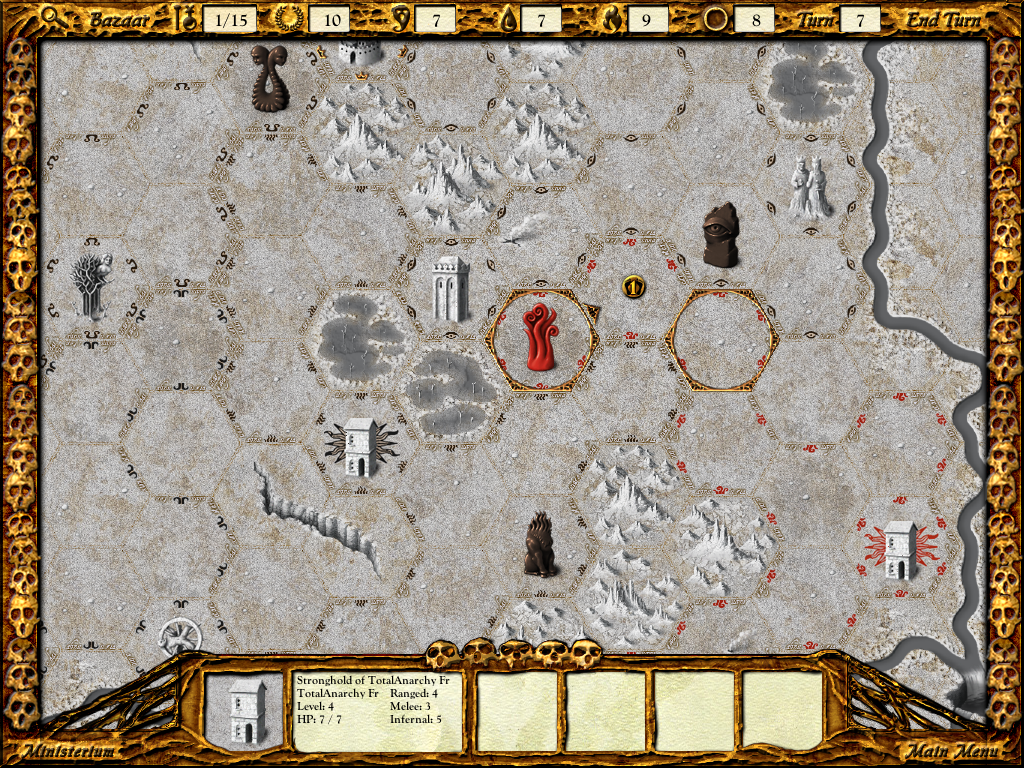
There are three distinct routes to the throne, which keeps a match from collapsing into a simple war of attrition. You can build enough prestige to impress the Infernal Conclave, manipulate the High Conclave before the election, or take Pandemonium and defend both it and your stronghold for five turns. The wrapped hex map adds another layer to territorial planning; keep scrolling in one direction and you eventually return to where you began. That makes positioning feel less straightforward than on a standard bounded map.
Frustration is likely to set in when a plan needs several pieces to come together and you do not have enough orders to move them all forward. Other archfiends can further restrict what you do through events such as excommunication. But that constraint is also the point. This is a game for you if choosing what not to do is as satisfying as making a perfect move.
Graphics
The game is viewed from above on a hex-based map of Hell, where Cantons, Places of Power, strongholds, and Pandemonium form the strategic landmarks you are fighting over. Its clearest visual strength is practical: the map gives the territorial contest a concrete board-game shape, and the wraparound world makes its geography more interesting than a simple edge-to-edge battlefield.
Story
The premise is wonderfully direct: the Prince of Darkness has vanished, Hell’s throne is empty, and several archfiends are ready to claim it. That is enough justification for the game’s cold-blooded mix of conquest, prestige hunting, and diplomatic interference. You are not saving the world; you are trying to rule the worst place in it.
What works especially well is how the objective structure supports that premise. Winning favor with the Infernal Conclave feels appropriately political, manipulating the election feels appropriately underhanded, and taking Pandemonium offers the blunt military answer. The story is less about a scripted journey than the kind of ruler you become through your decisions.
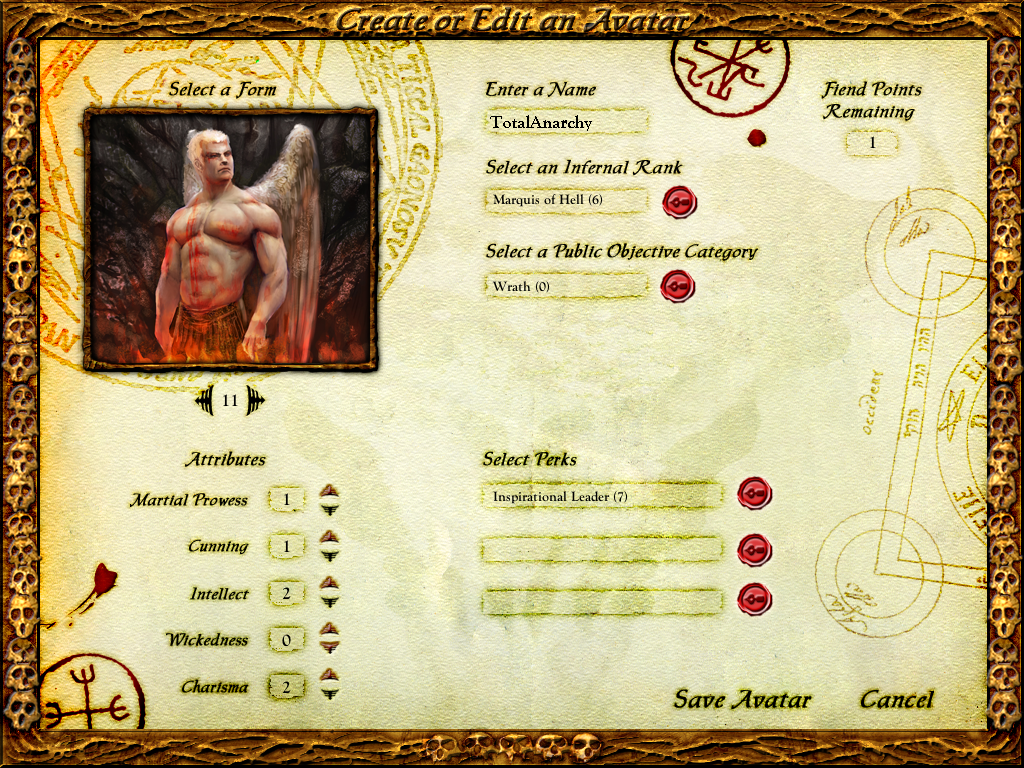
Your custom avatar also gives the contest a personal angle. You can use the default Abaddon or create an archfiend with chosen attributes and demonic rank. Combined with selectable objectives and opponents, that makes each attempt at the throne feel like a new infernal rivalry rather than a fixed campaign you merely replay.
Overall Experience
Solium Infernum is at its best when you stop treating every turn as a checklist and start treating it as an argument for why your archfiend deserves to rule. A legion can win territory, a praetor can stiffen a key defense or serve as a champion in a diplomatic brawl, and a relic or artifact can shift your position. None of these choices exists in isolation because prestige remains the larger measure of success.
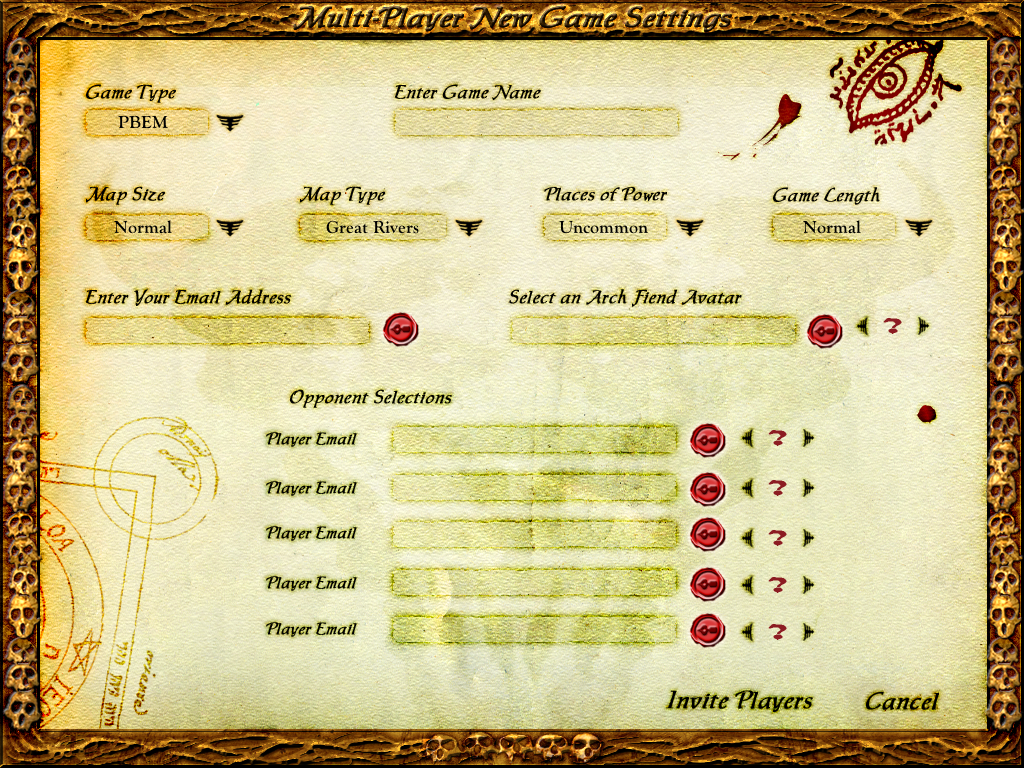
The game offers useful ways to match its intensity to your appetite. Normal Game leaves room to experiment, while Iron Man makes each save opportunity precious. Hot Seat works for a shared local contest, and Play-by-Email is a natural fit for a deliberate strategy game built around plotting ahead. Map size, opponent count, and objectives can also be adjusted before a game begins.
Give it a chance if you enjoy turn-based strategy that rewards restraint, opportunism, and several competing paths to victory. Its payoff is not the immediate rush of moving armies every minute; it is the delayed satisfaction of realizing that a few carefully rationed orders have put a rival in an impossible position. That is a strong, distinctive foundation for a strategy game about winning Hell’s crown.



Reviews
There are no reviews yet.