 Retro Replay Retro Replay gaming reviews, news, emulation, geek stuff and more!
Retro Replay Review
Gameplay
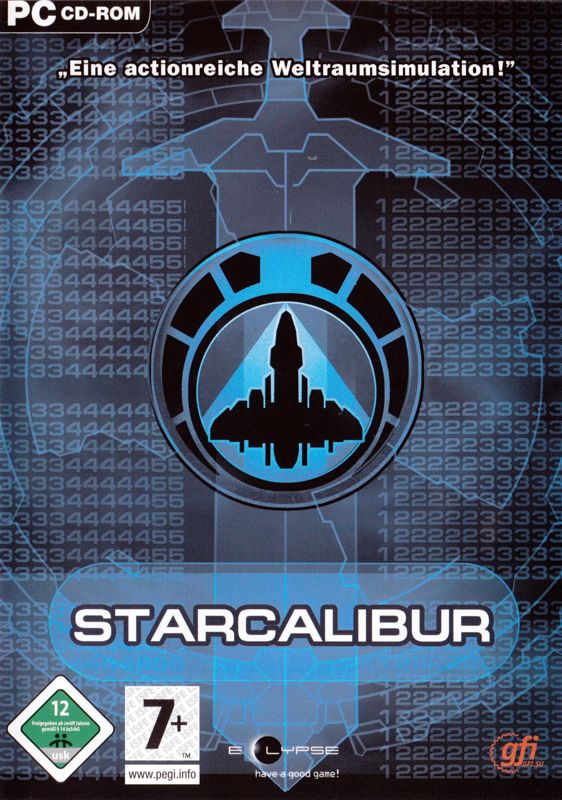
StarCalibur starts with an immediately understandable promise: get in a fighter, move from waypoint to waypoint, and handle whatever hostile situation is waiting there. That directness is its strongest card. There is little mystery about what you are doing, so you can settle into the rhythm of flying, fighting, and pushing toward the next objective without wrestling with an elaborate structure.
The campaign does at least vary the job label. Seek-and-destroy sorties, escorts, and reconnaissance missions ask you to fly toward different goals, while some missions put you in a turret rather than one of the game’s three starfighters. Free-space battles and trips over planetary surfaces also prevent every mission from taking place against the same backdrop. If you enjoy arcade space combat most when it stays focused and keeps moving, that change of scenery helps.
Still, the missions sound more varied than they feel. Much of the game comes back to traveling between waypoints and completing an objective before moving on. That can become a grind once you have seen the basic loop a few times. New weapons and upgrades to ship characteristics give you a reason to keep going, and improving a favored craft is the main progression hook, but they do not fundamentally change the campaign’s linear flow.
This is a better fit for a gamer who wants a clean, old-school run of space missions than for someone craving tactical depth or a campaign that constantly surprises. The first hour is likely to be the easiest sell: you are learning the ships, collecting upgrades, and getting a mix of assignments. Whether it holds you afterward depends on how much mileage you can get from repeatable flying and shooting.
Graphics
StarCalibur lets you fly through open space and over planetary surfaces, with three starfighter types and turret missions giving the action a few different sights from the cockpit-side of combat. The hostile aliens are described as sea-dweller-like, which gives the enemy force a more unusual look than a standard human fleet.
Story
The conflict comes from failed communication: humanity and the alien race lack the translation ability needed to understand one another, and fighting follows from that gap. It is a sensible science-fiction setup because it gives the war a little more texture than simple conquest.
But StarCalibur’s story is a frame around the missions, not the reason to play them. The premise is potentially more interesting than the linear sequence of combat jobs it supports. You should not go in expecting the narrative to steadily deepen the conflict or carry you through the repetitive stretches.
That does not make the setup worthless. The idea of a war born from misunderstanding suits a game about repeated engagements with an unfamiliar alien enemy. It gives the shooting a trace of melancholy, even if the game’s real focus remains getting to the next waypoint and surviving the next assignment.
Overall Experience
StarCalibur is a modest, straightforward space-combat game with a dependable arcade pulse. When you want to fly a fighter, pick up stronger weapons, and clear another mission without a lot of ceremony, it has a clear enough hook. The mixture of fighter and turret duties, space and surface environments, and upgrade progression keeps the journey from becoming completely flat.
Its weakness is equally clear: the same waypoint-driven mission structure returns often, and the objective variety does not fully disguise it. Escort, reconnaissance, and destruction assignments can feel like different signs posted along the same road. Once frustration sets in, the game has limited ways to refresh that core routine.
Give it a chance if a linear arcade space campaign sounds comforting rather than restrictive, especially if incremental ship improvement is enough to keep you invested. Skip it if you need every mission to introduce a new wrinkle or want the story to take center stage. For the right mood, StarCalibur offers a serviceable ride; it just never escapes the gravity of its repetition.

Reviews
There are no reviews yet.