 Retro Replay Retro Gaming History, Reviews & Emulation
Retro Replay Review
Gameplay
The first few minutes feel instantly familiar if you have ever lost an afternoon to Minesweeper. You choose an opening square, reveal a patch of empty spaces if luck is on your side, and begin reading the numbered tiles around them. Every number tells you how many mines touch that square, not where they are, so progress comes from patiently comparing clues and making deductions. That mix of certainty and risk remains the whole hook.
Minesweeper Flags does not soften the punishment. Select a mine and the round is over, which means a board can collapse on a single mistaken read. The mine counter and timer are useful pressure gauges: one tracks the remaining danger while the other quietly reminds you how long you have spent staring at the same knot of numbers. If you enjoy puzzles where concentration matters more than reflexes, that tension is exactly the point. If random-looking opening guesses irritate you, the early moments can still feel harsh.
The campaign gives the game a more deliberate sense of progression by moving through matches spread across seven continents. Its boards are not always square, and some encounters allow multiple lives through a heart indicator. Those changes matter because they break up the standard grid-reading routine without abandoning it. The classic solo mode is still the cleanest place to learn, but the campaign is where the game has more room to surprise you with a different board shape or a little extra breathing room.
Multiplayer turns the usual solitary puzzle into a mean little game of nerve. In the standard turn-based mode, competitors take turns selecting squares and the first person to hit a mine loses. It is a simple rule, but it changes how you watch the board: you are not only trying to solve it, you are hoping your opponent inherits the ugly guesses.
Flags is the more distinct competitive variation. Mines are replaced with colored flags, and now you want to uncover them before the other player does. Custom rules let you alter turn limits, player count, difficulty, whether finding a flag earns another move, and whether someone can win early. That flexibility gives the multiplayer side more life than a single novelty mode would have managed.
Graphics
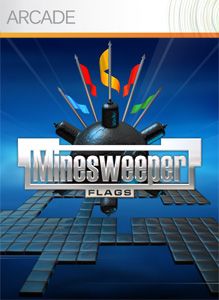
Instead of the old flat 2D minefield, Minesweeper Flags uses themed 3D grids viewed from a semi-top-down angle. The perspective makes the board feel more like a small playing field than a Windows utility, while still keeping the important numbered squares and marked spaces in view.
Story
There is no dramatic tale driving each puzzle; the campaign’s structure comes from its trip across the seven continents. That is enough to give the solo play a destination beyond repeatedly clearing another anonymous square board.
The real narrative is the one you create tile by tile. A safe opening creates confidence, a crowded cluster of numbers turns into a problem you slowly untangle, and one wrong selection ends the run with brutal finality. It is a tiny arc, but Minesweeper has always been good at making it feel personal.
Multiplayer creates its own sharper kind of drama. Watching an opponent take a turn on a board you both understand makes even a routine square selection feel loaded, especially when the remaining safe choices are no longer obvious.
Overall Experience
Minesweeper Flags is a solid expansion of a puzzle classic rather than a replacement for its clean simplicity. The underlying game still asks you to slow down, trust the clues, and accept that a careless click can erase several minutes of smart work. That is a satisfying bargain when you are in the mood for deduction, though it will not win over anyone who already finds Minesweeper cold or unforgiving.
The campaign’s irregular boards and extra lives give single-player sessions more variety, while the two multiplayer modes make a strong case for returning with friends. Standard multiplayer is wonderfully cruel in its pass-the-risk structure, and Flags offers a more active race for discoveries. Neither mode changes the fact that you are reading a grid, but both find a worthwhile new angle on it.
Give it a chance if you want a familiar logic puzzle with more ways to play than the old desktop version offered. It is especially easy to recommend for someone who enjoys mastering numbered clues alone, then wants to see how that same knowledge holds up when another person is waiting for their turn. The payoff is not spectacle; it is the quiet satisfaction of turning a dangerous board into a solved one.


Reviews
There are no reviews yet.