 Retro Replay Retro Replay gaming reviews, news, emulation, geek stuff and more!
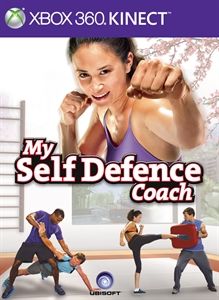
Retro Replay Review
Gameplay
The first hour has an immediate, physical pull: you stand in front of Kinect, enter the dojo, and start copying defensive movements as a training partner acts out threatening what-if scenarios. That directness is the point. You are not learning button strings from a controller; you are asked to move, react, and keep your body involved. For anyone tired of sedentary fighting games, that can be a refreshing change of pace.
Its scoring gives the drills a little structure. Technique, stamina, composure, and reflexes are judged separately, so simply flailing through a session is not the whole goal. The split is sensible, particularly because a self-defense-themed game should care about staying calm as well as throwing a punch. Still, the format sounds more compelling than it becomes. Mimicking prompted gestures can feel rigid, and the score chase does not turn these exercises into a richly tactical combat system.
The extra activities help break up the central scenarios. Punching, boxing, kicking, cardio, and yoga—framed here as meditation for stressful situations—mean you can use it as a light active routine rather than replaying one type of drill exclusively. That said, buy into the premise only if you want guided movement sessions. This is not the kind of fighting game you settle into for deep competitive mastery, nor should a game be treated as a replacement for hands-on self-defense instruction.
Graphics
The dojo setting keeps the focus on the bodies in motion. Most usefully, the player character is rendered semi-transparently during drills, allowing you to see the attacker as well as the position you are trying to copy. On a Kinect game built around matching movement, that is a practical visual choice rather than mere decoration.
Story
There is little indication of a conventional story campaign here. Instead, the game frames its action through training-partner encounters and hypothetical moments of threat. The goal is functional: put a defensive exercise in context, then ask you to perform it.
That stripped-back setup suits short sessions. You can jump into a drill without waiting through elaborate plot setup, and the dojo gives the disparate activities a shared home. But there is not much dramatic momentum to pull you forward once the novelty of performing for Kinect begins to fade.
Think of the scenarios as prompts, not storytelling. They provide a reason for the movements, while the real progression comes from improving grades across the four performance categories. If you need character arcs or escalating narrative stakes to stay engaged, this camp will feel sparse quickly.
Overall Experience
Self-Defense Training Camp has a clear niche and only a modest reach within it. When you have room to use Kinect and feel like moving, the mixture of defensive drills, strikes, cardio, and calming exercises can make for a more purposeful workout than simply shadowboxing in the living room. The best moments are likely the straightforward ones, when a scenario asks for a response and you focus on getting your stance and timing right.
Frustration sets in if you expect either a robust fighter or serious real-world training. The game’s gesture-following structure and statistical grades give it a framework, but not the depth needed to sustain long-term obsession. Its self-defense angle is also too important to reduce to a score screen: treat it as active entertainment with a training theme, not expertise in a box.
At 4.6/10, it is hard to recommend broadly, but not impossible to recommend at all. Kinect owners looking for a light, guided fitness diversion may get some value from its focused drills and variety of sessions. Everyone else will probably find that the initial novelty wears off before the camp develops into something worth returning to. For basic background on the release, see the Self-Defense Training Camp history and release information.


Reviews
There are no reviews yet.