 Retro Replay Retro Gaming History, Reviews & Emulation
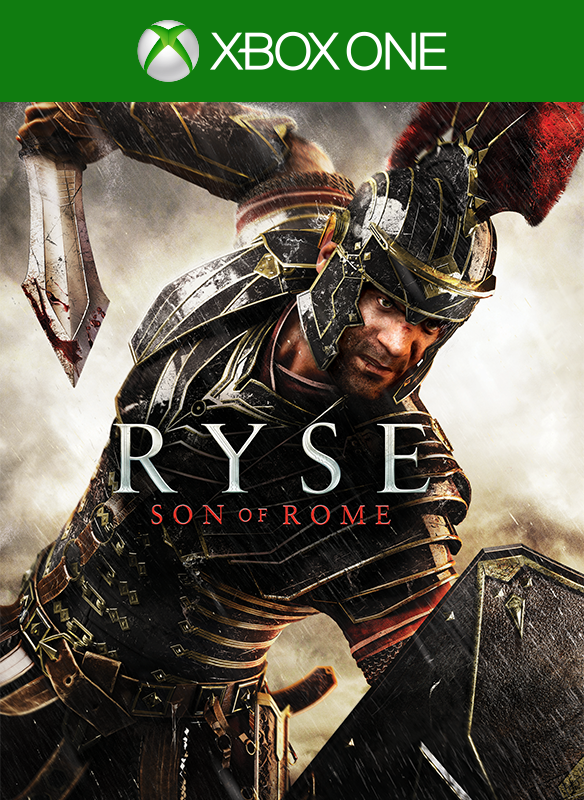


Retro Replay Review
Gameplay
The first hour knows exactly what it wants from you: march into a Roman war film, put a sword through a line of enemies, and enjoy the sheer force of the animation. Ryse is a third-person brawler rather than a deep character-action game. Marius blocks, strikes, dodges, and keeps moving through compact clashes with barbarians, Egyptians, and Roman rebels. It is direct, accessible, and satisfying in short bursts, especially when the battlefield is crowded enough to make you feel like a centurion at the sharp end of an army.
Executions are the centrepiece. Stagger an opponent and you can trigger a cinematic finish that ends the fight immediately, often returning health or morale. That creates a useful rhythm: soften a foe, seize the recovery, then get back to managing the next attacker. The moves are deliberately brutal and give combat its punch, though the system can start to feel familiar once you have seen its cadence repeated across the campaign. You are not solving elaborate encounters so much as maintaining momentum through them.
Dodges can open up the Mark of the Legion command, which lets Marius rally nearby Romans and send them into a mass attack. These moments add a welcome flash of command fantasy without turning the game into a strategy title. Weapon unlocks also keep the arsenal from staying completely static; gladii, shields, and exotic blades bring their own attack patterns and perks. Still, the campaign’s linear structure means the best reason to push forward is the next battle or set-piece, not the freedom to experiment.
Colosseum: Blood Brothers is the better fit if you want the fighting to last beyond the credits. Up to four people can tackle waves of AI gladiators in arena battles, earn gold and XP, and spend them on armour, weapons, elixirs, and emblems. The challenge creator is a smart extra, letting you build and share combat scenarios. It cannot transform the core combat into something deeper, but co-op chaos and more open arena layouts give it a livelier second wind.

Graphics
Ryse earns its reputation as a Roman spectacle. The third-person camera stays close enough to catch Marius’s sword work and executions, while large-scale battles fill the background with fighting soldiers. Rain, dynamic lighting, and thick blood effects give the warzones a heavy, expensive-looking texture.
The contrast between disciplined Roman formations and the varied barbarian, Egyptian, and rebel opponents helps battles avoid becoming one long blur of bodies. Cinematic cut-scenes carry much of the story, and they match the game’s grand, violent tone.

Story
Marius Titus begins with a clean, forceful motive: barbarian raiders murder his family, so he joins Rome’s army looking for revenge. He recounts these campaigns to Emperor Nero, a framing device that gives the story a suitably dramatic Roman stage. From there, the plot sends him through enemy territory, toward a conspiracy that threatens Rome from outside and within.
It is familiar revenge material, and Ryse does not hide that. The story works best when it treats Marius as a soldier caught in a huge, bloody machine rather than when it leans on the broadest turns of its conspiracy. The campaign’s cinematic scenes do much of the narrative lifting, so expect a guided action story rather than an adventure shaped by your choices.
Optional conversations with commanders and legion-roster interactions offer extra context for anyone who wants to linger between fights. They do not radically alter the march, but they add some welcome detail to Marius’s military world. If Roman revenge drama is already your weakness, you will likely enjoy the ride more than someone hoping for a subtle historical epic. For background on the game’s release and history, see Ryse: Son of Rome.
Overall Experience
Ryse: Son of Rome is a polished, narrow action game whose greatest strength is how quickly it puts you in the middle of a lavish Roman bloodbath. The swordplay has enough snap to carry a linear campaign, and the execution system reliably delivers the kind of grisly punctuation that makes a routine encounter feel bigger than it is.
Frustration sets in if you need combat systems that continually unfold or campaigns that invite different approaches. The game has weapons, squad commands, and upgrades, but its fundamental loop remains straightforward. That is not a flaw if you meet it on its own terms; it is a problem if you want the tactical depth implied by marching beside a legion.
The payoff is worthwhile for anyone after a cinematic, single-player Roman action romp, particularly if a brisk campaign sounds better than a sprawling one. Colosseum: Blood Brothers adds meaningful replay value for friends willing to fight through waves together, while the customisation and scenario creator give repeat sessions a purpose. Ryse does not conquer every part of its ambition, but it delivers a memorable shield-and-sword spectacle when you want one.


Reviews
There are no reviews yet.