 Retro Replay Retro Replay gaming reviews, news, emulation, geek stuff and more!
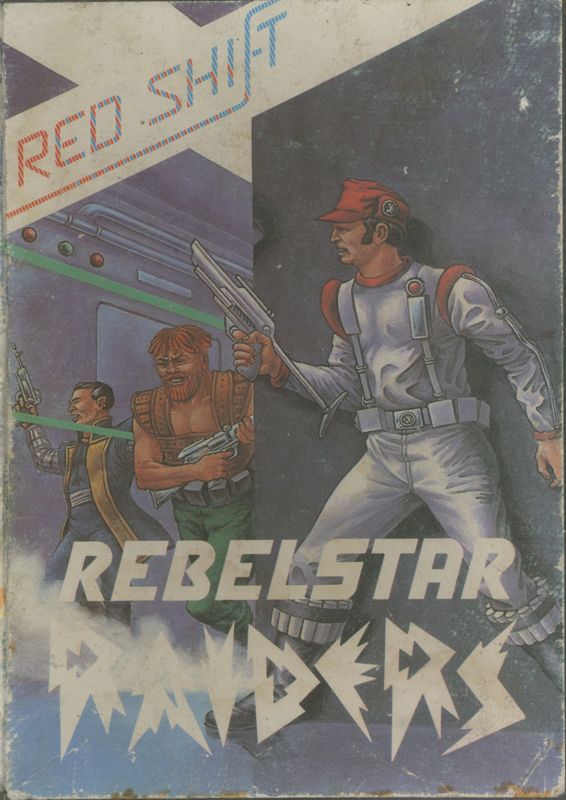


Retro Replay Review
Gameplay
Rebelstar Raiders starts before the first shot: both sides manually deploy their units, then have to make that opening arrangement count. That is a strong hook if you enjoy the anxious little decisions that define old-school tactics. Put a fighter in the wrong place, overcommit a flank, or leave a firing lane open, and you have created a problem you must solve over the next several turns.
Each side commands between 20 and 30 characters with individual characteristics and different weapons, so this is not a tiny skirmish where one move settles everything. The scale promises the kind of match where positioning, preserving useful units, and deciding when to risk ranged combat matter more than rushing through turns. The three operating modes—cursor, movement, and ranged combat—also make its turn structure explicit. You are moving between selecting, repositioning, and attacking rather than relying on a single all-purpose command.
The catch is enormous: there is no computer-controlled opponent. Rebelstar Raiders is strictly for two people. That makes every scenario potentially more exciting, because another human can react to your deployment and punish your habits, but it also means the cartridge has no fallback value for a solitary evening. If you have a regular local opponent and both of you enjoy slow, careful tactical duels, the restriction becomes the whole point. If not, it becomes a hard stop.

Graphics
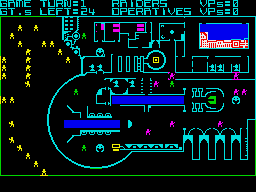
The game uses a top-down view suited to a battlefield game, keeping attention on character placement and weapon range rather than dramatic camera work. Its sci-fi scenarios at least give the matches distinct destinations in name, from a moon base to the final assault.
Story
There is no sprawling narrative framework here; the story is carried by the scenario titles and the conflict you create across the board. “Moonbase,” “Starlingale,” and “The Final Assault” suggest a progression from a location-based fight toward a climactic confrontation, but the real drama comes from the choices made by the two people playing.
That sparseness suits the design better than it hurts it. Individual characteristics give the combatants some distinction, while the manual deployment lets each match begin with its own implied plan: a cautious defence, an aggressive push, or a trap waiting for an opponent to walk into it.
Don’t come expecting character scenes or a detailed sci-fi tale. Come for the small stories tactics games do well: the unit that survives an exposed advance, the weapon that changes a standoff, and the deployment decision that looks clever until the other side finds its answer.
Overall Experience
Rebelstar Raiders is a focused competitive tactics game with a remarkably uncompromising requirement: another person must be at the table. Its three scenarios and sizeable forces give two committed players plenty to discuss, second-guess, and replay, especially when a defeat can be traced back to deployment rather than blamed on random chaos.
Its interface is likely to feel deliberate even by turn-based standards, since cursor control, movement, and ranged attacks are separated into distinct modes. That will suit gamers who like methodical command games and dislike being hurried. It is less inviting if you want immediate action or a strategy game that can entertain you alone.
For a regular two-player pairing, the payoff is real: a lean sci-fi duel built around planning and counterplanning, with enough units on each side for a match to develop beyond one obvious trick. For everyone else, the missing solo opponent makes it difficult to recommend no matter how appealing the tactical core sounds.



Reviews
There are no reviews yet.