 Retro Replay Retro Gaming History, Reviews & Emulation
Retro Replay Review
Gameplay
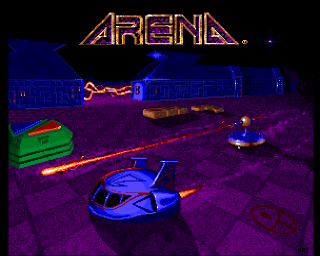
Arena starts with a rule that is easy to understand and hard to respect: once a diamond is pushed, it keeps sliding until something stops it. That simple constraint turns each board into a planning exercise. You are not merely moving objects toward an arrangement; you are deciding which moves leave enough walls, teleporters, and other obstacles in the right places to make the next move possible. When a route comes together, it has the satisfying snap of a good sliding puzzle.
The spaceship and roaming enemies keep that puzzle-solving from becoming too leisurely. Contact can cost life energy, and the harsher penalty—being relocated to a former level—adds real pressure when you are already trying to protect a fragile solution. Shooting gives you a way to clear a path, but it is not a blanket answer, since some enemies are needed to solve the stage. That is where Arena becomes most interesting: the things chasing you may also be pieces on the board.
Expect frustration when you spot the correct diamond order one move too late. A single push can leave a diamond stranded in a position that makes the puzzle unwinnable, and the enemies make leisurely experimentation risky. Still, the three consequence-free restarts are a smart mercy. Use them freely rather than trying to salvage every doomed attempt; Arena is strongest when you are testing a plan, learning why it failed, and coming back with a cleaner route.
With around a hundred levels, there is plenty here for someone who enjoys methodical spatial puzzles but wants more urgency than a quiet block-pusher supplies. The action can make a tightly reasoned board feel chaotic at first, yet it also prevents the game from becoming a rote sequence of moves. Give it time to teach you when to shoot, when to preserve an enemy, and when to restart. Once that balance clicks, each completed level feels earned rather than merely solved.
Graphics
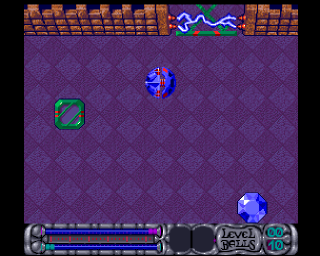
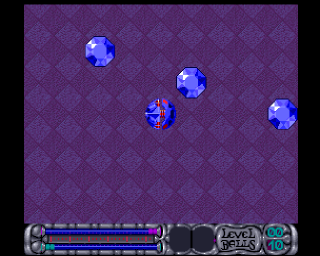
Arena uses a top-down view of a spaceship, sliding diamonds, obstacles, teleporters, power-ups, and enemies sharing compact playfields. That angle is a natural fit for the puzzle work: you can watch a diamond travel across the board and judge where a wall or teleporter will finally stop it.
Story
The sci-fi setting is delivered through the immediate essentials: you are in a spaceship, dealing with diamonds, hostile enemies, teleporters, and shields. It is a clean frame for the action rather than a reason to slow down between boards. The focus stays on what your next push will do.
That stripped-down approach suits Arena’s structure. Each level supplies its own small drama: a layout that looks manageable, a diamond that needs to cross the board without blocking another, and enemies turning a careful plan into a moving target. You create the tension yourself through the order of your decisions.
If you need a puzzle game to carry you with characters or plot turns, this is not where the pull comes from. Arena earns its momentum from escalation across its stages and from the increasingly personal grudge you build against layouts that nearly work. The payoff is the relief of finally seeing the route you missed, not a narrative reveal.
Overall Experience
Arena is a demanding hybrid that makes both halves matter. The diamond arrangements reward calm, deliberate thought, while the enemies insist that you cannot always take all the time you want. It can feel unfair when an enemy interrupts a promising setup or when a mistaken push ruins a board, but the restart allowance keeps the game from punishing curiosity too severely.
The first hour is likely to be a mix of quick victories and embarrassing dead ends. Stick with it long enough to stop pushing on instinct. Start reading every obstacle as a possible brake, every enemy as either danger or tool, and every empty lane as something you may need later. That mental shift is the difference between wrestling the game and enjoying its puzzles.
Recommended for gamers who like Atomix-style sliding-object problems and do not mind action pressure invading the board. Arena’s difficulty is part of its character, not an obstacle it tries to hide. When you solve a stage under threat, after resetting a few bad experiments, the result has a crisp satisfaction that a safer puzzle game rarely matches.


Reviews
There are no reviews yet.