 Retro Replay Retro Replay gaming reviews, news, emulation, geek stuff and more!
Retro Replay Review
Gameplay
Cash gets to the point quickly. You are not building an empire for its own sake; you are trying to finish a set time period with more personal wealth than five rivals. Because your monthly salary depends on company performance but stock trades use your own money, every decision sits between corporate ambition and self-interest. That is the game’s best idea, and it gives even a straightforward commodity run a little extra bite.
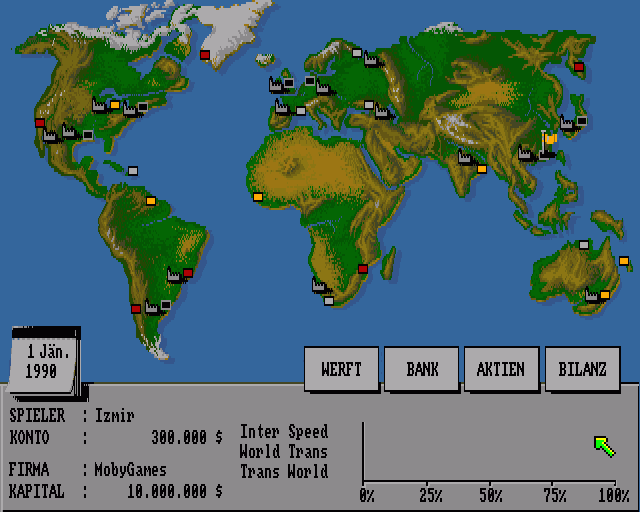
The core loop is deliberately lean: buy and sell copper, bauxite, and nickel across 25 cities, then react when prices change after each three-day turn. Ships, warehouses, and bank loans widen the choices without changing what Cash fundamentally is: a numbers-first trading game. You will get the most out of it when you enjoy watching routes, prices, capacity, and debt pull against each other rather than expecting a sprawling simulation full of side activities.
The tension rises when a deal that looked safe is about to meet a different market. Warehousing can make sense when you expect a better price later, but tying up goods has consequences; a loan can fund expansion, but it makes a poor run hurt more. Six human or AI competitors mean you can treat it as either a measured solo management contest or a sharper local rivalry. Its narrow focus is a strength, though repetition can set in if the turn-by-turn swings do not grab you.
Graphics
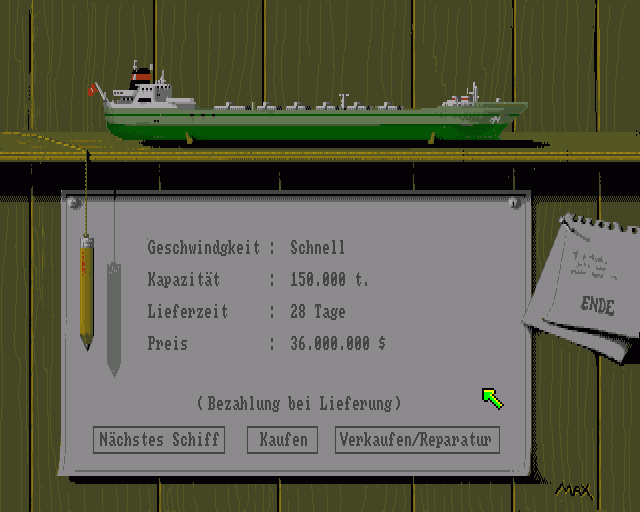
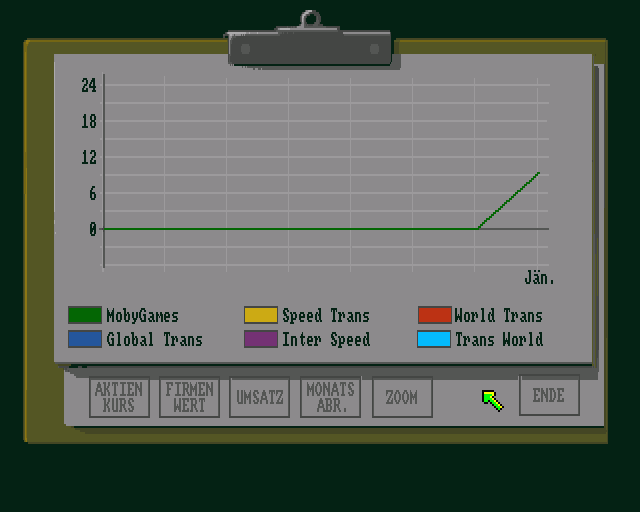
Cash is built around a business simulation rather than visual flourish. Its trading decisions, city network, and company management are the center of attention, so the game’s look chiefly serves the act of comparing opportunities and making the next move.
Story
There is no grand dramatic journey to carry Cash forward. Its story is the one that develops from your ledger: an ambitious shipping outfit, a salary tied to performance, and personal investments that can either put you ahead or leave you exposed.
That premise is stronger than it first sounds because it gives the win condition a human edge. A company can perform well, yet your personal position still matters. You are not simply optimizing an abstract business; you are trying to ensure that the rewards end up in your own pocket before time runs out.
Rivalry supplies the rest of the drama. Against five other human or AI contenders, the memorable moments are likely to be the reversals created by a timely trade, an ill-judged loan, or a market move that changes who is actually winning. If you need authored characters and plot turns, this will feel dry; if you enjoy making your own boardroom war stories, it has a neat framework for them.
Overall Experience
Cash is a compact strategy game with a clean competitive hook. The first hour should tell you exactly whether it has you: if calculating the value of one more shipment, one more ship, or one more risky investment feels exciting, its simple rules leave room for satisfying decisions.
Its limitations are equally clear. There are only three commodities, and the market rhythm can feel mechanical when you have already settled into a preferred way of trading. The game asks you to find drama in financial timing and long-term planning, not in constant novelty.
Still, the personal-wealth twist keeps it from being just another race to grow a company. Give Cash a chance if you like turn-based economic games that reward restraint, opportunism, and a willingness to gamble when the numbers line up. It is modest but purposeful, and its best matches should leave you arguing over whether caution or nerve won the fortune.


Reviews
There are no reviews yet.