 Retro Replay Retro Gaming History, Reviews & Emulation
Retro Replay Review
Gameplay
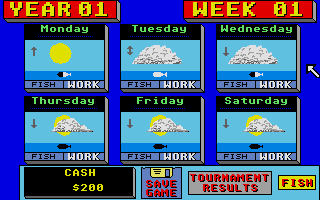
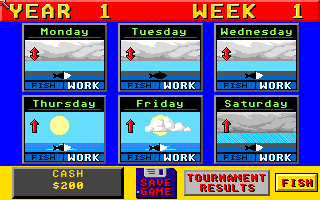
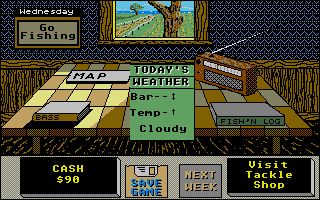
The first hour of Gone Fishing is defined by limitation, and that is largely the point. You begin in a rented boat with basic tackle such as a plastic worm or spinner, so every outing feels like a small bet: pick a place, account for the forecast, and hope your choice produces something worth the time. It has more at stake than a casual fishing game because your money matters outside the boat as well.
What starts to click is the connection between preparation and progress. Better tackle, depth finders, and more serious bass boats are not handed over as decoration; they are goals you work toward through ordinary employment or successful tournament fishing. That gives the game a pleasing career-minded structure. You are building a fishing life rather than hopping between disconnected lakes for a high score.
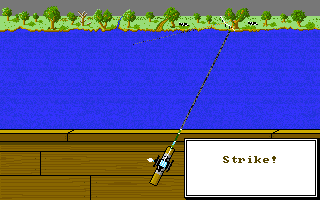
The actual catch is not treated as automatic. Once a fish bites, you need to manage it carefully to bring it in, which gives a successful catch some tension after the planning stage. That said, this is a game for someone willing to accept that fishing includes waiting, uncertain results, and occasional poor decisions. If you want constant action, the work-and-weather side can become frustrating fast.
Tournaments are the clearest payoff for the long-term grind. Winning can finance the next step up, turning a good day on the water into genuine momentum. Gone Fishing earns its satisfaction through that climb from cheap gear to competitive aspirations, not through instant mastery. Give it a chance if the idea of making careful, practical choices sounds as enjoyable as landing the fish itself.
Graphics
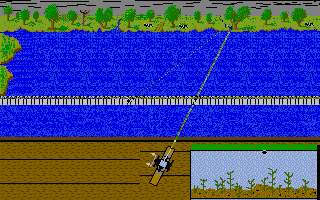
Gone Fishing uses both first-person and top-down viewpoints. The shift in perspective fits its split focus between being out on the water and managing the broader fishing routine, even if the visuals are more functional than lavish.
Story
There is no grand tale to chase here; the story is the one you make out of a character trying to support a fishing habit and turn it into a tournament career. That modest setup suits the game. A rented boat and inexpensive lures give the opening a clear sense of being at the bottom rung.
Work is an important part of that arc, not just background flavor. You need income to keep pursuing better gear and fishing opportunities, so the game makes the hobby feel dependent on everyday responsibility. It is an unusually grounded idea for a sports simulation, and it gives each purchase more weight.
Success in tournaments changes the tone of that personal journey. Instead of merely spending money to fish again, you can use skillful results to fund the next phase of the career. The narrative payoff is quiet but effective: your rising status comes from persistence, planning, and catches you have actually fought to land.
Overall Experience
Gone Fishing is a deliberate simulation that asks you to enjoy the whole routine around fishing, not just the moment a line goes tight. Forecast checks, location decisions, equipment purchases, employment, and tournament entries all feed into one another. The best moments come when a careful decision pays off and pushes your modest operation forward.
Its patience can also be its barrier. The need to work for money may feel like a drag if you only came for casts and catches, and the game does not promise a frictionless route to better boats and equipment. But that resistance is why the progression has meaning; you feel the difference between starting out and competing because the game makes you live through the gap.
For a gamer who likes sports sims with budgets, long-term goals, and room for personal judgment, Gone Fishing has a sturdy, satisfying premise. It is less for anyone chasing arcade speed than for someone happy to spend time learning how a fishing career holds together. Stick with its slow opening, and the tournament ambition gives those early, humble outings a worthwhile destination.


Reviews
There are no reviews yet.