 Retro Replay Retro Gaming History, Reviews & Emulation
Retro Replay Review
Gameplay
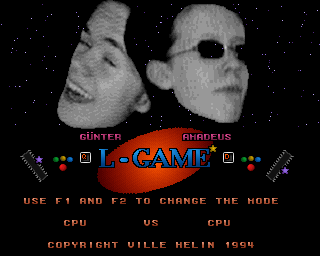
L-Game starts with an objective you can grasp in seconds: move the pieces so the other player cannot move their L-shaped block. That clarity is its strongest weapon. There is no need to learn a pile of exceptions before the game becomes interesting; you can begin testing space, blocking routes, and trying to leave the opponent with an awkward board almost immediately.
What clicks after the opening turns is that this is not merely about denying one move. Every adjustment changes the shape of the playfield, so you need to think about what your opponent can rearrange in reply. A tempting trap can turn into an escape route if you have not considered the next position. The game rewards patience and a willingness to pause before committing to the move that looks most aggressive.
That same tight focus can be unforgiving. If you want a puzzle game that constantly introduces new rules or a strategy game with a long build-up, L-Game may feel slight. Its tension comes from revisiting one clean idea until you see more of its consequences. Against another person, that can make a short session surprisingly sharp; solo, the pull depends on how much you enjoy working through positional problems for their own sake.
Graphics
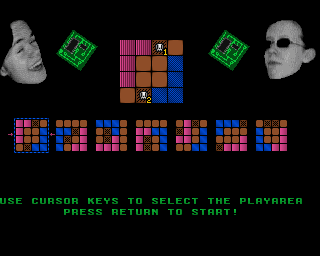
The view is top-down and fixed on the playfield, fitting a game built around the exact placement of L-shaped blocks and the available spaces around them. The board is the focus, as it should be: you are looking at a compact tactical puzzle rather than a sprawling world.
Story
L-Game does not need a grand tale to create a little drama. Each match writes its own miniature contest: a position opens up, one side presses too close, and suddenly the available space has become a problem that must be solved right now.
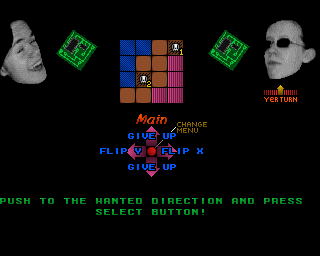
The “characters” are effectively the opposing L-shaped blocks, and that abstraction is part of the point. You project the rivalry onto the board because every move is deliberate and visible. A good sequence feels like a quiet argument conducted through geometry.
Its real historical context is also appealing. Made for a 1994 game-making competition hosted by Finnish computer magazine MikroBitti and later released through Aminet, it has the concentrated, idea-first character of a game built to make a simple ruleset stand out. That is a more fitting frame than any forced narrative would be.
Overall Experience
L-Game is a compact strategy puzzle that earns its place through discipline. It takes one goal, one board-focused confrontation, and a turn-based structure, then trusts you to find the depth in the positions. The payoff is not spectacle; it is the satisfaction of spotting the arrangement that leaves the other L-block stranded.
Bring a friend if you can, because the two-player format is where the pressure of second-guessing another mind is easiest to feel. Every turn carries a question: are you closing the net, or giving away the space that lets the opponent reverse the board? That is enough to make a small game feel competitive.
Give it a chance if concise abstract games appeal to you and you enjoy learning through repeated rounds. L-Game will not occupy you with breadth, but its central duel is sturdy enough to reward a return once you start recognizing how quickly a board can turn against you.



Reviews
There are no reviews yet.