 Retro Replay Retro Gaming History, Reviews & Emulation
Retro Replay Review
Gameplay
White Death starts with a deceptively familiar proposition: move unit counters across a hex map and beat the opposing army. Then the game makes you earn every sensible decision. Strength and movement are visible on each unit, but those bars are only the beginning; morale, terrain, support, and positioning all matter. A push that looks obvious can become a poor trade if you have left a unit exposed or committed it through unfavourable ground.
The first hour is likely to feel more like learning a military procedure than settling into a conventional strategy game. Orders are issued through menus, and the pace is deliberate. That can be frustrating when you simply want to move forces and see what happens, but the friction has a purpose: White Death wants you to consider placement before movement, not after the consequences arrive.
Once that mindset clicks, the hex grid becomes the heart of the game. You are not just trying to advance; you are trying to arrange units so that terrain, support, and morale work together. The reward is the satisfaction of making a careful tactical plan hold up across a turn. With only six scenarios, it is a focused package rather than an enormous campaign, but each scenario represents a different phase of the fighting and gives the German and Russian sides their own command perspective.
Graphics
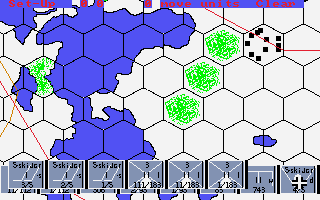
The action is shown from a top-down map view with hex grids. Units appear as military icons, each carrying a small strength-and-movement bar, so you can quickly identify which pieces are healthy, worn down, or able to move. It is a functional battlefield display built around reading the board rather than admiring individual soldiers or vehicles.
Story
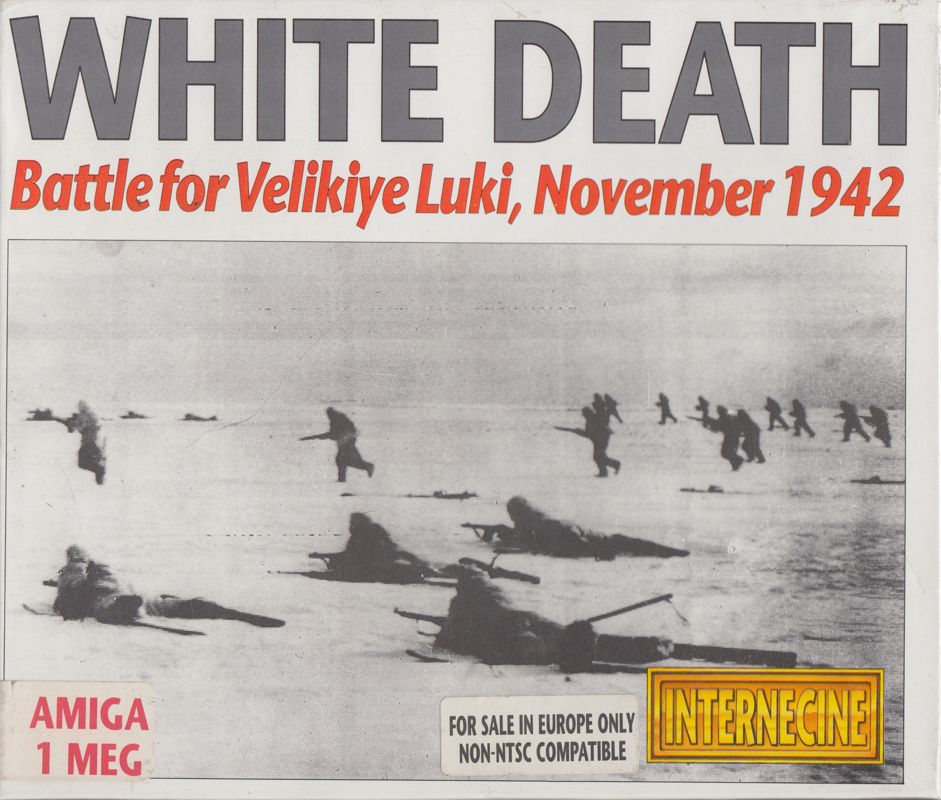
White Death is rooted in the 1942 fighting around the Russian village of Velikiye Luki. Its story is told through the conflict itself: six scenarios cover different stages of the battle, placing you in command of either the German or Russian forces.
That historical framing gives the matches more weight than an abstract set of opposing counters. The question is not merely whether you can capture ground, but whether you can manage the tactical problems of this particular wartime struggle with the resources on your side of the map.
Do not come looking for a character-driven war tale. The drama here comes from operational pressure: a weakened unit, difficult terrain, and the uneasy choice between holding position or committing to a move. If history-minded tactical games are your thing, that restrained approach fits the subject.
Overall Experience
White Death is for the patient strategy gamer who likes the board-game discipline of hexes, counters, and deliberate turns. It asks you to slow down, inspect the field, and make choices with more care than flair. If that sounds appealing, the game’s concentration on morale, terrain, support, and unit placement can be rewarding.
Its biggest hurdle is also its defining trait: the menu-driven, simulation-heavy approach does not offer easy momentum. You need to be willing to learn how its tactical considerations interact and accept that a bad placement can matter more than a bold attack. Gamers after immediate action will likely bounce off it.
At its best, White Death captures the cerebral tension of a historical tabletop wargame on a computer. The six-scenario structure keeps it compact, while the option to command either side adds reason to revisit the battlefield. It is not an inviting strategy game, but it has a clear payoff for anyone who enjoys carefully reasoned World War II tactics.


Reviews
There are no reviews yet.