 Retro Replay Retro Gaming History, Reviews & Emulation

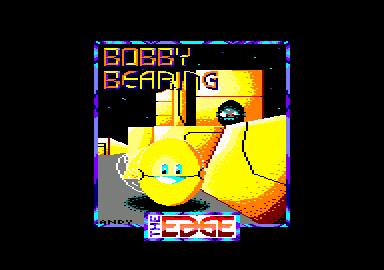

Retro Replay Review
Gameplay
Bobby Bearing starts with the immediate pleasure of steering a rolling ball through angled rooms, then steadily turns that pleasure into tension. You are trying to navigate the Metaplanes, a large fixed-screen isometric maze packed with junctions and dead ends, while avoiding the hazards that make a wrong route more costly than a brief detour. It is the kind of game that asks you to pay attention from the outset: where did that lift lead, which fork did you already test, and was that suspicious wall hiding a switch?
The central challenge is orientation rather than reflexes alone. Lifts, magnets, air ducts, and hidden switches continually complicate your mental map, while enemies, crushing stone blocks, and precarious edges make movement feel dangerous. That mix gives the maze a nice sense of menace. You are not merely searching for an exit; you are trying to preserve enough time to make each discovery count.
Rescuing Bobby’s four brothers adds a strong twist to the basic navigation. Once you find one, you have to roll him to the exit, turning a successful search into a second problem: can you guide both balls through the route you have earned? This is where the game’s compact rooms and interconnected maze structure start to click. A path that seemed simple while alone can become much more demanding with a brother in tow.
The timer is both Bobby Bearing’s sharpest idea and its likely breaking point for some gamers. There are no spare lives or health reserves to soften failures. Death, an enemy stun, and even restarting a room after trapping yourself all cost time. That can feel punishing when you are still learning the maze, but it also prevents careless trial and error from flattening the game. If you enjoy making notes, remembering routes, and improving a run through familiarity, the pressure creates a worthwhile payoff.
Graphics
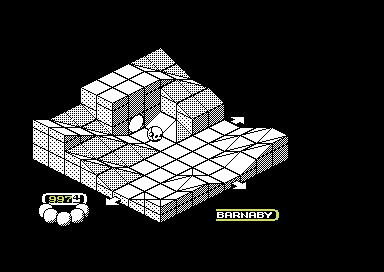
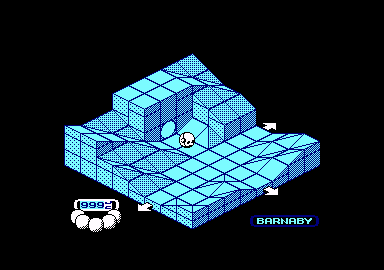
The isometric rooms give Bobby Bearing a clean, board-game-like view of each challenge. Bobby, his brothers, enemy marbles, stone crushers, lifts, and edges are all part of a compact obstacle-course picture, and the fixed screens make it easier to study a room before committing to a route. The diagonal perspective is especially useful when you are judging tight passages or the risk of rolling off the screen.

Story
The story is light, but it gives the puzzle action a charmingly odd frame. Bobby is a young steel ball from Technofear, tricked by his evil cousin into the dangerous Metaplanes along with his four brothers. His mission is simple: get home and bring them all back.
That setup does not demand much attention between rooms, and it does not need to. The brothers are more than a stated rescue goal because each one becomes something you must physically guide to safety. It is a small but effective way to make the maze feel less like a sequence of abstract screens and more like a rescue under pressure.
There is a pleasingly direct, arcade-era clarity to the whole premise. An evil cousin sends a family of steel balls into a lethal maze; Bobby rolls in after them. For a game built around spatial puzzles, that is exactly enough motivation.
Overall Experience
Bobby Bearing is a demanding isometric maze game with a better hook than its simple premise initially suggests. The act of rolling through Technofear’s dangerous screens is easy to grasp, but mapping the maze, managing the clock, surviving traps, and escorting brothers home gives it real staying power. It rewards calm observation far more reliably than impatient improvisation.
Expect frustration when a bad turn, an enemy hit, or an unwinnable position drains precious seconds. Yet the restart penalty is part of a design that wants every choice to matter. The game can be unforgiving, but it is not aimless: each remembered junction and successfully navigated hazard makes the next attempt feel more controlled.
Give it a chance if you like old-school puzzle action that treats navigation as the main event. Fans of isometric games built on route learning will find a tense, focused challenge here, while anyone who dislikes timers or repeated attempts may bounce off quickly. For more game history and release information, see Bobby Bearing’s reference page.


Reviews
There are no reviews yet.