 Retro Replay Retro Replay gaming reviews, news, emulation, geek stuff and more!
Retro Replay Review
Gameplay
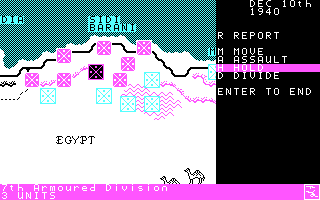
The first few turns make Desert Rats feel uncompromisingly old-school: you are looking at a scrolling map, selecting units on rectangular cells, and issuing a small set of direct orders. Hold ground, move, dig in, or attack. There is no layer of busywork between you and the central question of whether to commit forces now or preserve them for the next turn.
That simplicity starts to click once you accept that the campaign is about positioning and timing, not rapid-fire tactics. An assault is a commitment; fortifying a unit or ordering it to hold can be just as meaningful as pushing forward. The slow pace suits the subject well, because North Africa becomes a problem of deciding where pressure matters and when a line is worth defending.
The campaign range is a major strength. Rommel’s arrival in Tripoli leads toward El Alamein, with Battleaxe, Crusader, and Gazala along the way, so you are not just replaying one isolated clash. DOS and ZX Spectrum 128K versions also add Operation Compass and Beda Fomm, extending the historical ground covered.
Malta status is the most welcome lever for changing the balance of a campaign. Choosing Historical, Operation Hercules, or removing Malta as a base lets you test a different strategic assumption rather than merely replaying the same situation. Two human opponents are likely to get the most out of it, though solo play remains viable with either Allied or Axis forces under computer control.
Graphics
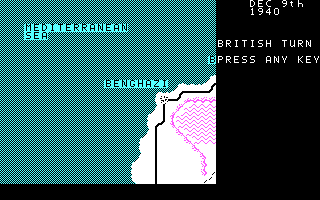
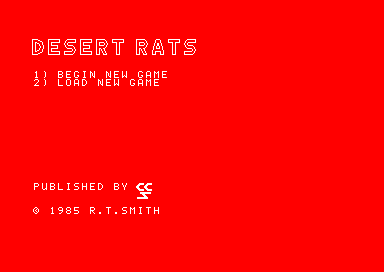
The visuals are centered on the scrolling top-down campaign map and its rectangular grid. It is functional rather than decorative, but that overhead view keeps unit positions and movement across the desert easy to follow.
Story
There is no character-led war story here. Instead, Desert Rats tells its story through the sequence of historical operations: the arrival of Rommel, the hard fighting around Battleaxe and Crusader, Gazala, and the eventual road to El Alamein.
That framing works because the game gives you room to challenge the expected result. Montgomery’s historical victory over Rommel at El Alamein is the destination in the history books, but your decisions can hasten it, delay it, or redirect the campaign’s outcome.
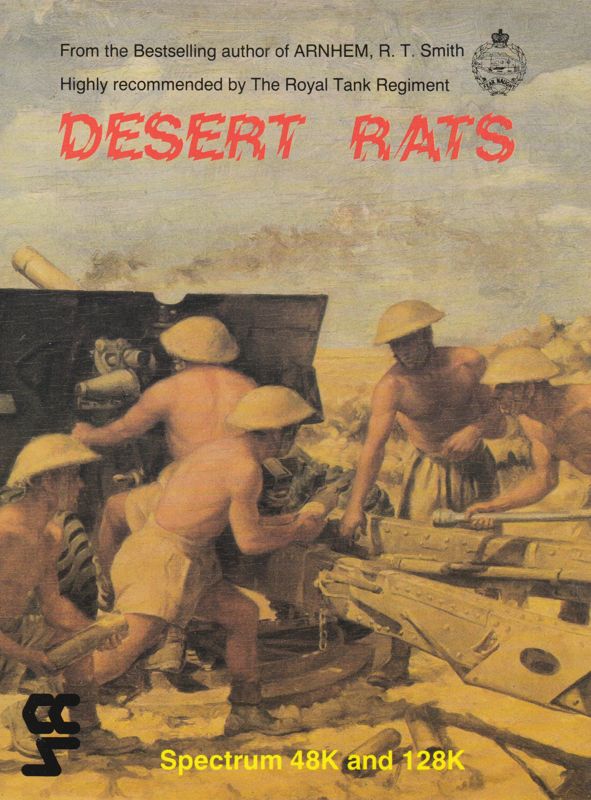
The included instruction booklet matters more than it might in a modern strategy game. Its campaign notes, maps, and photographs give the individual scenarios context, helping the turns feel connected to a real military campaign instead of a string of abstract boards.
Overall Experience
Desert Rats earns its value through focus. It does not try to disguise a wargame as an action game or bury its decisions under elaborate systems; it asks whether you can make sound operational choices over a demanding historical campaign.
Frustration can set in if you need immediate feedback or lavish battlefield detail. The map-and-orders format is stark, and the deliberate turn structure asks for patience. If you enjoy studying a situation, committing to a plan, and living with the consequences, that restraint becomes part of the pleasure.
For a broadly more engaging WWII strategy experience, its age and austere interface keep it from being an easy recommendation. For the gamer drawn specifically to 1941–42 North Africa, however, the lengthy campaign, alternate Malta conditions, and two-sided play make it a worthwhile piece of classic computer wargaming.


Reviews
There are no reviews yet.