 Retro Replay Retro Gaming History, Reviews & Emulation


Retro Replay Review
Gameplay
The opening minutes make Rugby Manager’s priorities clear. You are not picking up a controller to sidestep defenders or smash through a tackle; you are in an office, using a joystick-controlled hand to select the items that shape your team’s affairs before moving on to the next match. There is something endearingly tactile about that desk-bound setup. It turns basic menu navigation into a little performance of being the person in charge.
That same approach can also be a hurdle. Moving a hand around the office and clicking objects is slower and less direct than simply selecting options from a clean list, so your tolerance for vintage interfaces matters. The game asks you to settle into its pace, make your selections, and commit. It feels less like a quick sports game and more like a patient routine between fixtures.
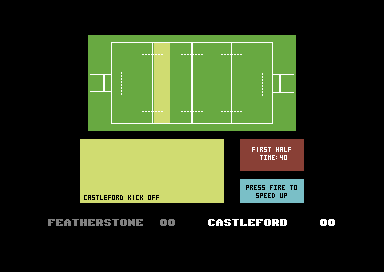
On match day, the game reduces rugby league to information you can monitor: an overhead view of the pitch, a bar sliding left and right to show where the ball is, a text box reporting events, plus the clock and score. Holding fire speeds the action up, which is a useful concession once you are eager to see the outcome. The abstraction is severe, but it does create a clear manager’s-distance tension: you can follow territory, read the updates, and wait to learn whether your preparation paid off.
The downside is that the match display has little room for drama beyond the changing text and position marker. You are watching the consequences rather than experiencing the physical flow of rugby. That is the point, but it means Rugby Manager works best when you enjoy the anticipation of a simulation and do not need every fixture to feel like a playable sporting event.

Graphics
The office view is the game’s most distinctive image: you look out from behind a desk and guide a hand around the room with the joystick. Matches switch to a top-down pitch display, where the moving bar, score, time, and commentary box keep the important information in one place. It is functional, sparse, and very much built around following results rather than watching animated rugby.
Story
There is no authored drama pulling you through Rugby Manager. Its story is the one you make from running a rugby league team: the decisions made in the office, the next fixture, and the accumulating pressure of whether the scoreline backs you up.
That can be enough if you like sports management games as a source of private narratives. A good result feels like confirmation that you made the right calls; a bad one leaves you staring at the same detached match report and wondering what should change before the next game.
Because the game keeps you at arm’s length from the action, its drama is understated. You will not get cinematic rivalries or on-field heroics here. The satisfaction comes from treating each update and final score as evidence of how your team is doing under your watch.
Overall Experience
Rugby Manager is a small, stubbornly old-fashioned rugby league management game whose strongest idea is putting you physically at a desk before reducing the match to the information a manager might obsess over. Its pace is deliberate, and its interface will either feel charmingly hands-on or unnecessarily laborious.
The payoff is modest but real for the right mood. Once you accept that the moving bar and text are the match, it becomes easier to focus on the nervous wait for field position to shift and the score to settle. Speeding up play with the fire button helps when that wait becomes too long.
Give it a chance if you enjoy early home-computer simulations and can find pleasure in making choices without being shown much of the sporting action. Skip it if you want a detailed tactical dashboard or the thrill of controlling rugby on the pitch. Rugby Manager has a neat managerial premise, but it remains a niche curiosity rather than a broadly compelling sports game.


Reviews
There are no reviews yet.