 Retro Replay Retro Gaming History, Reviews & Emulation
Retro Replay Review
Gameplay
The first few turns of Battles in Normandy put the central pressure right in front of you: objectives are fixed, time is limited, and simply pushing units toward the nearest key location is not enough. You are directing corps-level operations across hex maps, so every commitment has weight. A unit sent down one route may be badly needed elsewhere when the enemy resists, the ground slows movement, or the calendar runs out.
What makes the game more than a race between flags is the way weather, terrain, supply, experience, and morale sit inside the battle calculation. That combination gives you reasons to pause before attacking. A favorable-looking advance can turn sour if you overextend, while experienced, well-supported troops are worth using with care instead of treating every counter as interchangeable. The strongest moments come from recognizing that position and readiness matter as much as raw numbers.
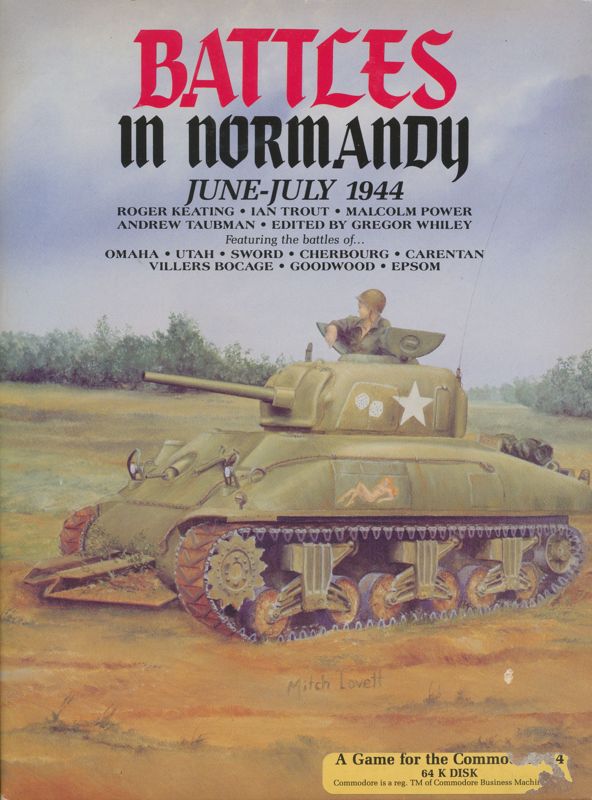
The eight scenarios are a sensible fit for this format. Omaha, Utah, Sword, Cherbourg, Carentan, Villers-Bocage, Goodwood, and Epsom offer distinct named operations without asking you to swallow one enormous campaign before seeing a result. Frustration will set in if you want instant tactical fireworks: this is turn-based operational planning, and its victories come from patient map control. If that sounds satisfying, the objective deadlines give each scenario a clean, urgent edge.
Graphics
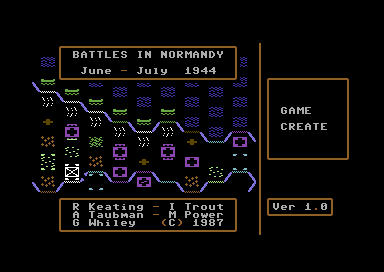
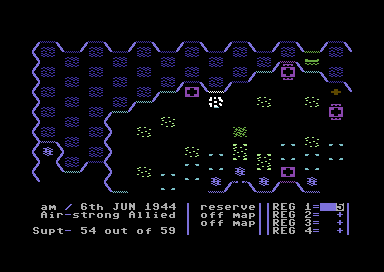
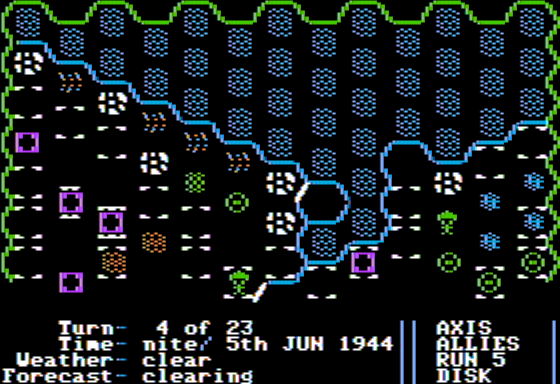
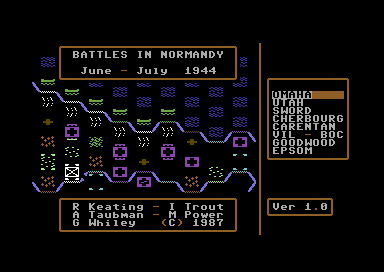
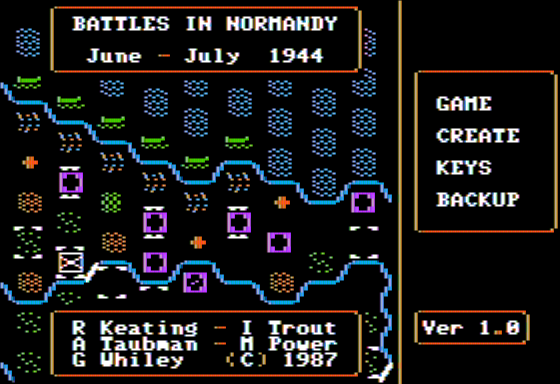
The game uses a top-down hex-grid view, keeping the battlefield map and unit positions at the center of the screen. It is a practical look for a wargame of this scale: troop movement across the hexes is easy to track, and the important places are the locations you are fighting to seize.
Story
There is no need for an elaborate invented campaign narrative here. Battles in Normandy draws its drama from the 1944 Allied landing in German-occupied Normandy and from the military problem each operation presents. You are not being carried through a character story; you are handed a historical situation and asked to make the command decisions work.
The scenario list does a lot of the thematic lifting. Omaha, Utah, and Sword immediately frame the opening invasion, while Cherbourg, Carentan, Villers-Bocage, Goodwood, and Epsom move the focus across the Normandy fighting. That structure gives the game a stronger sense of progression than a set of anonymous maps would have.
Its story is therefore one of pressure, geography, and consequence. Capturing a key location within the allotted turns becomes the measure of whether your version of an operation succeeds. History-minded strategy fans will likely appreciate that restraint; anyone looking for personal drama should come for the operational challenge instead.
Overall Experience
Battles in Normandy is a focused historical wargame with enough operational friction to make its eight scenarios feel like problems to solve rather than maps to clear. The corps-level command scale is a good match for Normandy, where route choices, timing, and the ability to sustain an advance can matter more than one flashy attack.
Its age and directness are part of the bargain. You need to enjoy hexes, turns, and the slow satisfaction of improving a plan after a bad result. The game will punish impatience because weather, terrain, supply, morale, and experience all demand attention, but that same resistance makes a successful push toward an objective feel earned.
Give it a chance if you want a compact Second World War wargame centered on real Normandy operations and clear victory conditions. Skip it if you need a character-driven war story or rapid tactical action. For the right kind of strategist, its disciplined focus is the payoff.


Reviews
There are no reviews yet.