 Retro Replay Retro Gaming History, Reviews & Emulation
Retro Replay Review
Gameplay
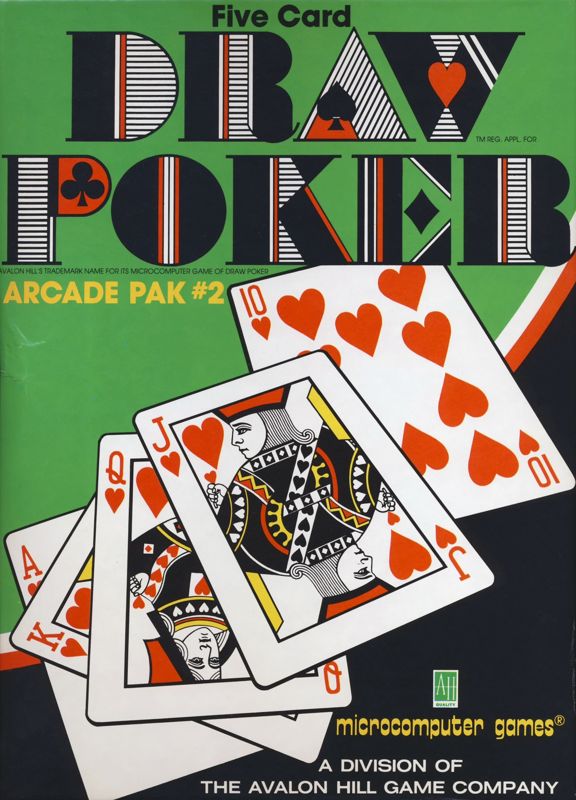
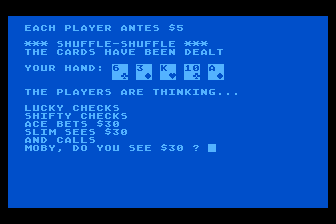
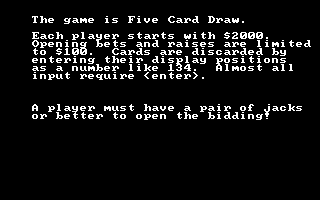
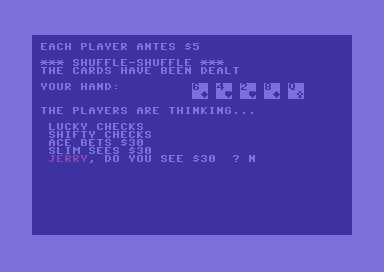
Draw Poker lives or dies on whether you enjoy five-card draw’s small, anxious decisions, and it understands that much. Everyone antes $5, you see your five cards, and the opening rule demands a pair of Jacks or better before betting can begin. That one restriction gives weak-looking deals real weight: you are not simply chasing the best possible hand, but deciding whether you have enough to enter the pot at all.
Once betting starts, the usual draw-poker mind game takes over. You can stand pat on a hand that might already be good, or replace cards in hope of building something stronger. Against four computer-controlled seats, each deal asks you to balance caution against greed. A decent pair can tempt you into opening; a draw can tempt you into throwing away a hand that was already safe. That tension is the game’s best feature.
The limitations show up quickly because there is little distance between you and the same basic loop. You begin with $2,000, play hands, and try not to let the pot work against you. There is no elaborate layer around the card play to refresh it, so your enjoyment depends heavily on how much you can get from repeated hands of classic draw poker. It works best in short sessions, when a few risky draws and a close betting round are enough.
Graphics
The game is built around a top-down card-table view, putting the five-card hands and the other seats at the center of the screen. Its strongest visual virtue is simple clarity: this is a card game that keeps your attention on the deal, the pot, and the decisions in front of you.
Story
There is no plotted campaign pulling you from hand to hand. The story is the one poker naturally creates: a modest ante, an uncertain opening hand, and the question of whether your next draw will rescue you or cost you money.
Lucky, Shifty, Ace, and Slim give the four computer opponents recognizable table names. They make each round feel less like solitaire with betting and more like sitting down with a recurring group, even though the real drama remains in the cards and the wagers.
That stripped-back approach suits the game’s period and its subject. You are not asked to follow a larger tale; you make your own run from the $2,000 starting bankroll, one questionable open and one hopeful draw at a time. If you need narrative momentum, it will feel dry. If a poker table can supply its own stakes, it is enough.
Overall Experience
Draw Poker is a serviceable version of a familiar card game, and its 6.1 score feels fair. The Jacks-or-better opening rule gives the early betting a little bite, while the drawing phase preserves the satisfying uncertainty that makes five-card draw worth playing in the first place.
Its greatest strength is also its ceiling: it stays close to standard poker. That makes it easy to understand if you already know the game, but it leaves little to discover beyond better judgment at the table. You will probably know within an hour whether the repeated rhythm of ante, assess, bet, draw, and reveal has its hooks in you.
Give it a chance if you want uncomplicated, computer-opponent five-card draw and are happy to make your own tension from the bankroll. Skip it if you want a card game with a broader sense of progression or a reason to keep playing beyond the next deal. For a brief poker break, though, its plain focus can still be inviting.


Reviews
There are no reviews yet.