 Retro Replay Retro Replay gaming reviews, news, emulation, geek stuff and more!
Retro Replay Review
Gameplay
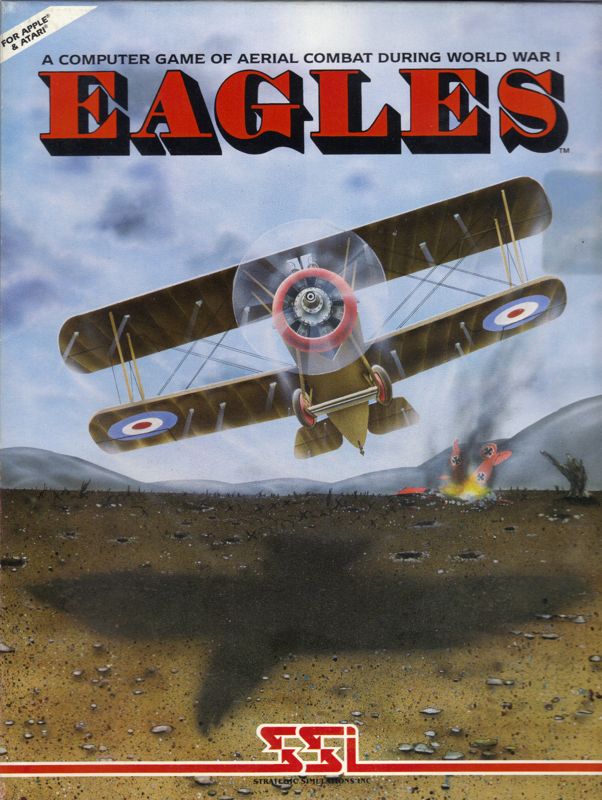
Eagles asks you to think like a cautious WWI pilot rather than an action-game ace. Every aircraft takes its turn in numerical order, and a fight can grow to twenty planes, so the opening minutes are about orienting yourself: which side is where, who can spot whom, and which aircraft is about to drift into trouble. Once you understand that each map square covers roughly 50 yards and altitude has its own 25-foot steps, the battlefield stops feeling like a grid and starts feeling like airspace you have to manage.
The heart of the game is positioning. Pilots can see four squares away but fire only one square away, creating a useful gap between noticing danger and being able to act on it. You have to close distance without handing the enemy an easy shot, while clouds and wind complicate what would otherwise be a clean calculation. That friction is where the game earns its name: a melee is not simply two planes trading attacks, but a crowded sequence of moves in which a poor approach can leave an aircraft exposed.
Its turn order is also its biggest hurdle. Waiting for every numbered aircraft to act can make a large engagement feel methodical to the point of dryness, particularly if you came in expecting the instant rush of a cockpit game. Stick with it, though, and the fixed order becomes part of the tactical puzzle. You can anticipate who moves next and plan around that fact, which gives successful positioning a satisfying, earned quality.
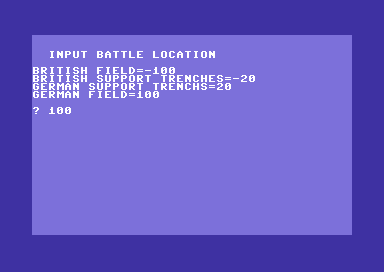
Three main scenarios—Over There, Voss’s Last Fight, and Red And Black—give the game distinct starting points, while four smaller games offer more focused objectives. Bloody April, Sausage Run, Contact Patrol, and The Eleventh Hour make this more than a single battle setup. The optional plane-creation section is a welcome extra for anyone who enjoys tailoring a force before committing it to the map.
Graphics
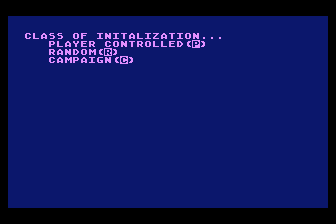
The battlefield is built from north-south-east-west squares with separate altitude levels, and aircraft carry ID numbers from 1 to 20. That makes the crowded encounters easier to track in principle: Allied planes use 1 through 10, while German planes use 11 through 20. It is a functional, information-first view suited to counting range, altitude, and movement rather than chasing cinematic dogfight drama.

Story
There is no grand character-driven campaign here; the drama comes from the historical frame and the individual missions. France and Germany in the latter half of World War I is a strong fit for this kind of measured aerial contest, because every encounter is about survival, positioning, and getting a mission finished.
The named scenarios give the action a little more flavor than a generic skirmish. Voss’s Last Fight in particular carries inherent historical weight in its title, while Over There and Red And Black suggest different slices of the air war without forcing a long narrative between battles.
What you take away is your own combat record. Each game ends with kills, completion time, and rank, while successful missions determine advancement in rank. That is a lean kind of storytelling, but it works for a simulation built around the consequences of a mission rather than a scripted plot.
Overall Experience
Eagles is a serious, compact air-war wargame that finds tension in distance, turn order, and the narrow window between spotting an opponent and reaching firing range. Its best moments come when several planes are involved and you can see a promising line of attack threatened by wind, cloud, or an enemy that will move before you do.
You will need patience for the rules and for the orderly pace of the rounds. This is not a game that flatters impatience: twenty aircraft acting one after another can feel laborious, and the grid-based abstraction asks you to imagine the thrill of flight rather than delivering it directly. But for the right mood, that restraint makes every decision feel consequential.
Give it a chance if you enjoy tabletop-minded tactics and want WWI dogfights treated as a problem of maneuver rather than reflex. The scenario selection, mini-games, rankings, and custom-plane option give it useful replay value, while the underlying system remains focused enough that repeated missions teach you how to read the sky more intelligently. It is a niche experience, but a thoughtful one.


Reviews
There are no reviews yet.