 Retro Replay Retro Gaming History, Reviews & Emulation
Retro Replay Review
Gameplay
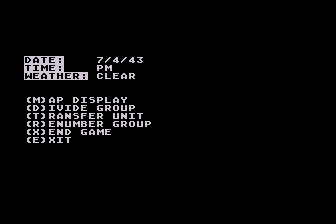
The first hour of Objective: Kursk is about getting your bearings and recognizing that an attack cannot be treated as a single decision. A turn covers twelve hours, but the game breaks the work into five preparation phases before combat begins. You supply and move forces, alter formations, plan assaults, call on air strikes and artillery, and deal with air-combat situations before the fighting is resolved. That structure gives an offensive a satisfying sense of buildup: you are trying to make the battlefield ready before you ask your troops to take ground.
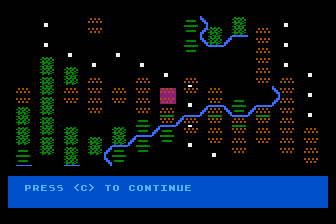
The hex grid, with each hex representing three miles, makes this a grand-tactical contest rather than a skirmish. You are managing the shape and direction of a front across the south flank of the Kursk salient, from Belgorod up toward Kursk. The decisions have weight because victory is tied both to town control and to surviving combat forces. A reckless lunge may look tempting, but the game’s scoring makes clear that losses are not just an acceptable cost of progress.
What starts to click is the relationship between preparation and commitment. Movement alone does not solve the problem; supply, formations, bombardment, and the timing of an assault all compete for your attention. That density is the game’s reward for veteran wargamers and its likely point of frustration for newcomers. Soviet forces can be run by the computer or another human, so there is room for either a solo campaign against the defense or a more deliberate head-to-head contest. The hard deadline of July 15, 1943 keeps the German advance from becoming an endless exercise in cautious positioning.
Graphics
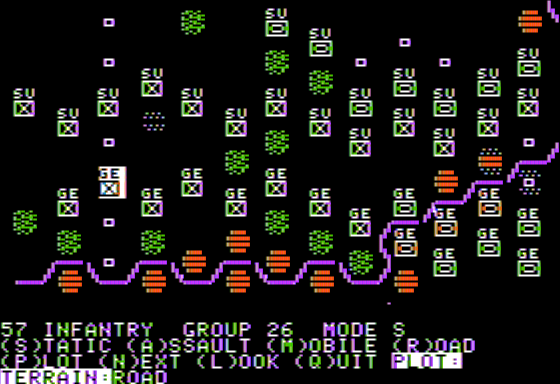
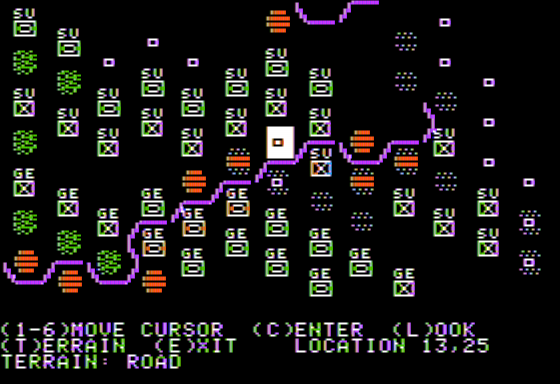
Objective: Kursk uses a top-down map built around its three-mile hexes. The battlefield view is functional and appropriately map-focused: it puts the emphasis on tracing routes, judging distance, and following the line between German and Soviet forces rather than on close-up battlefield drama.
Story
This is historical conflict rather than character-driven storytelling. You take the German side in the Fourth Panzer Army’s attacks against Soviet forces on the southern flank of the Kursk salient, a focused slice of the larger Battle of Kursk. That narrow focus helps the game feel purposeful: every planned advance belongs to a specific operation with a specific geographical objective.
The tension comes from the calendar and the map. You have until July 15, 1943 to beat your opponent, unless you force a result sooner, so the historical situation becomes a built-in dramatic clock. Towns are more than names on a map because their control contributes directly to victory points, while the survival of your forces gives every hard-fought gain a cost.
Because the armies are pre-assigned at the start, the story is not about building an army from scratch or inventing an alternate force structure. It is about how well you use the forces placed in your hands. That makes the scenario feel closer to a military problem laid out for you to solve: find the openings, protect what must endure, and decide where the offensive can afford to spend its strength.
Overall Experience
Objective: Kursk earns its value through concentration. It does not spread itself across the whole Eastern Front; it stays with one major operation and asks you to understand the consequences of a push through heavily contested ground. The result is a wargame with a clear central question: can a prepared German offensive seize enough ground, without bleeding away the forces needed to claim victory?
You should give it a chance if the phrase “five phases to prepare for battle” sounds inviting rather than exhausting. The game asks for patience and a willingness to think in terms of supply, formations, and incremental territorial gains. In return, it offers a more deliberate kind of tension than a fast action game: the tension of committing to an assault after you have spent a turn trying to make it succeed.
Its age and dense subject matter make it a specialized recommendation, but it is a solid one for historical strategy fans. The computer-controlled Soviet side makes solo play viable, while human control on either side gives the scenario a direct competitive angle. If you want World War II strategy where the road to a town is as important as taking it, Objective: Kursk remains a stern, focused battle plan worth working through.


Reviews
There are no reviews yet.