 Retro Replay Retro Gaming History, Reviews & Emulation


Retro Replay Review
Gameplay
The first few turns of Starfleet Orion can feel like trying to play chess while both players write their moves in secret. That uncertainty is the point. Orders are entered separately and resolved simultaneously, so a sensible attack can become a disaster when the enemy turns away, accelerates, or simply puts you somewhere you did not expect. It creates a tense, wonderfully adversarial kind of planning that modern turn-based games often smooth away.
Energy management is where the game starts to click. Propulsion, weapons, and shields all draw from a limited supply, forcing you to choose between closing range, surviving a counterattack, and making an attack count. Beam weapons reward proximity but lose effectiveness at distance; missiles go to a chosen grid location whether a ship is there or not; torpedoes are looser directional weapons that can catch targets within two grid spaces. You are always trying to anticipate where a ship will be, not where it is.
The 12 scenarios steadily introduce more complexity, and the 22 ship types give the encounters room to develop beyond identical fleets passing each other on a grid. Fighters and tractor beams add especially nasty positional possibilities: pushing a ship into danger, clearing a weapon’s path, or accelerating fighters toward a target can turn a careful plan inside out. Frustration sets in when a prediction misses and an entire turn is wasted, but that is usually the kind of frustration that makes you immediately want a rematch.
Graphics
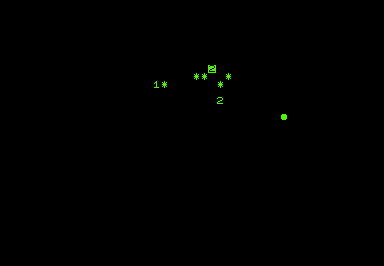
Starfleet Orion puts its battles on a 32 by 64 grid, and that fixed tactical view keeps ship positions and weapon ranges at the center of your attention. This is a utilitarian battlefield rather than a cinematic space opera; the important picture is the one formed by distances, angles, and the dangerous squares your opponent may enter next.
Story
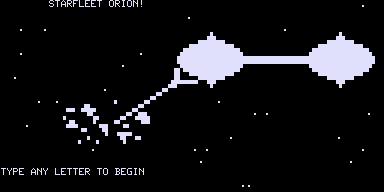
The story is a clean wargame frame: the Stellar Union and the Confederation of Orion send fleets against each other. There is no need for more elaborate drama when each scenario already gives the rivalry its shape through opposing forces and victory conditions.
What gives the conflict character is the way ships can be destroyed or escape the field. Escape is not merely a retreat; it becomes part of the command decision, especially when preserving a ship matters more than winning one exchange of fire.
This is not a game you play for a plotted campaign or named characters. You supply the drama yourself when a fleeing ship slips away, a torpedo threatens a route, or an opponent reads your plan perfectly. With the right rival across the table, the sparse setup becomes enough.
Overall Experience
Starfleet Orion is demanding, slow-burning, and built around the pleasure of outthinking another person. Its simultaneous turns give it a distinctive pulse: you make your commitments, wait for resolution, and discover whether your logic was brilliant or completely wrong. That moment of reveal is the game’s strongest hook.
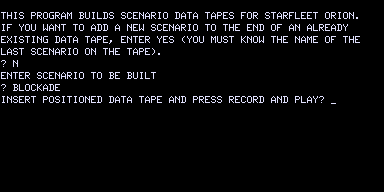
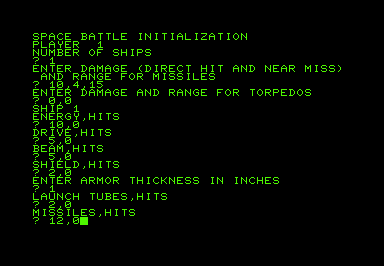
The biggest practical warning is simple: there is no computer opponent. You need a second player, and the tape edition adds a real barrier by requiring scenarios to be typed from the manual into the editor and saved before play. The disk edition is the friendlier route, while the scenario editor is valuable if you and a friend want to build your own confrontations after exhausting the included set.
Give it a chance if you enjoy old-school wargames that demand patience, note-taking, and a willing human adversary. Skip it if you want a solo campaign, quick spectacle, or a forgiving tactical game. For two commanders prepared to learn its weapons and live with the consequences of simultaneous orders, Starfleet Orion still delivers a sharp, unusually thoughtful fleet duel.


Reviews
There are no reviews yet.