 Retro Replay Retro Gaming History, Reviews & Emulation
Retro Replay Review
Gameplay
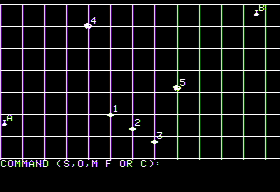
Invasion Orion is at its best when a quiet turn suddenly becomes a dangerous one. You are looking across a 32 by 64 battlefield, measuring how long you can stay out of beam range, whether a missile or torpedo volley will force the issue, and when a fighter squadron is worth deploying. There is no need for twitch reflexes here; the tension comes from committing to a move and living with the board position it creates.
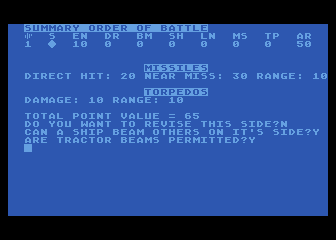
The weapon mix gives fleet clashes more texture than a bare exchange of shots. Short-range beams reward getting close, while long-range missiles and torpedoes let you threaten space before the fleets meet. Tractor beams add another positional consideration, although this sequel no longer lets them interfere with enemy missiles. That limitation matters: incoming ordnance demands planning rather than a last-second tractor-beam answer.
Its single-player emphasis is a welcome fit for a game built around deliberate decisions. The computer can control either side, and the three difficulty levels make it easier to learn how the systems interact before stepping up the pressure. Later versions also add two-player play, which is where the same careful movement and weapon choices can become a proper battle of nerves.
Ten scenarios and 30 ship types give you reasons to revisit the rules from different angles, rather than treating one fleet engagement as the whole package. The editor is the real long-term hook: you can build new scenarios and design new ships, then see whether your clever idea survives contact with the grid. Tape players should know that scenarios must be typed into the editor, while disk editions include them as finished files; that is a substantial difference in how quickly you get into the action.
Graphics
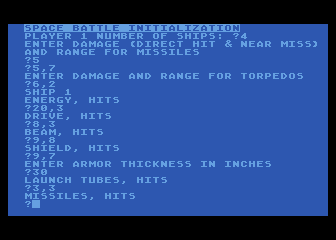
The view is top-down and centered on the tactical grid, with the battlefield arranged for following ship positions across a broad 32 by 64 space. This is functional, old-school strategy imagery: you watch fleets maneuver rather than expecting detailed spacecraft drama.
Story
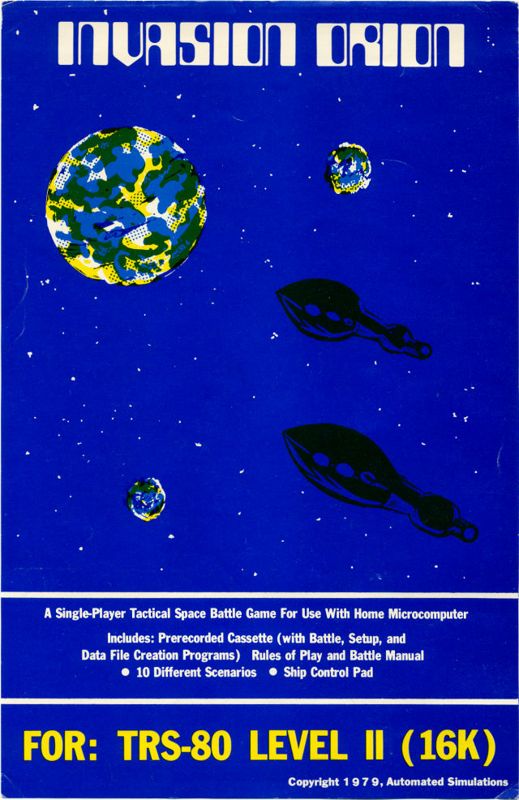
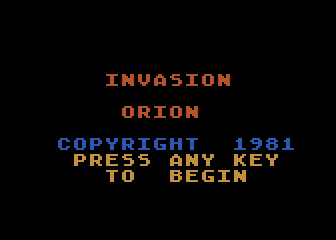
The story is lean but perfectly suited to the game’s purpose. The Stellar Union is defending itself against an invasion by the robotic Klaatu, giving each scenario a clear us-versus-them frame without asking you to pause the tactical problem-solving for elaborate narrative detours.
That simplicity works because the conflict is expressed through the fleets. You are not being asked to absorb a complicated campaign plot; you are asked to hold the line against an invading force and make each ship’s survival count. For a game of this era, that is enough motivation to turn an abstract grid battle into a defensive war.
If you want background on the game’s history and releases, the Invasion Orion history page is a useful companion. In the game itself, the story remains a brisk setup, and the scenarios do the heavier lifting through the tactical situations they present.
Overall Experience
Invasion Orion has the particular pull of an early computer strategy game that trusts you to meet it halfway. The first hour is about learning what range, positioning, and weapon timing really mean; once that clicks, a sparse-looking grid becomes a space where a single poor approach can ruin a fleet. It is demanding in a thoughtful way, not because it buries you under rules.
The payoff is strongest if you enjoy turn-based wargames that are happy to let you linger over a decision. The expanded ship roster, ten scenarios, adjustable computer opponent, and design editor give it more staying power than a one-off historical curiosity. Creating a ship or battle of your own is especially valuable when the supplied encounters have taught you the basics.
Still, this is unapologetically old-school strategy. The tape-version scenario entry is a real hurdle, and the narrative is little more than a framework for combat. If you can appreciate a focused fleet tactics game where range and maneuvering matter more than ornament, Invasion Orion remains worth your time; if you need a sweeping story or immediate spectacle, its rewards may feel too austere.


Reviews
There are no reviews yet.