 Retro Replay Retro Gaming History, Reviews & Emulation



Retro Replay Review
Gameplay
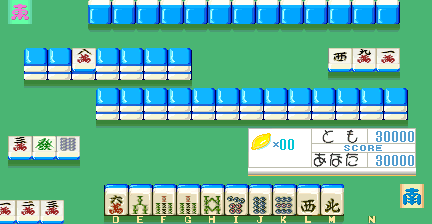
The first hour has a simple, slightly cheeky pull: instead of merely selecting opponents from a mahjong menu, you can frame the matches around an exchange student’s effort to find a girlfriend. That does not turn Mahjong Lemon Angel into a dating game with a few tiles attached. The romance is the wrapper; the tile game is what asks for your attention and decides whether the experience clicks.
Story mode is the better place to start because each of the three girls—Tomo, Erika, and Miki—has her own route. That structure gives you a reason to see more than one match, while the main menu’s direct-play option is there for the times you just want to sit down opposite a chosen opponent. It is a sensible division, and it respects two very different moods: following a character thread or getting straight to the table.
Frustration will set in fast if you arrive expecting the high-school premise to carry you through without an interest in mahjong. This is a cards-and-tiles game first, and its strongest audience is anyone who enjoys reading a hand, weighing possibilities, and accepting that a match can turn on the tiles available to you. For that crowd, the licensed romance framing is a memorable bonus rather than a distraction.

Graphics
The game pairs its mahjong matches with anime characters drawn from Lemon Angel. Tomo, Erika, and Miki give the opponent selection and story routes a face, which is more inviting than playing anonymous computer rivals. The high-school romance setup and character-based structure give this compact mahjong game a distinctly anime flavor.

Story
You play a male exchange student who has arrived in a new town feeling lonely and determined to find a girlfriend. It is a deliberately straightforward setup, but it works because it gives the otherwise familiar act of choosing an opponent a personal angle. You are not saving a world or unraveling a mystery; you are trying to make a connection.
Each route centers on one of the three love interests, so the story has a clear replay shape. Tomo, Erika, and Miki are not generic names added after the fact: they come from the Lemon Angel TV series and are based on real people. That license is the game’s main source of personality.
Do not come expecting a sweeping romance novel. The premise is light and the routes exist alongside mahjong rather than replacing it. Still, the separate stories make the game more inviting than a bare set of computer matches, especially if the Lemon Angel connection already means something to you.
Overall Experience
Mahjong Lemon Angel is an easy game to recommend conditionally and a hard game to recommend blindly. Its central trick—mahjong disguised as a high-school romance—sounds like a novelty, yet it is honest about what you will be doing. You spend your time playing mahjong against three characterful opponents, with story routes supplying context and a reason to return.
That honesty is its strength. Fans of the TV series get a chance to spend time with Tomo, Erika, and Miki in separate routes, while mahjong fans get a direct-match option that does not force them through story material every time. The two sides of the game coexist cleanly instead of fighting for control.
The payoff is worth it when either half of the pitch lands for you: you like mahjong, you enjoy vintage anime romance curiosities, or ideally both. Everyone else may find the relationship premise too thin to overcome a genre they do not already enjoy. At its best, though, this is a charmingly specific licensed game that knows a tile match becomes more memorable when the person across the table has a little narrative attached to her.



Reviews
There are no reviews yet.