 Retro Replay Retro Gaming History, Reviews & Emulation
Retro Replay Review
Gameplay
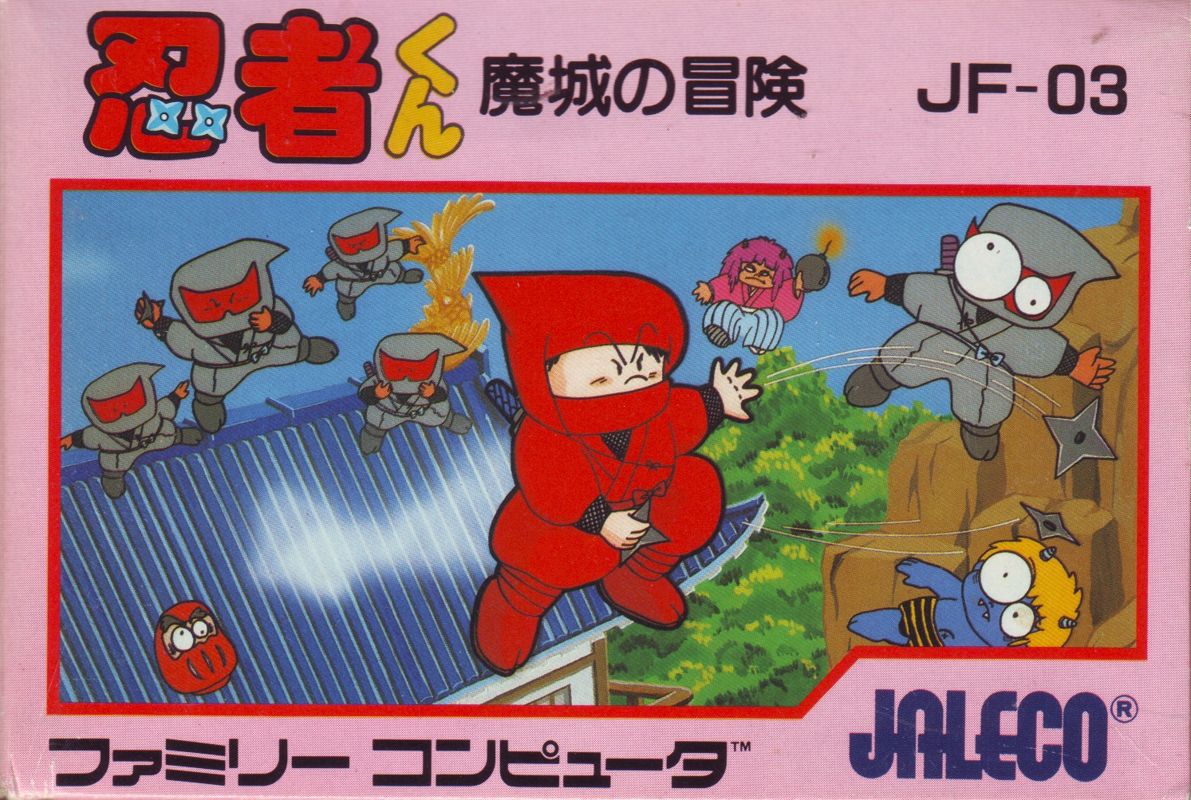
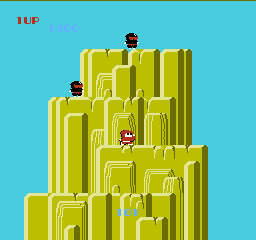
Ninja-Kun: Majō no Bōken starts with an idea you understand almost instantly. You are a ninja in a vertical arena of platforms, enemies occupy different levels, and the stage does not end until every last one is gone. Jump upward, drop down when a lower target is exposed, and throw shurikens before the timer turns a simple cleanup job into a scramble. That directness gives the opening minutes a brisk, inviting arcade pull.
The movement creates the game’s best tension. Platforms are not just routes to the next screen; they determine where you can attack from and when you have to commit to changing levels. An enemy sitting above you is not always an immediate problem, but getting there costs time, while dropping down can leave you needing to reposition quickly. You are continually weighing a safer shot against the fastest route through the stage.
Shurikens keep the combat clean and easy to read. There is no elaborate combo system to learn: line up a foe and fire. Defeated enemies drop scrolls for score, giving you a small but welcome reason to collect your rewards rather than simply racing toward the next target. The score chase fits the arcade structure, though it does not change the basic rhythm of hunting down every enemy.
Frustration can set in if you want a platformer that keeps adding new wrinkles. The central loop is relentlessly focused on clearing enemies under a time limit, and the pressure rises from execution rather than a broader set of tools. But if that stripped-down challenge sounds good, the clarity works in its favor. You always know what went wrong: you took too long, chose the wrong route, or failed to land the shuriken shot when it mattered.
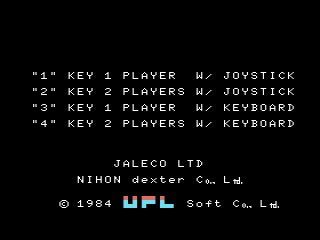
Graphics
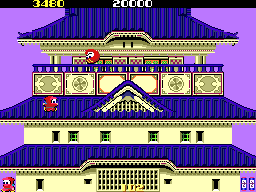
The action is shown from the side in vertically arranged platform screens, making it easy to track where the ninja stands relative to enemies above and below. Ninjas, demons, shurikens, platforms, and dropped scrolls all serve the immediate task of reading a crowded arcade encounter.
Story
This is a lean chase toward the Demon Castle. Your ninja is working through enemy ninjas and demons en route to a final showdown, which is enough motivation for a game built around short, repeatable combat stages.
Do not expect the journey to carry the experience through character drama or elaborate plot turns. The story is a frame for the action: each cleared stage says you are one step nearer to the castle and its final opponent.
That simplicity suits the game’s arcade instincts. The real narrative momentum comes from surviving the current timer and seeing whether you can keep the run going, not from stopping to absorb exposition.
Overall Experience
Ninja-Kun: Majō no Bōken is a compact, no-nonsense arcade platformer. Its strongest quality is how quickly it turns a room full of enemies into a route-planning problem: which level to tackle first, when to climb, when to drop, and where to throw your next shuriken.
The payoff depends on your tolerance for repetition. If you enjoy old-school games that take one simple rule set and ask you to improve inside it, there is honest fun in becoming faster and cleaner at stage clears. If you need constant new mechanics or a story with more weight, its narrow focus will feel limiting before the Demon Castle becomes a compelling goal.
Give it a chance when you want a brisk, score-minded challenge rather than a sprawling platform adventure. It is a solid historical arcade-style diversion with a satisfying core, even if that core does not have enough variety to make every session feel fresh.


Reviews
There are no reviews yet.