 Retro Replay Retro Gaming History, Reviews & Emulation

Retro Replay Review
Gameplay
The first few turns put you in the kind of squeeze good campaign wargames thrive on. You are not merely trying to destroy everything in sight. France earns victory points by killing enemy units, while the Allies want cities, so movement across the strategic map carries a different urgency depending on your side. That asymmetry gives the 1814 campaign a strong push-and-pull: one army needs to blunt and punish, the other needs to keep advancing.
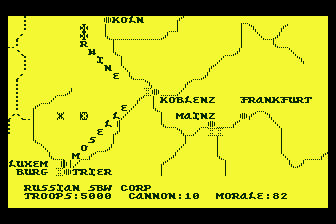
At the strategic level, corps move across a map covering France and what is now western Germany. When armies meet, the game shifts to division-scale tactical battles. That is an ambitious amount of military decision-making for a game with only 25 turns, especially since each turn represents several days. You need to think about where a corps will matter next, not simply where it can win now.
The tactical layer is where the game asks you to earn its results. Morale, facing, and formation affect combat, so the better decision is not always the most aggressive one. That makes battles more than a numbers check, but it also means careless positioning can become frustrating fast. If you want to concentrate on the campaign, automatic battle resolution is a sensible escape hatch; if you enjoy getting into the details, fighting manually gives your choices more weight.
The fixed campaign length is both the game’s best discipline and its sharpest edge. There is no room for leisurely cleanup or a plan that takes ten turns to mature. Allied city captures and French casualties both feed the final total, so you should keep the scoring goal in mind every time you move. It rewards gamers who can set priorities, then abandon them when the map demands it.

Graphics
The view is functional and top-down, built around the broad campaign map and separate tactical battle screens. You will spend your time reading unit positions across France and western Germany, then handling smaller division-level engagements. It is a utilitarian look suited to a computer wargame: the interest comes from seeing armies converge on objectives, not from decorative battlefield detail.
Story
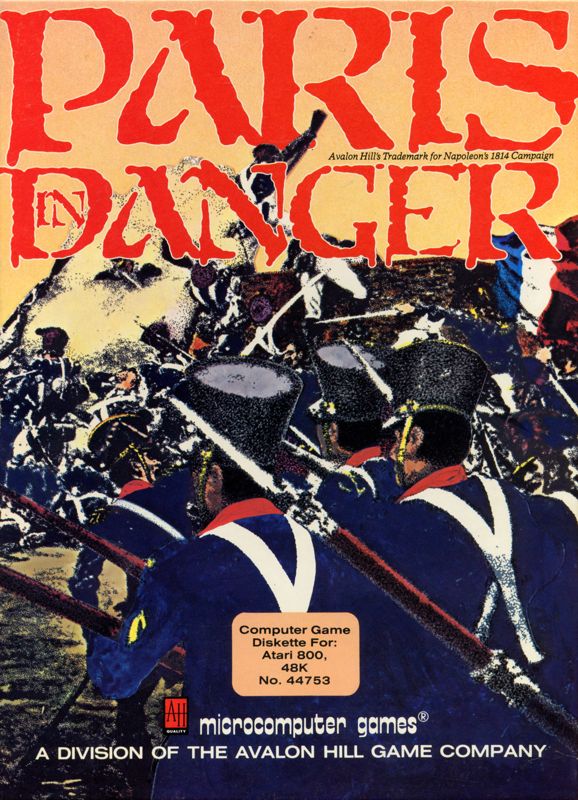
This is history used as a pressure cooker rather than a character-driven tale. The campaign centers on 1814, with Russian, Prussian, and Austrian forces of the Sixth Coalition advancing against Napoleon’s France and Paris looming as the obvious prize. That framework immediately explains why the two sides do not play alike.
Taking the Allied side carries the momentum of an advancing coalition, but city capture—not sheer destruction—is what matters. France, meanwhile, is judged by the enemy it can kill. The contrast makes each side tell a different version of the same campaign: one is trying to keep the march alive, while the other is trying to make that march too costly.
The strongest narrative moments are likely to come from your own map decisions. A battle you choose to fight may protect a route toward a city or bleed the enemy at the right moment; an automatically resolved clash may be enough because time matters more elsewhere. The campaign’s story is not written in speeches, but in whether Paris remains out of reach when the final turn arrives.
Overall Experience
Paris in Danger has the bracing clarity of a focused historical wargame. It gives you one campaign, a hard deadline, and two sides with conflicting measures of success. That focus keeps it from becoming a shapeless march across a big map, and the tactical option means major clashes need not feel entirely abstract.
Its demands are also plain. You have to care about the difference between corps-level maneuver and division-level fighting, and you have to tolerate a system where formation, morale, and facing can punish loose play. This is not a casual route through Napoleonic history. It is a game for the night when you want to study the board, make a plan, and accept that the plan may have to change after one costly battle.
Give it a chance if you like turn-based strategy with a clear historical contest at its center and enjoy being asked to manage both the campaign and its crucial engagements. The limited turn count, distinct objectives, and option to hand off battles create a tight, replayable contest from either side. It is demanding, but its demands are purposeful, and the race for points gives the final tally real tension.


Reviews
There are no reviews yet.