 Retro Replay Retro Gaming History, Reviews & Emulation

Retro Replay Review
Gameplay
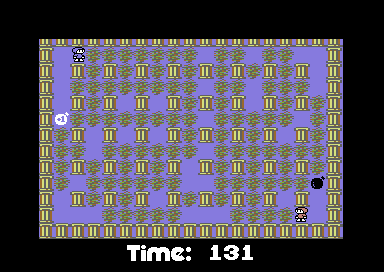
Bomb Mania understands why the Bomberman formula has lasted: putting down a bomb is easy, while surviving your own plan is not. You carve routes through destructible walls, grab upgrades, and attempt to trap rivals in the tight corridors left behind. A round can flip in seconds when one bomb opens a path, another blast reaches farther than expected, and suddenly there is nowhere safe to stand.
The ordinary upgrades—more bombs, longer blast range, and extra speed—create the expected escalation, but the kick and remote-bomb extras are where matches get mischievous. Kicking a bomb lets you turn a blocked lane into a moving threat, while R-bombs reward patience and timing because you can set several traps off together. These tools are simple enough to understand immediately, yet they give experienced opponents plenty of ways to fake you out.
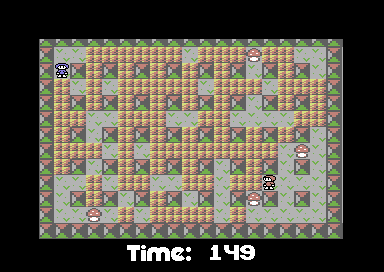
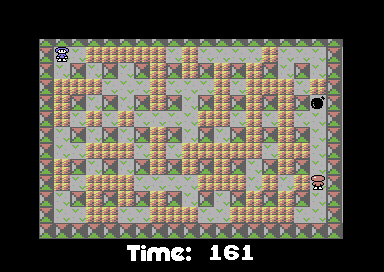
The eight level types are more than a change of backdrop. Under Pressure steadily bricks up the arena and pushes everyone toward a final confrontation; Night Shift makes occasional flashes of light precious; Mushroom Party can turn one careless detonation into a huge chain reaction. Ghost Attack, Hide and Seek, Kick It, and the wildly overpowered Crazy! mode each bend the familiar routine in a different direction. That keeps repeat sessions from settling into the same cautious opening every time.
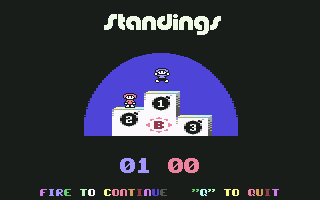
The focus is unapologetically on local competition. The open-ended sequence cycles back to the first level after the eighth, with a podium tracking the standings between rounds, so it works best as a running score battle rather than a game you finish once. With four participants, enabled by the 4JOY adaptor, it has the right kind of crowd energy: laughter after mistakes, arguments over who caused a chain reaction, and a constant demand for one more round. Smaller groups still get the core maze duel, but the main event is clearly four-player chaos.
Graphics
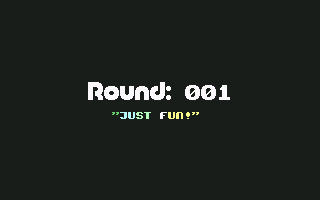
Bomb Mania uses a top-down maze view built for watching bombs, walls, pickups, and opponents occupy the same cramped grid. The clearest visual flourish comes from Night Shift, where darkness covers the arena and brief flashes reveal the action. The between-round podium also gives the ongoing score contest a welcome bit of ceremony.
Story
There is no narrative detour between the bombs and the bragging rights. You are dropped into a succession of competitive arenas, and the only meaningful drama is who reaches the podium ahead of everyone else.
That suits the game. A story would only interrupt the rapid loop of learning a stage rule, getting blown up by it, and returning with a better idea. Bomb Mania finds its personality in match anecdotes instead: the remote bomb somebody forgot about, the mushrooms that carried a blast across the maze, or the closing walls that forced a panicked final charge.
The level names do a little of the scene-setting work. They tell you whether to expect a straightforward warm-up, a darkened scramble, or an arena already loaded for destruction. It is a thin framework, but it is exactly enough for a competitive arcade game built around replaying rounds.
Overall Experience
Bomb Mania is a confident spin on a proven party-game setup, and its strength is not novelty for novelty’s sake. It takes the familiar bomb-maze contest and gives it enough stage-specific complications to make you alter your habits. The best rounds balance deliberate trap-setting with outright panic, especially once movement speed, blast range, and bomb counts start climbing.
Frustration is part of the bargain. Tight corridors and expanding explosions mean a single poor placement can kill you before you have time to correct it, while darkness, pipes, and chain reactions can make the arena feel wonderfully cruel. If you want a measured solo challenge, that volatility may wear thin. If you enjoy competitive games where a bad decision becomes everyone’s favorite joke, it is the point.
Give Bomb Mania a chance if you can gather rivals around one machine and make use of its four-player setup. Its fundamentals are instantly legible, its special stages prevent the formula from becoming stale, and its open-ended structure invites a long session rather than a quick look. It does not need a complicated premise: with four people chasing the last safe square on the board, the payoff is already there.


Reviews
There are no reviews yet.