 Retro Replay Retro Gaming History, Reviews & Emulation

Retro Replay Review
Gameplay
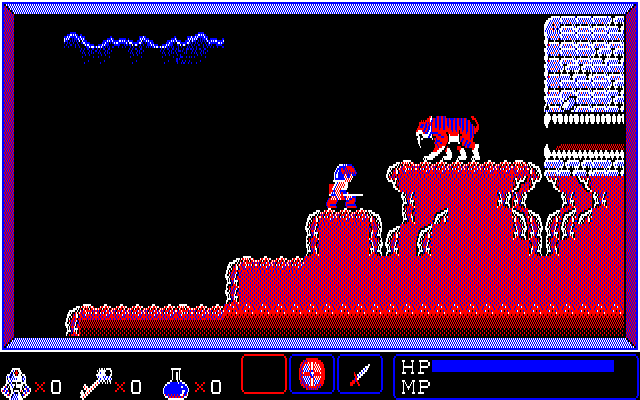
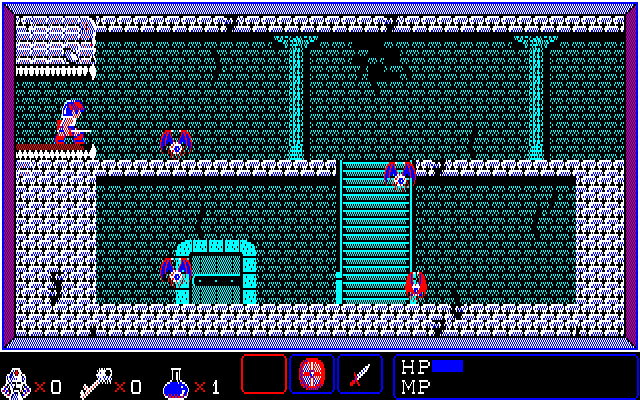
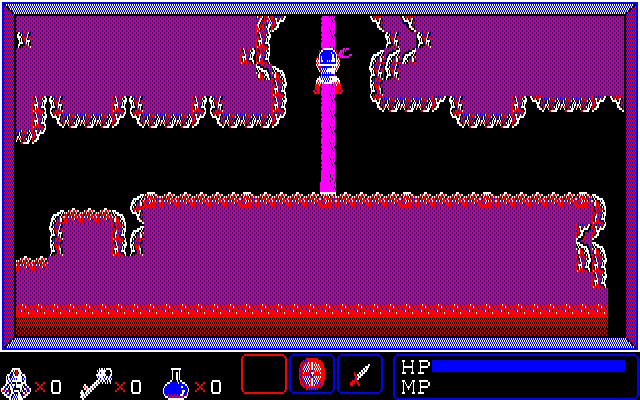
The first hour of Curse of Babylon is spent learning that movement is almost everything. You travel through connected side-view rooms, climb shafts, drop into lower routes, and make jumps over gaps while trying to work out which passages lead to treasure, which lead to trouble, and which are simply blocked for later. That loose structure gives the adventure a welcome sense of discovery rather than funneling you down one obvious path.
Combat is the part you will either learn to enjoy or wrestle with all the way through. Since the jump button doubles as your attack, you do not stand still and trade blows; you gain momentum and keep bumping into enemies. It is an awkward idea on paper, and it can be awkward in practice when an enemy gets in your way during a jump. But once the rhythm clicks, fights become a test of positioning and persistence rather than simple button mashing.
There are no experience points to grind and no money to stockpile, which makes each useful find feel direct. Enemies can leave healing potions, weapons, and armor, while treasure rooms offer another reason to look down every branch. Progress comes from better gear, keys, and knowledge of the maze. The downside is that stronger enemies and sealed-off routes can force you to retreat and search elsewhere, so patience matters as much as reflexes.
Graphics
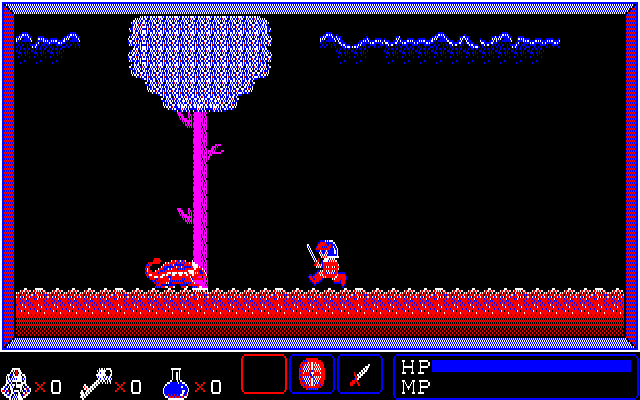
The game uses side-view screens built around practical terrain: ledges, vertical shafts, chasms, treasure rooms, and the monsters standing between you and the next route. That layout makes the platforming concerns immediately clear, even when the larger maze sends you in circles.
Story
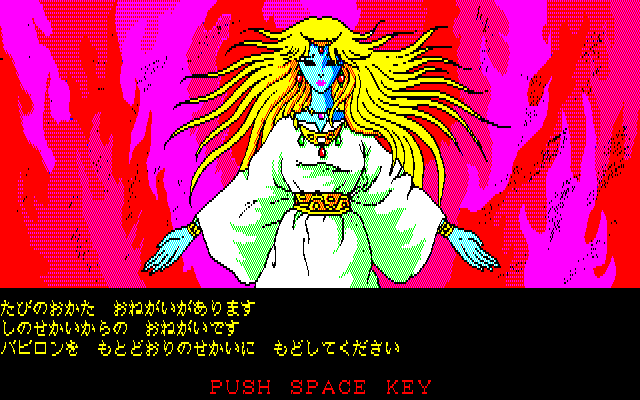
Its setup is clean, grim fantasy: Babylon was prosperous, monsters arrived, and the population was wiped out. Now one adventurer enters the forbidden enclosed land to destroy the evil left behind. It is a sturdy excuse to head into danger, loot abandoned rooms, and keep pressing into places no one else will enter.
Do not come expecting a heavily developed tale. The story works more as a frame around the exploration than as a constant companion. Babylon’s ruined status does give your solitary progress some weight, though; every key and stronger piece of equipment feels like another step into a place that has already lost.
That simplicity suits the game’s structure. Rather than interrupting the maze with elaborate plot business, Curse of Babylon lets its blocked passages, guarded areas, and scattered rewards tell you what kind of journey this is: a dangerous clean-up job in a land overrun by monsters.
Overall Experience
Curse of Babylon is a compellingly stubborn action game with light role-playing seasoning. Its open-ended exploration is the reason to play it. Being able to choose an area, hit a wall, then return after finding a key or tougher equipment creates a small but effective sense of adventuring on your own terms.
Its friction is real. The bump-based jumping attacks ask for adjustment, maze-like screens can make progress feel elusive, and backtracking is part of the bargain. If you need crisp, immediately intuitive combat or constant forward momentum, this can become frustrating before its strengths have time to settle in.
Stick with it if you enjoy old fantasy games that make you earn your route through the world. The payoff is not a sweeping role-playing system but the gradual mastery of an interconnected hostile space: you remember the shafts, the treasure rooms, the guards you could not beat earlier, and finally find a way through. That makes Curse of Babylon a worthwhile curiosity for patient Commodore 64 action-adventure fans.


Reviews
There are no reviews yet.