 Retro Replay Retro Replay gaming reviews, news, emulation, geek stuff and more!

Retro Replay Review
Gameplay
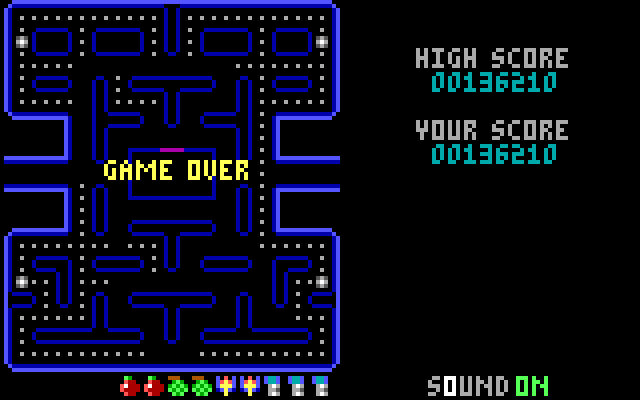
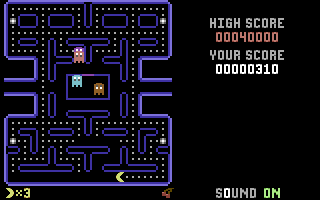
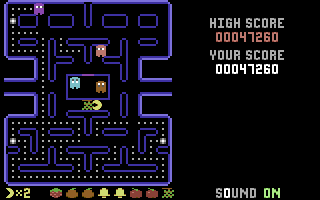
The first few minutes of Paku Paku are pleasingly direct. You enter a maze, start clearing dots, and almost immediately have to decide whether to finish a safe corridor or cut across the board before a ghost closes it off. That familiar Pac-Man pressure survives the conversion because the important stuff is still here: four pursuers, power pills that briefly let you eat them, and fruit bonuses tempting you to take your eyes off the immediate danger.
What starts to click is that this is not simply a dot-collecting exercise. The ghosts retain distinct behavior and personalities adapted from the arcade game, so you cannot treat every encounter as identical. Learning when to retreat, when to commit to a route, and when a power pill can turn a bad position into a profitable one gives the game its staying power. The smaller, lower-resolution grid changes the shape of that knowledge without abandoning the original game’s logic.
Frustration can set in exactly where it should in a Pac-Man game: after you get greedy for a fruit, misread a ghost’s route, or assume a corridor is safe one second too long. That sting is part of the point. Paku Paku does not need to reinvent the arcade formula; it earns its time by preserving the tense, repeatable decisions that made the formula endure, then fitting them onto exceptionally old PC hardware.
Graphics
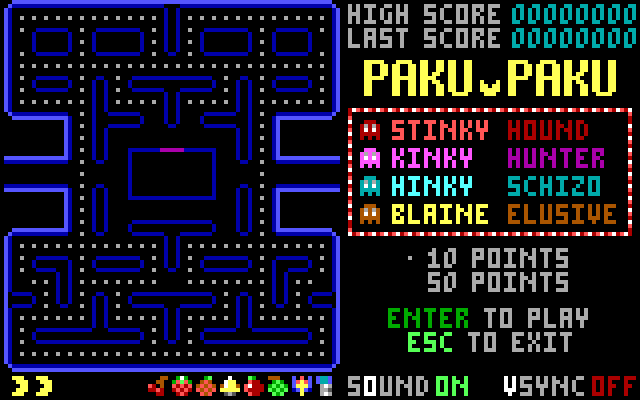
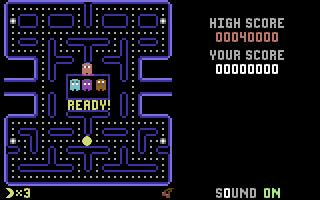
Paku Paku was built around 16-color CGA graphics in an unofficial low-resolution mode, and its sprites and animations are shaped by that constraint. The maze, dots, ghosts, and fruit are reduced to chunky essentials, but the action remains easy to parse because every moving piece has a clear purpose on the board.
Story
There is no elaborate plot pulling you through Paku Paku, and that is faithful to its arcade roots. The entire dramatic setup is in the chase: clear the maze, stay alive, and turn the hunted ghosts into targets when you grab a power pill.
Fruit bonuses add tiny flashes of temptation rather than narrative detours. They matter because they ask whether you can afford to chase points while the ghosts continue to patrol the maze.
That stripped-back premise suits the game. Each round tells its own miniature story of a route that looked clever, a close escape that bought you time, or a single bad turn that ended the run.
Overall Experience
Paku Paku is worth playing because it treats a hardware experiment like a real arcade game, not a museum demonstration. Its origins in a CGA programming challenge are impressive, but the lasting reason to load it up is the care put into the maze chase, ghost behavior, and faithful moment-to-moment tension.
You should give it a chance if you like Pac-Man enough to notice the value of a thoughtful conversion, or if you enjoy seeing how much game can be coaxed from early IBM PC-compatible hardware. The free Cardware release and public-domain Turbo Pascal and assembly sources also make it a particularly welcoming artifact for curious retro players and programmers.
It will not convert anyone who finds Pac-Man’s loop too simple or too punishing. For everyone else, Paku Paku is a compact, respectful adaptation with a satisfying answer to a very specific question: can this classic arcade chase still work on a machine from the earliest days of PC gaming? Yes—and it works better than the premise might suggest.


Reviews
There are no reviews yet.