 Retro Replay Retro Replay gaming reviews, news, emulation, geek stuff and more!


Retro Replay Review
Gameplay
Plazma Ball starts by changing what “football game” means at the controller. Instead of snapping into a play and reacting in real time, you have the breathing room to assess all eleven athletes on the field. In a round, you may move anywhere from none of them to all of them, then use blocks or prepare a throw when you have possession. It is a deliberately measured rhythm, and that is its strongest quality.
The first few turns are likely to feel unusually open-ended. Having so many possible movements can make a simple advance look like a puzzle with too many answers. Stick with it. The structure starts to click once you stop treating every athlete as someone who must act immediately and begin using the turn to shape space: hold a position, line up a block, or move several bodies to make a later throw more attractive.
Statistics govern throwing attempts and fights, which gives the game a welcome layer of consequence. A risky pass or confrontation is not simply a test of timing; it is a decision to take a calculated chance with the athletes you have. That can frustrate anyone who wants total control over every outcome, but it is also what makes squad planning matter from one match to the next.
Pre-match placement within a 50-yard radius adds another tactical phase before the action begins. You are not merely handed a starting formation and told to adapt. You can establish the shape you want, then spend the match trying to make that initial idea pay off. The two-player option is especially fitting here, since another human can answer a careful setup with an equally careful counter.
Graphics
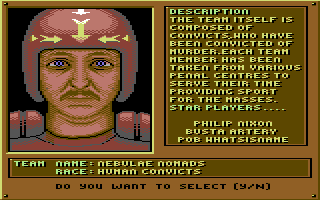
The action uses a top-down, fixed-screen view, putting the emphasis on the field and the placement of individual athletes. That angle suits a turn-based sport well: you can take in the positions of both sides before committing to a sequence of moves.

Story
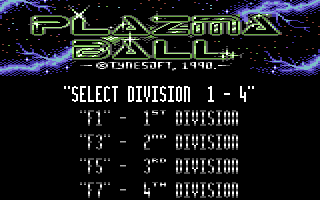
Plazma Ball finds its drama in league competition rather than in a scripted tale. You take a team into a four-division league, with four teams in each division, and the continuing campaign gives individual matches a reason to matter beyond a one-off tactical exercise.
The sci-fi setting changes the flavor of the sport without displacing its competitive core. The important story is the one you create through a season: whether your team’s statistical strengths carry it through difficult encounters, and whether the plans that looked smart before a match survive contact with an opponent.
That makes the game’s narrative payoff personal and sporting. A successful throw, a decisive block, or a well-judged deployment can become part of your own account of a league run. If you need authored characters and plot turns, this is not where the game puts its weight; its stakes come from results and rival teams.
Overall Experience
Plazma Ball is an intriguing hybrid for gamers who enjoy the geometry and patience of turn-based tactics but want it attached to a recognizably American-football-shaped contest. Its willingness to let you move an entire side in one round creates a broader tactical canvas than a standard sports game, while blocks, passes, and athlete statistics keep that freedom tied to meaningful risk.
The main hurdle is also the point. This is not a quick, instinctive football game; you need to enjoy pausing over formations and accepting that a statistically resolved play can go against you. If that sounds like friction rather than fun, the methodical pace may wear thin. If you like thinking several moves ahead, it gives every possession more weight.
The league structure and support for two competing team controllers make the investment easier to justify. Solo, it offers a season-long reason to sharpen your approach. With another person, it becomes a tense contest of deployments, nerve, and competing reads of the field. It is a niche idea, but a smart one: tactical sports fans should give it a serious look.


Reviews
There are no reviews yet.