 Retro Replay Retro Gaming History, Reviews & Emulation
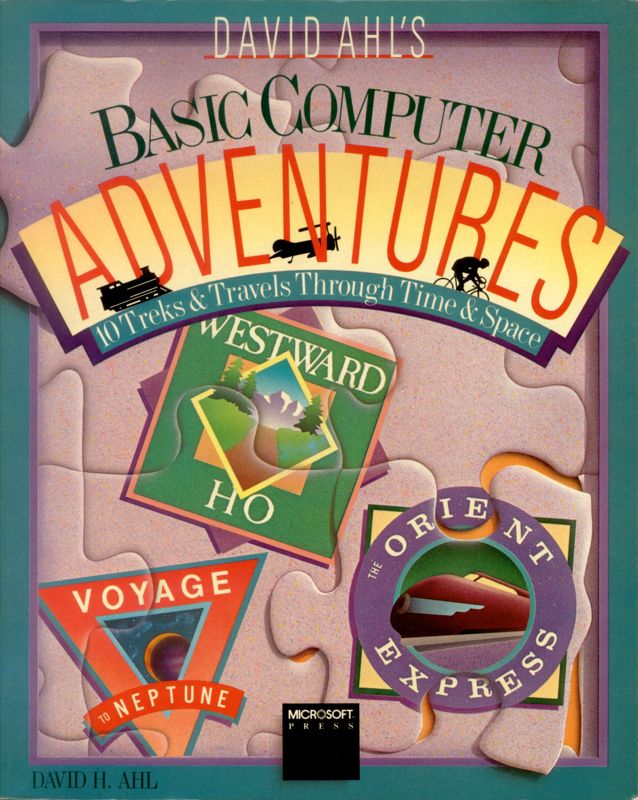
Retro Replay Review
Gameplay
The first hour works because you are never locked into one subject for long. If leading a wagon west in Westward Ho! does not grab you, there is a 1908 New York-to-Paris race, an around-the-world flight, a cycling tour, a train-bound mystery, a trek up the Appalachian Trail, and even a six-year mission to Neptune. That variety is more than a novelty: each scenario puts a different coat of paint on the same pleasingly tense question of whether you planned well enough to survive the next setback.
Most of the games put resource management at the center. You buy a wagon and supplies from a $420 starting budget in Westward Ho!; you must watch food and provisions on Marco Polo’s route; Amelia Earhart’s flight demands attention to weather, fuel, and aircraft maintenance. The best moments come when the information in front of you becomes a decision instead of flavor text. A weather report or a low supply count makes you stop, weigh the risk, and accept that a sensible plan can still be battered by snow, illness, accidents, or breakdowns.
That same unpredictability can become the collection’s biggest irritation. Hazards arrive from all directions: bandits, fires, bad water, rough terrain, derailed trains, track fires, equipment failures, and fatigue. There is a strong survival-game satisfaction in recovering from trouble, but you need to enjoy being tested by circumstances rather than feeling fully in command. Treat a failed run as a lesson in budgeting and preparation, not as a verdict on your skill, and these compact simulations are much easier to appreciate.
The standout strength is range. The Orient Express adds clue gathering and a murder case to its trip from London to Constantinople, while Hong Kong Hustle turns the pressure into a midnight escape after you gather fifteen bags of gold and jewels. Subway Scavenger is built around completing deliveries before quitting time. None of these ideas needs a huge ruleset to create momentum; a deadline, a route, and a few ugly surprises are often enough.
Graphics
This is a text-based collection, so the pictures are chiefly the ones you build in your head: a supply-starved caravan, a struggling Thomas Flyer, a damaged Lockheed Electra, or a long trail turning hostile with snow and rain. The focus stays on written situations, instructions, and choices rather than illustrated characters or scenic locations.
Story
Do not come in expecting one overarching tale. These are ten self-contained premises, and their stories exist to give practical stakes to the simulation. Crossing the Silk Road safely, reaching Oregon City, winning the Tour de France, making it to Maine before snow blocks New Hampshire, or getting a spaceship to Neptune all give your numbers and decisions a destination.
Several setups have more dramatic bite than the average travel simulation. The secret-agent assignment in The Orient Express asks you to contact an arms dealer and identify an associate’s killer, while Hong Kong Hustle begins with the threat of property confiscation and turns it into a race to escape the city. They are lean premises, but they give each obstacle a reason to matter beyond another random inconvenience.
The historical and quasi-historical subjects are also a smart fit for this format. Marco Polo, the Oregon Trail, the 1908 automobile race, Amelia Earhart’s flight attempt, and the Appalachian Trail all arrive with built-in stakes and a sense of distance. The writing does not need elaborate character arcs when the core drama is whether you can carry a group, vehicle, or expedition across a punishing route.
Overall Experience
David Ahl’s Basic Computer Adventures feels like a shelf of small, stern travel games from a time when a few lines of text and a difficult decision could carry an entire session. It is at its best when you settle into one trip, learn what can go wrong, and gradually make fewer wasteful choices. The tension is modest but real: every supply purchase and weather-informed decision can be the difference between reaching the next stage and limping out of a run.
The source-code inclusion gives the package a second reason to exist. You can play the games, read the notes, then inspect the BASIC behind them. For anyone curious about early game programming, that is more than a bonus; it makes the collection feel like both an anthology and an approachable workshop. For everyone else, it remains a set of concise simulations with enough variety to find a favorite.
Give it a chance if you enjoy old text games, historical journeys, and the stubborn pleasure of managing limited resources under pressure. You may bounce off the spare format or the harsh run of setbacks if you want polish and constant narrative momentum. But if a tense paragraph about weather, fuel, food, or a mechanical fault sounds like the start of a good evening, this bundle has a durable, quietly demanding charm.


Reviews
There are no reviews yet.