 Retro Replay Retro Gaming History, Reviews & Emulation
Retro Replay Review
Gameplay
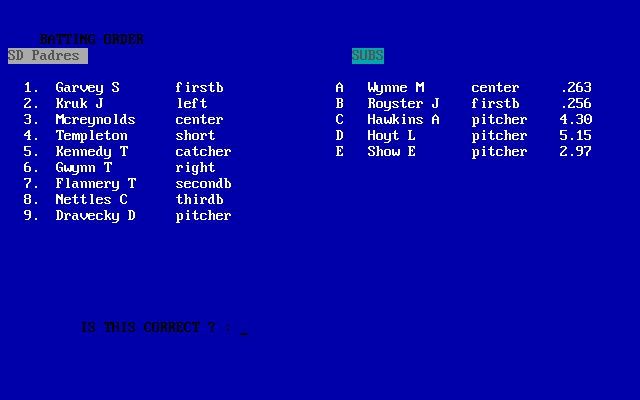
The first few minutes put you in the manager’s chair. You select one of the National or American League divisions, choose the two teams taking the field, decide who starts, arrange the batting order, and pick a pitcher. That pregame setup is the strongest invitation Digital League Baseball makes: before a ball is thrown, you have already made choices that feel recognizably baseball-minded.
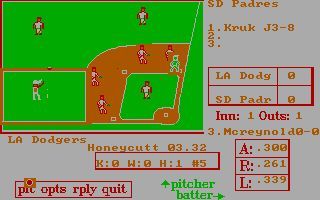
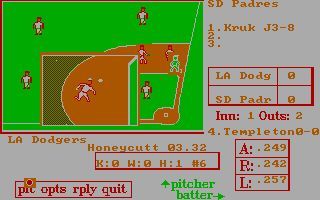
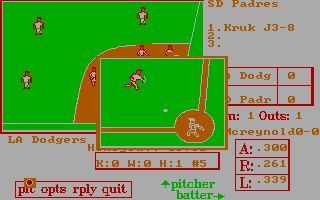
Once play begins, the game’s unusual structure takes over. A small window shows the pitcher delivering to the hitter; on contact, that window closes and another opens for the ball’s trip toward a fielder. A catch or throw can trigger yet another window at a base. It is not continuous baseball, and the interruptions will test your patience if you want to watch a play unfold naturally. Still, there is a certain charm in seeing each outcome handed off like a sequence of baseball cards coming to life.
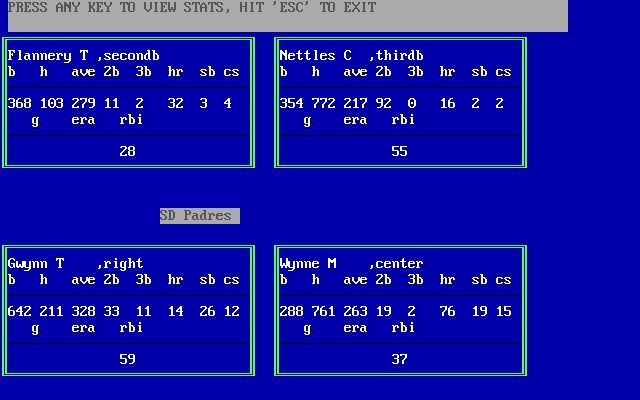
The useful decisions do not end with the lineup. You can change teams, bring in a new pitcher, call for a steal or bunt, and look at in-game statistics. Those options give the matches more texture than simply watching a simulation run. The game is at its best when you are reacting to the situation—nudging the contest with a substitution or a small-ball call—rather than treating the animated windows as the main attraction.
Its pace is the dividing line. The window-by-window approach makes each play easy to isolate, but it also turns baseball’s flow into a series of discrete results. If you enjoy old simulations where roster decisions and game-state choices carry the weight, that can start to click. If your ideal baseball game lives and dies by fluid fielding and action, the novelty wears thin quickly.
Graphics
The action appears in small windows over the main game area: first the pitch at the plate, then a separate view of the fielder, then another for a close play at a base. That fragmented layout is distinctive and makes the game’s individual baseball moments easy to identify, even if it cannot deliver the feeling of one uninterrupted field view.
Sound is equally spare, with a blip for contact and applause-like noise when a runner reaches home. It is basic feedback, but it does help punctuate the key results.
Story
There is no authored drama here; the story comes from the league you choose and the games you set in motion. Selecting opponents, constructing a batting order, and trusting a starting pitcher creates the familiar little stakes of a baseball matchup before the first pitch.
Each game writes its own modest sporting narrative through the decisions available to you. A changed pitcher, a bunt attempt, or a steal call can become the moment you remember from a match, especially when the next small action window reveals whether the gamble worked.
After the final out, the league table is the important coda. It places the completed game alongside the rest of the division and invites another matchup, turning single contests into a continuing schedule. That is enough context to make wins and losses feel connected, even though the focus remains squarely on the baseball simulation.
Overall Experience
Digital League Baseball is an inventive, plainly dated baseball simulation whose best idea is also its biggest limitation. The pop-up action windows are a memorable workaround for modest hardware, and they give the game an identity beyond a dry set of results. But they also make the sport feel chopped into pieces.
Give it a chance if you enjoy DOS-era sports games for their managerial decisions and their resourceful design. The league selection, lineup building, pitcher changes, tactical calls, stats, and standings provide enough structure to reward a patient baseball fan. You are participating in the contest rather than merely picking teams and waiting for a score.
For most modern baseball fans, this is more interesting as a historical oddity than an everyday diamond destination. The payoff is real if you can meet it on its own terms: a compact single-player simulation where every play arrives as a tiny scene and every decision is simple, direct, and legible. It is modest, but not thoughtless.


Reviews
There are no reviews yet.