 Retro Replay Retro Gaming History, Reviews & Emulation
Retro Replay Review
Gameplay
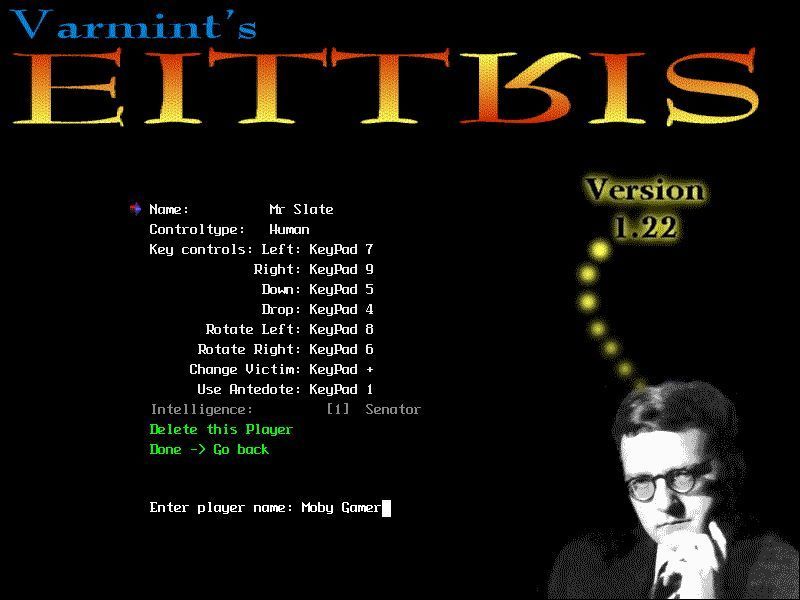
Varmint’s Eittris gets to the point quickly: blocks fall, you work the keyboard, and every bad placement makes the next decision more uncomfortable. That directness is a strength. In the first hour, you can simply chase clears and learn the pace, while the customizable action keys let you put the important inputs where your hands expect them. For a DOS puzzle game played entirely on the keyboard, that flexibility matters more than it might sound.
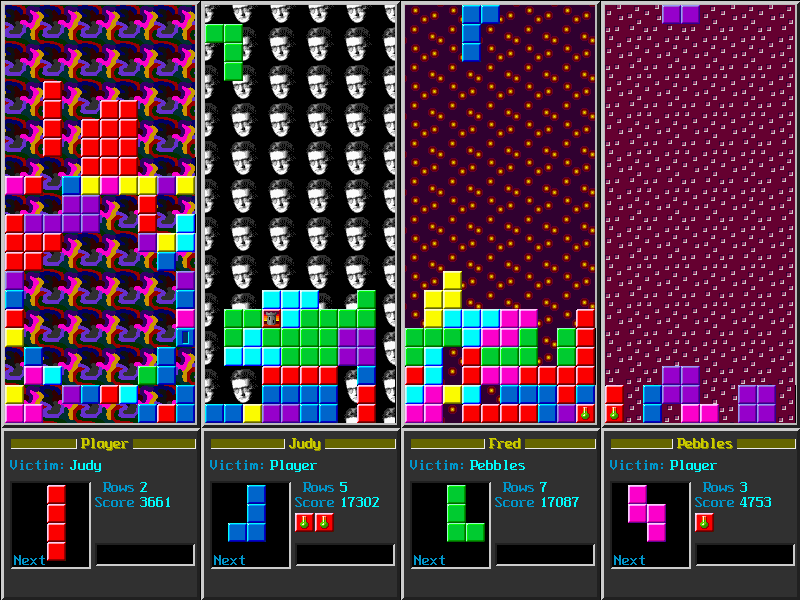
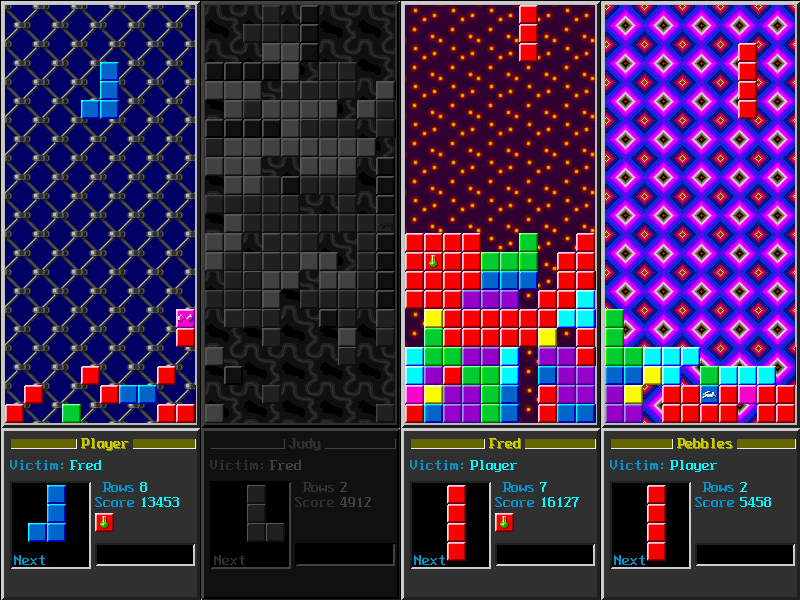
The special blocks are what lift it above a routine solo score attack. Clear the row holding one and you capture it; in competitive games, activating one affects your assigned victim. That specific target relationship adds a nice wrinkle to four-player matches. You are not just trying to survive longer than everyone else: you are deciding when a clear is worth making and when a special block is worth saving for the person in your sights.
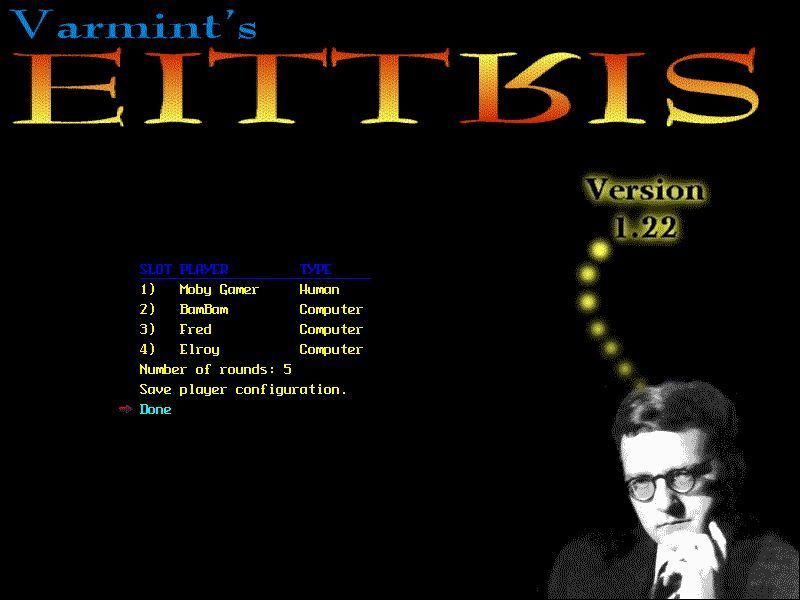
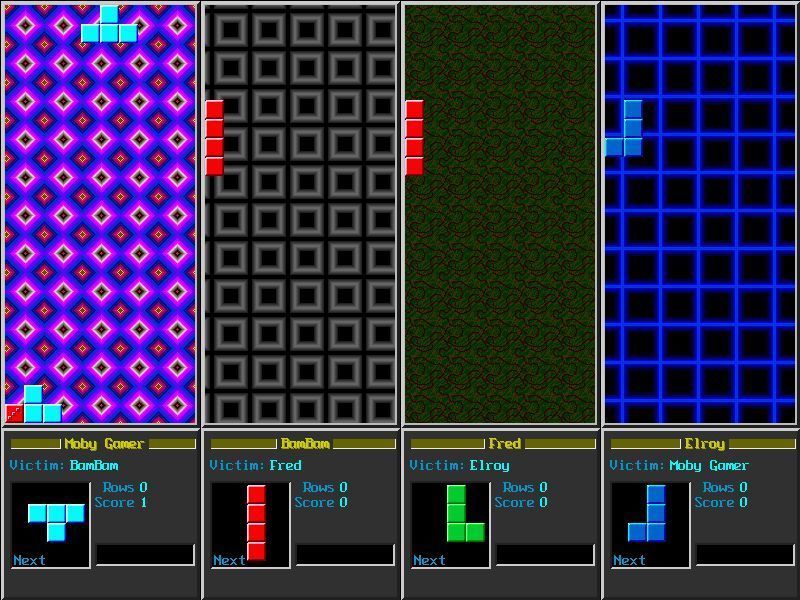
Up to four humans or computer opponents can play simultaneously, which is where the game has its strongest hook. The competitive format should suit a small group willing to share a keyboard setup and accept that things can become hectic fast. Solo-minded puzzle fans can still chase the high-score table, but the targeted special-block attacks are the reason to bring opponents into the mix. Frustration will set in if you want a relaxed, contemplative block game; Eittris works better when you enjoy responding under pressure.
Graphics
The action stays on fixed, side-view puzzle screens built around the falling blocks and their rows. That simple view keeps the important information in front of you, especially when a special block is sitting in a row you want to clear.
Story
Varmint’s Eittris is not asking you to invest in characters or plot. Its drama comes from the board: a clean row at the right moment, a special block waiting to be claimed, and an opponent becoming your designated victim.
That makes each match feel like a short competitive anecdote rather than a chapter in a larger tale. You remember the collapse that ended your run or the well-timed activation that hurt the right rival, not a scripted event between rounds.
It is a good fit for the format. A falling-block game benefits from getting you back into the next round quickly, and the score table gives those brief sessions a reason to matter beyond a single match.
Overall Experience
This is a sturdy little freeware puzzle game with a sharper competitive streak than its basic falling-block setup first suggests. Once special blocks and assigned victims enter the picture, clearing lines becomes more than housekeeping. You begin weighing your own safety against the chance to disrupt someone else, and that tension is the payoff.
The game is worth trying if you like keyboard-driven DOS puzzlers and have any interest in local competitive play with computer opponents filling open slots. Its soundtrack and score table round out the old-school package without distracting from the board. The verification code is now more of a historical leftover than a useful online feature, but it does not hurt the immediate game.
Go in for brisk rounds, not a sprawling puzzle epic. Varmint’s Eittris earns its recommendation through uncomplicated controls, multiplayer chaos, and the satisfying little mind game created by its special blocks. It may not replace a favorite falling-block classic, but it has enough of its own competitive personality to justify a few more matches.


Reviews
There are no reviews yet.