 Retro Replay Retro Replay gaming reviews, news, emulation, geek stuff and more!

Retro Replay Review
Gameplay
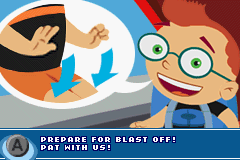
The first few minutes tell you exactly who Disney’s Little Einsteins is for. Before Rocket can leave, you tap along with the music to power the launch. That is a smart, welcoming hook for its intended young audience: it asks for participation without dumping a complicated rulebook in your lap, and it makes the music feel like part of the mission rather than background noise.
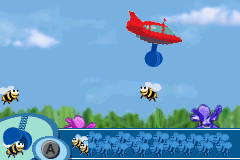
Each of the seven missions is broken into three short sections, so the game keeps changing the kind of attention it wants from you. One moment you are steering Rocket through an obstacle course; another asks you to listen closely and identify what the music is directing you to find. The variety matters. It prevents the game from becoming one long string of identical button prompts, while still keeping every activity simple enough for a child to understand.
Easy and Hard are more meaningful than a token label here. Hard changes the button demands and requires extra effort to complete objectives, so it gives a child something to graduate toward after learning the basics. Start on Easy unless the player is already confident with handheld controls. The challenge is not likely to hold an experienced adult for long on its own, but sitting alongside a younger player and helping them hear the cue or guide Rocket is where the game makes the most sense.
Graphics
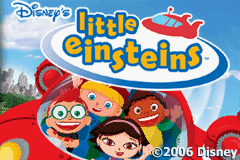
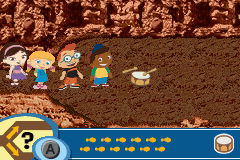
The game draws from the Little Einsteins world, centering its child heroes and Rocket, while each mission also incorporates a famous work of art. That combination fits the educational theme neatly: the artwork is part of the trip rather than an unrelated lesson wedged between stages.

Story
This is structured like the cartoon’s mission format rather than a sprawling handheld adventure. You join the Little Einsteins, get Rocket ready to go, and move through a series of compact missions. That familiar routine is useful for young fans because it makes each session easy to enter.
Classical music and famous art give each mission more character than a generic cartoon license would have had. The game does not need a dense plot to justify its progress; its purpose is to make the next destination, musical piece, and activity feel like the next stop on a Little Einsteins outing.
Adults hoping for a story with surprises or dramatic momentum will find the framework slight. For a child who knows the show, though, that predictability is a strength. They are not being asked to decode a complicated narrative before they can enjoy helping Rocket and the team move forward.
Overall Experience
Disney’s Little Einsteins understands its audience unusually well. It turns the show’s mix of participation, music, and art into brief GBA activities instead of forcing a conventional action game onto characters meant for preschoolers. The result is modest but focused, and the short mission sections suit a child’s attention span far better than an overlong campaign would.
Frustration can set in if you expect depth beyond its educational mini-game structure. Rocket steering and listening tasks are the sort of activities that work because they are clear and approachable, not because they build into elaborate mastery. Hard mode adds some replay value, but it does not transform the game into something aimed at veteran players.
Give it a chance if you are looking for a friendly first Game Boy Advance game for a Little Einsteins fan, especially one who likes tapping to music and recognizing visual art. It is not a broad all-ages classic, yet it earns its place as a thoughtful companion for the show: a small, structured adventure that invites kids to listen, look, and take part.


Reviews
There are no reviews yet.