 Retro Replay Retro Replay gaming reviews, news, emulation, geek stuff and more!
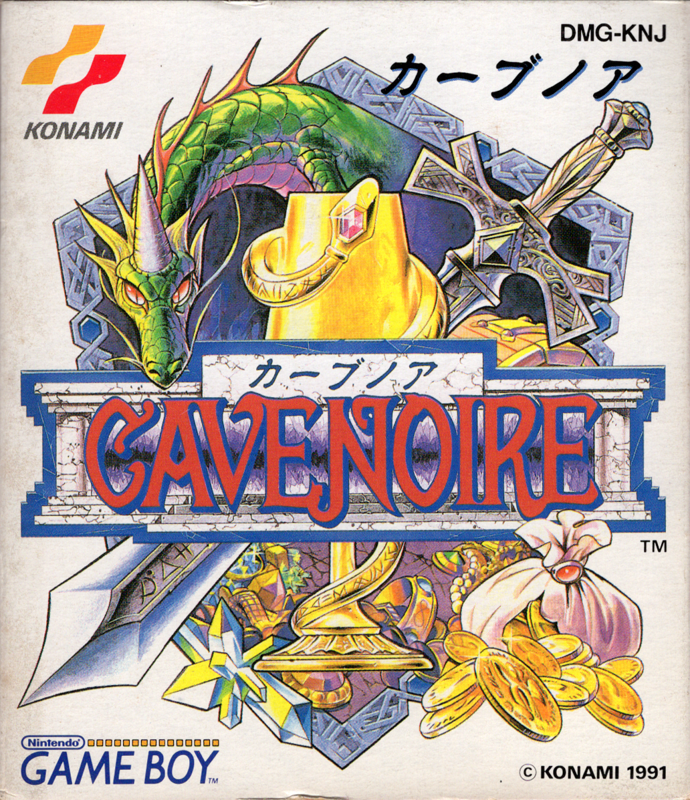

Retro Replay Review
Gameplay
The first few minutes of Cave Noire make a strong case for the one-more-run loop. You select one of four focused objectives, enter a newly generated dungeon, and immediately have a clear reason to push forward. A low difficulty quest lets you get your bearings, but the structure is never casual: death ends that attempt and sends you back to generate a new dungeon. Clearing a level unlocks the next difficulty, so even a small victory has tangible value.
What makes the game more deliberate than a simple scramble through corridors is its four-part turn sequence. You move, then your attack resolves, then enemies attack, then enemies move. Since attacks only happen from adjacent squares and their results draw on attack, defense, luck, and randomness, every step beside a monster is a decision rather than a reflex test. You can plan around the order of events, but you cannot fully plan away danger; a poor exchange can still leave your health in a bad place.
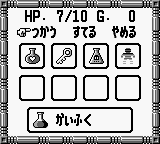
Items are where a run begins to open up. Weapons and armor improve core stats, while potions, spells, and rings can restore health, cure poison, hit hard, or make you invisible. That variety gives you reasons to inspect what the dungeon offers instead of treating every room as a straight path to the objective. The catch is that the goal remains urgent. Stockpiling safety means little if you fail to collect enough gold or orbs, kill the required monsters, or free the needed fairies.
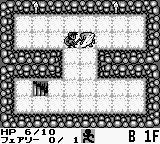
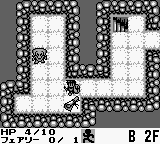
The dungeon itself is an active threat, not merely a backdrop for combat. Pits can drop you to a lower floor and hurt you, lava punishes contact, teleporters can disrupt your route, and breakable walls may offer a way through. Fog-covered rooms hide floor tiles until you enter them, although monsters remain visible, which creates a nasty kind of partial information: you can see a threat without knowing the ground between you and it. Even enemy kills can reshape a room’s information, with one monster clearing it and another obscuring it. Frustration arrives when a run collapses after several careful turns, but that same volatility gives successful runs their bite.
Graphics
The Game Boy view is straightforward top-down dungeon crawling: your hero, walls, floor tiles, monsters, and pickups occupy compact rooms built for quick scanning. Fog hides the floor while leaving monsters visible, a simple visual choice that makes uncertain rooms immediately tense. It is a functional, uncluttered look that suits a game asking you to count spaces and judge adjacency constantly.
Story
Cave Noire does not lean on a long dramatic setup; its fantasy framing comes through the jobs you undertake. One trip might be about killing monsters, the next about freeing fairies, then gathering gold or orbs. That narrow focus works because every quest gives the dungeon crawl a concrete finish line.
The escalating difficulty supplies the sense of progression. Higher levels ask for bigger target numbers, alter your starting statistics, and introduce different monster challenges. Rather than following a character arc, you build your own little survival stories: the run where a ring saved a bad fight, the route ruined by a pit, or the final objective reached with almost nothing left.
That spare approach will either feel clean or thin depending on what you want from an RPG. Come for dungeon problem-solving and self-made tales, not for a heavily authored fantasy narrative. For basic background on its place in Game Boy history, see Cave Noire’s release information.
Overall Experience
Cave Noire is compelling because it strips the roguelike down to short, sharp assignments without stripping away the consequences. Every quest has a defined purpose, every difficulty cleared opens another rung, and every dungeon must be earned from scratch. That makes it easy to return to, especially when you want a tense tactical run rather than a sprawling campaign.
Its harshest quality is also its defining one: the game only saves unlocked difficulty, not a promising expedition. Statistical combat includes randomness, environmental hazards can upend a route, and zero health means starting again in a different dungeon. You need to be comfortable treating failure as instruction, because Cave Noire rarely cushions a mistake.
The payoff is worth it for gamers who enjoy turn-based roguelikes at their most concise. Once you understand how movement, adjacency, items, fog, and hazardous terrain interact, the small dungeons become surprisingly knotty tactical spaces. Cave Noire is not generous, but it is focused, replayable, and satisfying when careful judgment finally carries a run over the line.



Reviews
There are no reviews yet.