 Retro Replay Retro Gaming History, Reviews & Emulation
Retro Replay Review
Gameplay
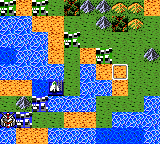
The first hour pulls you in with a clean, understandable objective loop. You move a small force across maps set in space, the atmosphere, or on a planet’s surface, trying to occupy key points and factories before the opposition does. That is familiar territory for turn-based strategy, but it works because every captured factory changes what you can bring into the fight. You are not merely trading units; you are trying to secure the means to replace them and expand your reach.
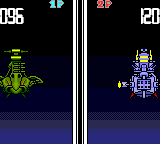
What starts to click is the division between map control and direct confrontation. Mobile-suit battles are one-on-one duels, and you may leave them to automatic resolution or manually control them. That option gives you a useful choice: keep the overall war moving when a skirmish is routine, or take responsibility when a crucial matchup is on the line. It also makes a mistake in positioning feel more personal, since an exposed unit can turn into a duel you now have to win.
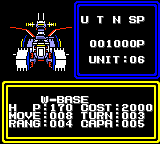
Larger spaceships add another layer by bombarding the enemy from a safer position. Used well, they let you soften opposition without throwing every robot into danger. The tension comes from balancing that long-range pressure against the need to physically claim objectives. Sitting back and firing is not enough if the other army is taking factories underneath you.
Frustration can set in if you want either half of the game to dominate. This is not a pure action game built around constant manual duels, nor is it a strategy game that entirely abstracts combat. Its rhythm asks you to accept both the deliberate turn structure and occasional hands-on fights. For the right mood, that hybrid is the point rather than a compromise.
Graphics
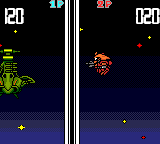
The game shifts between top-down strategic maps and side-view robot duels. That contrast gives the action battles a distinct change of pace from moving forces around the larger battlefield, while the SD Gundam format keeps the combatants compact and immediately recognizable as stylized machines rather than realistic military hardware.
Story
Winner’s History frames its conflict through a campaign of opposing robot armies rather than a detailed narrative premise. The story momentum comes from the succession of battles: each map is another contest for territory, production, and survival.
That makes the campaign a good fit if you prefer to create your own war stories from a hard-fought capture or a duel that unexpectedly turns a battle. The stakes are clearest on the field, where losing control of a factory has a direct consequence for what your army can do next.
There is also a straightforward competitive angle beyond the campaign. Single-map play lets you focus on one tactical problem, while a second player can turn the same territorial struggle into a more immediate test of planning and combat decisions. For another Gundam strategy detour, SD Gundam: Over Galaxian is a related entry in the series.
Overall Experience
SD Gundam Winner’s History earns its interest through the way it joins territory control, factory capture, unit production, ship bombardment, and optional manual duels. None of those ideas has to carry the whole game alone. Together, they make each advance feel like a decision about both the current fight and the army you will have a few turns later.
You should give it a chance if you like strategy games that stay small in scale but do not stay detached. The campaign and single-map options suit methodical solo play, while the versus mode is the stronger reason to return once you understand how much ground, production, and safe bombardment matter.
The payoff is best for Gundam fans who can enjoy a tactical contest without demanding that every encounter play the same way. Its action elements are not a distraction from strategy; they are the pressure valve that makes direct clashes matter. That blend gives this Game Gear game a sturdy, distinctive pull even when its pace asks for patience.


Reviews
There are no reviews yet.