 Retro Replay Retro Gaming History, Reviews & Emulation
Retro Replay Review
Gameplay
The village is a nasty place to learn that a closed door only buys a little time. Leon can hold a doorway, retreat through a building, or climb away from the crowd, but the villagers can follow him. They carry weapons, use ladders, and keep finding another approach. That makes the opening fight exciting in a way a corridor full of slow zombies rarely is: the danger keeps changing position, and a comfortable firing spot does not stay comfortable for long.
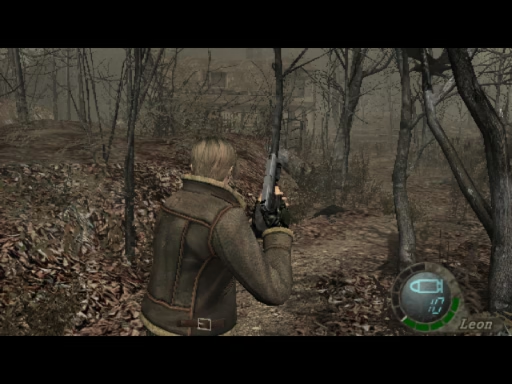
Aiming brings the camera close behind Leon’s shoulder and puts a laser sight on the target. A precise shot can create the opening for a kick, turning a single staggered enemy into a chance to push back the people around him. The weapons feel useful for different situations, so choosing what to equip matters as much as landing the shot. There is real satisfaction in interrupting an advance before it becomes a scramble.
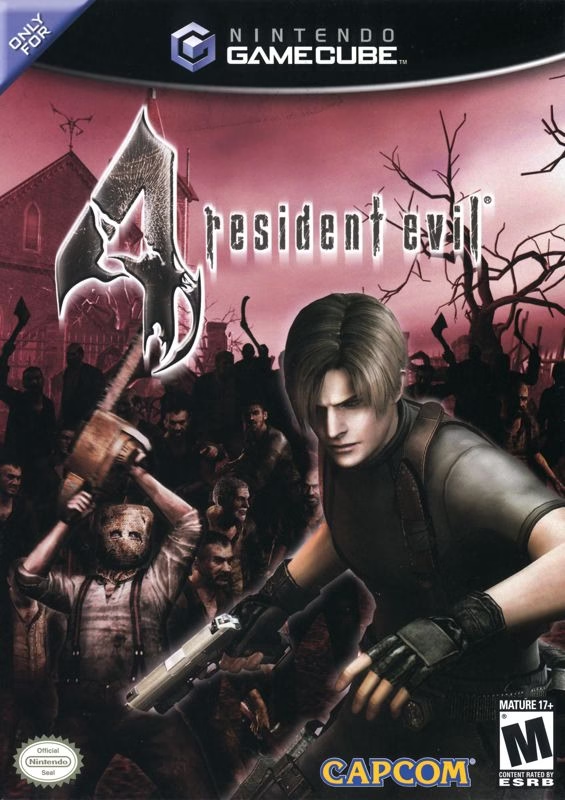
You have to stop moving to aim, which can feel restrictive if you arrive expecting to circle an enemy while firing. It works better once you start choosing where the fight should happen, then moving again before that position becomes a trap. The quick turn is especially useful when the crowd gets behind you. Capcom’s original GameCube manual covers that maneuver and the contextual attacks, both worth learning before trying to stand your ground.
Between fights, the attaché case gives your growing collection of weapons, ammunition, and healing items a pleasingly physical limit. Finding room for one more useful item can mean turning a weapon sideways and rearranging everything around it. Selling treasure and buying upgrades adds another small decision to the next stop at the Merchant. The fiddling can interrupt the pace, but it also makes the equipment feel like a collection you have chosen rather than an endless list of things to carry.
Graphics
The village gets a great deal out of muddy paths, rough wooden buildings, and people who look threatening before they come close enough to attack. Leon’s jacket and the villagers’ worn clothing fit the setting without making it look inviting. This is an ugly place in the useful sense: the scenery gives you plenty of reasons to want to leave.
The castle changes the view with stone halls, elaborate rooms, and robed figures that stand out against the architecture. The jump from rural buildings to these grand interiors gives the journey a welcome change of scenery. Enemies remain recognizable at a glance even when several are crowding into the same space.
Character animation does much of the work during a fight. A stagger, a fall, or an enemy climbing into view tells you something immediately, without taking away from the scene. Some close-up surfaces show their age, but the strong silhouettes and distinctive locations still give the original GameCube release a handsome, grimy character.
Story
Leon Kennedy has come a long way from the rookie caught in Resident Evil 2. Now working for the government, he travels to Europe to find the president’s kidnapped daughter, Ashley Graham. It is a clean setup that gets him into trouble quickly, without requiring a long explanation of every earlier outbreak.
Ashley gives the rescue a person to worry about once she joins Leon. Telling her to wait somewhere safe or follow you changes how you approach the next dangerous room. Having another life to protect can be tense in a good way, although an escort mistake is a more aggravating reason to retry than losing a straightforward fight.
The larger plot mixes grotesque threats with villains who enjoy talking and a hero who rarely misses a chance for a dry response. The combination is often funny, sometimes ridiculous, and well suited to a journey this packed with confrontations. Anyone hoping for a restrained horror story may find the theatrical streak too much, but Leon makes a likable guide through the nonsense.
Overall Experience
Resident Evil 4 is at its best when an ordinary-looking room becomes a problem you have to solve under pressure. A doorway, a ladder, and the space behind Leon suddenly matter because the enemies know how to use them too. The campaign keeps finding fresh places to put that combat, giving the weapons and movement restrictions enough different situations to stay interesting.
There are irritations. Button prompts can interrupt a scene you thought you were simply watching, escort failures can sting, and stopping to organize equipment is not always what you want during an urgent escape. The quieter, exploratory stretches of Resident Evil: Code: Veronica have also given way to a much more aggressive adventure. That shift is exciting, but it may not be what every longtime fan wants from the series.
For an action-horror game built around crowded fights, expressive enemies, and a memorable rescue mission, this original release remains an easy recommendation. It asks you to learn its particular rhythm rather than treating Leon like a modern shooter hero, and the adjustment pays off. The strongest moments come when you stop panicking, make one good shot, and finally find enough room to get out of the house.


Reviews
There are no reviews yet.