 Retro Replay Retro Gaming History, Reviews & Emulation
Retro Replay Review
Gameplay
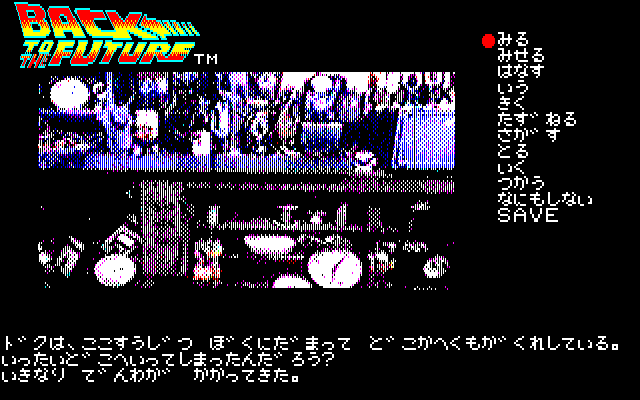
The first hour has the pleasant novelty of letting you inhabit Marty McFly rather than merely watch him. You move through the movie’s central predicament—stranded in the past and trying to bring his parents together—by picking commands from lists. Look, Say, Show, and Go give scenes the shape of an old-school adventure, and the familiar film setup helps you form a reasonable guess about what Marty ought to try next.
That initial goodwill runs into the game’s biggest problem: its solutions are often extremely narrow. A screen may offer several sensible verbs, yet only one moves the action forward. The issue is not that the game asks you to think through Marty’s situation; that would be welcome. It is that the choice list can turn progress into a search for the one accepted answer, even when other options sound perfectly plausible.
Decision scenes are harsher still. Marty may suggest an action and ask for a Yes or No response, or the game may give you several choices. Pick wrong and you can hit Game Over. That creates tension, but it also makes experimentation feel costly rather than clever. If you enjoy replaying short branches until you find the intended path, there is some period-appropriate charm here. If you want an adventure that rewards broad experimentation, this one can become irritating fast.
Graphics
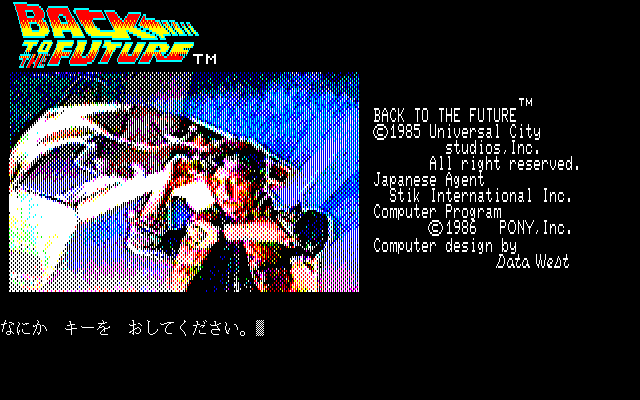
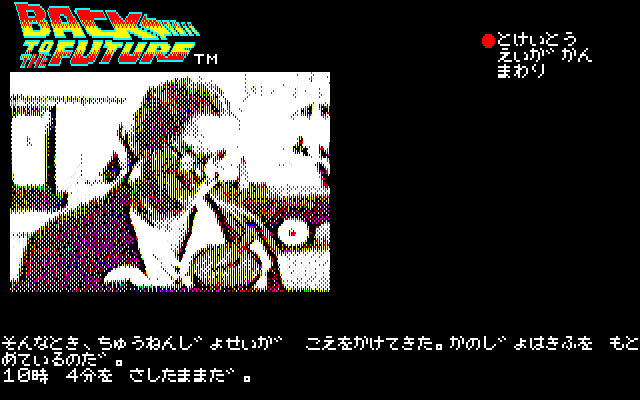
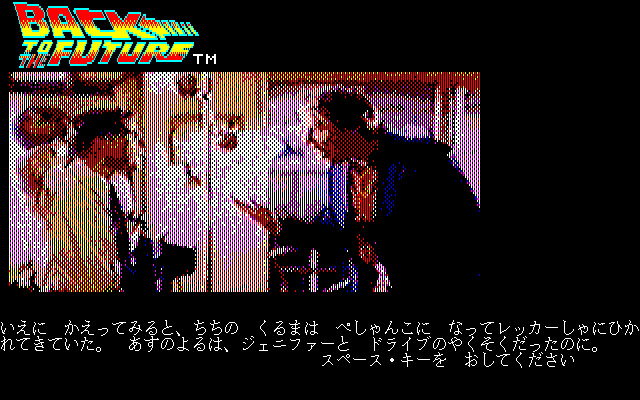
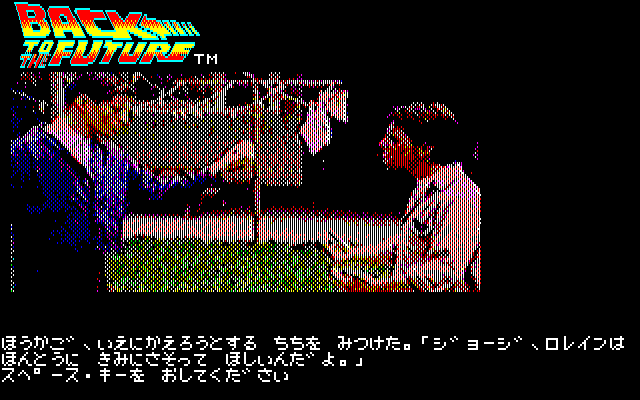
The game builds its scenes from digitized photos of the 1985 film’s original footage. Seeing Marty and the movie’s locations in these image-based screens is the clearest draw, especially for a 1986 MSX adaptation. They work more as snapshots guiding you through familiar moments than as richly animated scenes, but they give the game a direct connection to the film that drawn stand-ins would not have matched.
Story
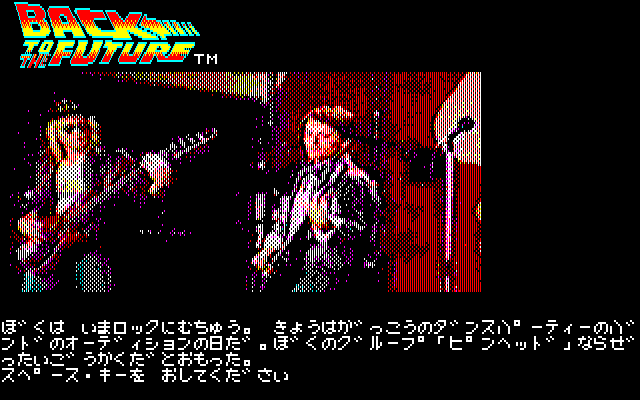
This is the film’s story in condensed form: Marty accidentally lands in the past, disrupts the path that brought his parents together, and has to help them fall in love before he can set things right. It remains a great adventure premise because every scene carries a simple, urgent question: what can Marty do now without making the situation worse?
The concise retelling is both a strength and a limitation. It gets you quickly to the important predicament and keeps the focus on Marty’s immediate goal, so you are rarely wondering what the game expects emotionally. At the same time, many movie scenes are absent, making the story feel more like a route through key checkpoints than a full interactive version of the film.
That makes prior affection for Back to the Future matter a lot. Fans can fill in the gaps and enjoy recognizing the major beats through the digitized images. Newcomers will understand the basic stakes, but they may find the compressed transitions and unforgiving choices less inviting. For another retro game based on the same time-travel favorite, see this related Back to the Future game.
Overall Experience
Back to the Future Adventure is most interesting as a very early, very specific attempt to turn a blockbuster into an MSX adventure. Its strongest moments come from the license itself: you know why Marty is desperate, you recognize the goal, and the photo-based scenes keep the game tied to the movie’s world. That immediate familiarity gives even simple command selections a little extra pull.
The trade-off is that the game asks for patience more than ingenuity. You will likely spend time testing verbs and choices, then restarting after a bad answer. Because the plot has been condensed, there is less room for the film’s scenes to breathe, and the strict progression can make you feel like you are being quizzed on the game’s preferred response rather than improvising as Marty.
Give it a chance if you are fond of 1980s Japanese-style adventures, MSX curiosities, or Back to the Future memorabilia in playable form. Everyone else should know what they are getting: a short, image-driven adaptation with a compelling premise and a stubbornly punitive interaction style. The nostalgia can carry it, but it does not fully smooth out the trial-and-error.



Reviews
There are no reviews yet.