 Retro Replay Retro Gaming History, Reviews & Emulation


Retro Replay Review
Gameplay
The first hour is about learning not to confuse movement with progress. You can produce units and vehicles, push them over hexes, and work toward occupying enemy major cities and harbors, but a bold line forward is only useful if you can sustain it. That familiar conquest loop is simple enough to grasp quickly and rich enough to punish careless expansion.
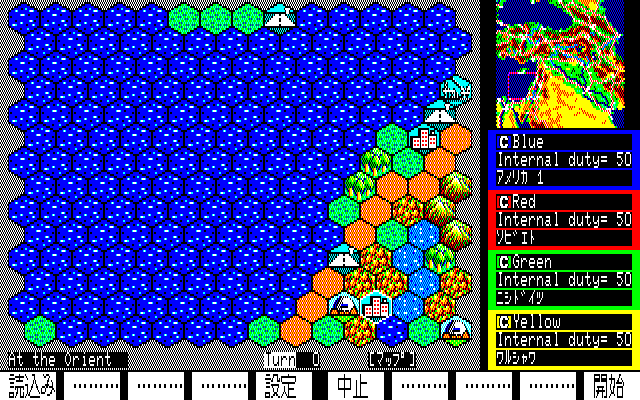
Four differently colored armies—blue, red, green, and yellow—can be controlled by human opponents or the computer, which gives the maps a welcome range. A one-on-one match asks for disciplined positioning; adding more sides makes every territorial gain feel less secure. You are not merely racing at an enemy: you are watching for the moment another army can profit from the hole you opened.
The hex grid is the heart of the game, and it makes the strategic stakes pleasantly plain. Cities and harbors are objectives worth fighting over, while unit production means territory has a practical value beyond the victory condition. The downside is that its pace is unapologetically methodical. If you need rapid tactical fireworks, the back-and-forth of building, moving, and gradually taking ground can test your patience. If you enjoy earning an advantage inch by inch, it is exactly the sort of friction that makes a win satisfying.

Graphics
The battlefield uses a top-down hex-based view, with armies separated by blue, red, green, and yellow colors. On TurboGrafx CD, battles receive full-screen sequences with backgrounds, a more elaborate break from the map than the standard field view.

Story
Campaign Version adds an introduction and background material about fictional countries at war. It gives the campaign a frame that the standalone battles do not necessarily need: you have a reason to regard the maps as chapters in a wider conflict rather than isolated puzzles.
Do not come here expecting the story to carry the experience. The conflict exists to set up military objectives, and the real drama comes from whether your advance reaches an enemy city before your own position crumbles. That is an honest fit for this kind of strategy game, though it will not satisfy anyone hoping for character-driven wartime storytelling.
The campaign is still worthwhile because it supplies momentum. A structured series of battles can make you more willing to learn from a failed plan, adjust your priorities, and take the next map more seriously. The included selection of additional maps, some modeled on real geographical areas, also helps the game feel broader than a single campaign run.
Overall Experience
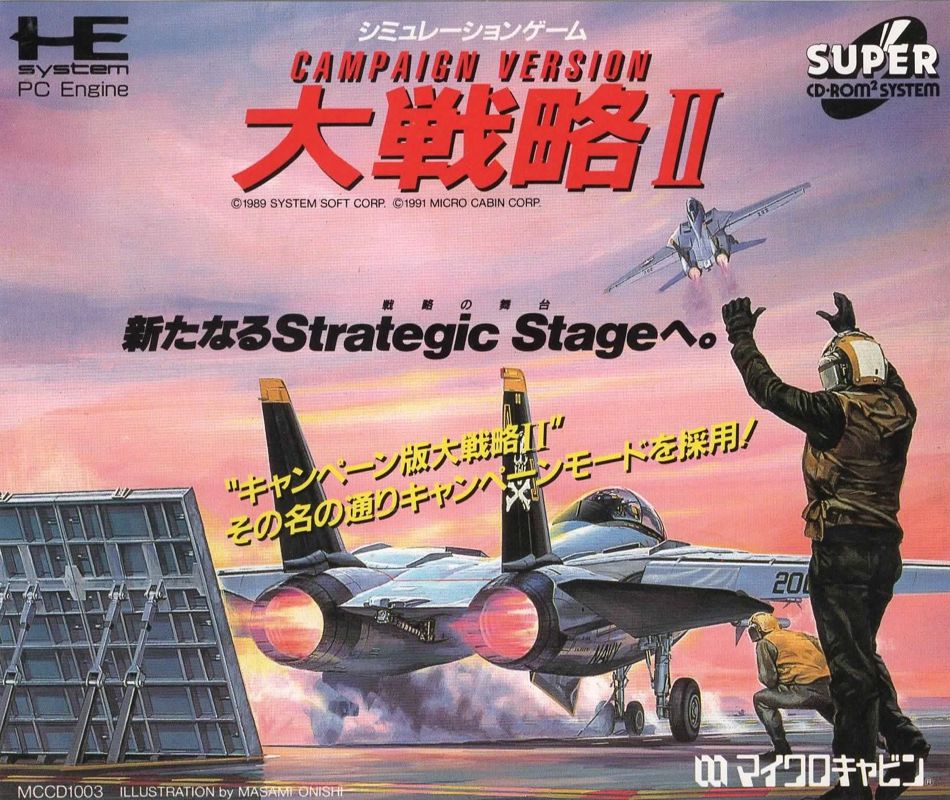
Daisenryaku II: Campaign Version is a sturdy, old-school war game built around territory, production, and patient positional play. Its strongest moments arrive when a city or harbor stops being a dot on the map and becomes the hinge of the whole war: hold it, and your plan lives; lose it, and every previous turn suddenly looks suspect.
It can be frustrating when a long plan fails, especially because its deliberate tempo makes each commitment feel expensive. Yet that same commitment is why the game has bite. You have time to think, but not much room to be careless, and the multiplayer or computer-controlled armies give the maps enough tension to reward repeat attempts.
Give it a chance if you want a focused hex wargame with a campaign wrapper and maps made for repeat play. Skip it if you need a story-heavy strategy game or a brisk, action-led pace. For the right kind of planner, its strict, territory-first battles still offer a compelling test of nerve and foresight.


Reviews
There are no reviews yet.