 Retro Replay Retro Replay gaming reviews, news, emulation, geek stuff and more!


Retro Replay Review
Gameplay
The first pull is straightforward and effective: Dino has someone to save, a curse may be involved, and the cure lies somewhere beyond the safety of his village. From there, Digan no Maseki asks you to think about the road as well as the next fight. Its menu-driven, turn-based battles and simple character growth are familiar ground, but hunger and tiredness put real pressure on longer excursions. Before setting out, buying enough rations matters.
The day/night cycle and purchasable horses push that same idea further. Horses offer faster travel, while the need to manage supplies means a trip is not just a line between towns on a map. It is a modestly more involved rhythm than a typical Japanese RPG of its era, and that extra preparation is the main reason to try it. If you enjoy packing for an expedition and making practical choices before leaving town, this has a distinct pull.
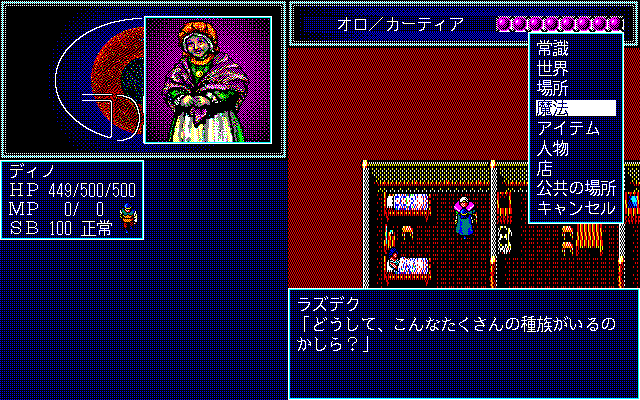
Conversation is where the Western influence sounds most promising. NPCs can discuss a range of subjects, from lore to everyday concerns, and the show command lets you present inventory items to hear what they think. You can also attack certain NPCs even when they are friendly. That freedom gives your decisions some bite, but it also means you should not treat every interaction as harmless background flavor. The game invites curiosity, then makes you responsible for where it leads.
Graphics
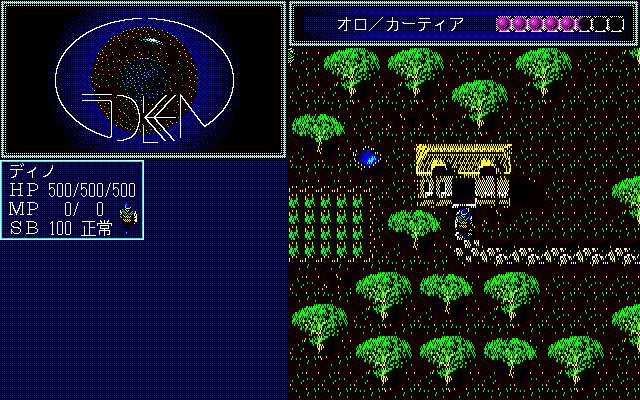
Digan no Maseki leans away from the familiar anime and manga look associated with many Japanese RPGs. Its fantasy world instead follows a more Western-styled visual direction, matching its interest in open conversation and practical travel systems.

Story
The story begins on Dino and Abiria’s wedding day in Kartia, a village in the country of Oro. Their visit to a sacred spring should be celebratory, but the goddess foresees pain and separation. That is an immediately ominous way to frame a newlywed couple, and it gives Dino’s quest a more personal charge than a generic call to adventure.
When Abiria soon falls ill, the local doctor suggests a magical curse, turning the prophecy into an urgent problem. Dino’s search for a cure in faraway lands is a classic fantasy setup, but the game wisely keeps the motivation close to home: he is not setting out for a throne, treasure, or abstract destiny. He is trying to save his wife.
That directness is the story’s strength. The premise does not need elaborate political intrigue to make the journey understandable. If you respond to earnest, personal stakes and a quest built around devotion rather than glory, Dino’s reason for leaving Kartia is easy to get behind.
Overall Experience
Digan no Maseki is most interesting as a meeting point between Japanese and Western role-playing traditions. The turn-based combat and growth system offer a recognizable framework, while supplies, fatigue, travel speed, conversation topics, item-showing, and broad freedom with NPCs make the world feel less tightly managed.
That combination will not suit everyone. If you want a frictionless RPG where travel is merely the gap between story scenes and battles, ration planning and fatigue can feel like chores. But if the idea of a journey having material costs sounds appealing, those same systems give the adventure texture and make preparation part of the game rather than dead time between destinations.
Give it a chance if you like vintage fantasy RPGs that let you poke at their world instead of just following its rails. Its strongest quality is not novelty for novelty’s sake; it is the way a simple, emotionally clear rescue quest sits beside systems that ask you to travel carefully, talk attentively, and accept the consequences of acting freely.


Reviews
There are no reviews yet.