 Retro Replay Retro Gaming History, Reviews & Emulation
Retro Replay Review
Gameplay
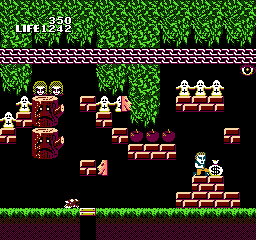
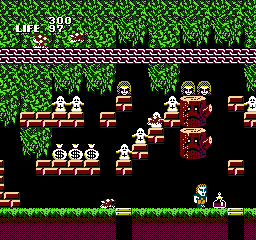
The opening minutes are brisk because Seikima II does not hide what it wants from you. Each area is a side-scrolling hunt for every visible pickup, with hostile enemies constantly interrupting your route. You can jump past them or fire back with a projectile, but neither option lets you relax for long: your health is draining even when you avoid a hit. That puts pressure on every detour and makes a missed item feel more costly than it should.
That pressure is the game’s most interesting idea and its biggest source of irritation. When you are weaving around attackers, grabbing the last few objects, and trying to preserve enough life to finish, the simple objective has real momentum. On the other hand, being forced to comb through seven collection stages before reaching a zone’s captive bandmate can become a wearying loop. The game asks for persistence more often than improvisation.
Moneybags give the scavenging a useful purpose, since shops trade your earnings for life potions, stronger weapons, and instruments for the rescued band members. Saving up can make the struggle feel less arbitrary, and a better weapon is a tangible reason to keep pushing forward. Practical advice: treat health recovery as the priority when your reserves are thin. The constant drain is not a background concern; it is the rule that defines the entire game.
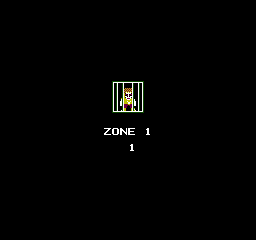
The rescue sequence at the end of each zone at least gives the item hunt a concrete payoff. After entering the eighth area, you must collect its objects and open caskets to produce the key that frees your bandmate. It is a straightforward structure, but it gives the game a finish line beyond merely surviving another hostile screen.
Graphics
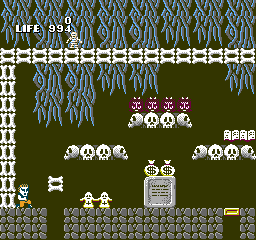
This is a 2D side-view scrolling game built around visible pickups, attacking enemies, shops, caskets, and caged bandmates. That focus suits the central task: you are meant to scan the stage, spot what remains to be collected, and keep moving before enemies and the life drain wear you down.
Story
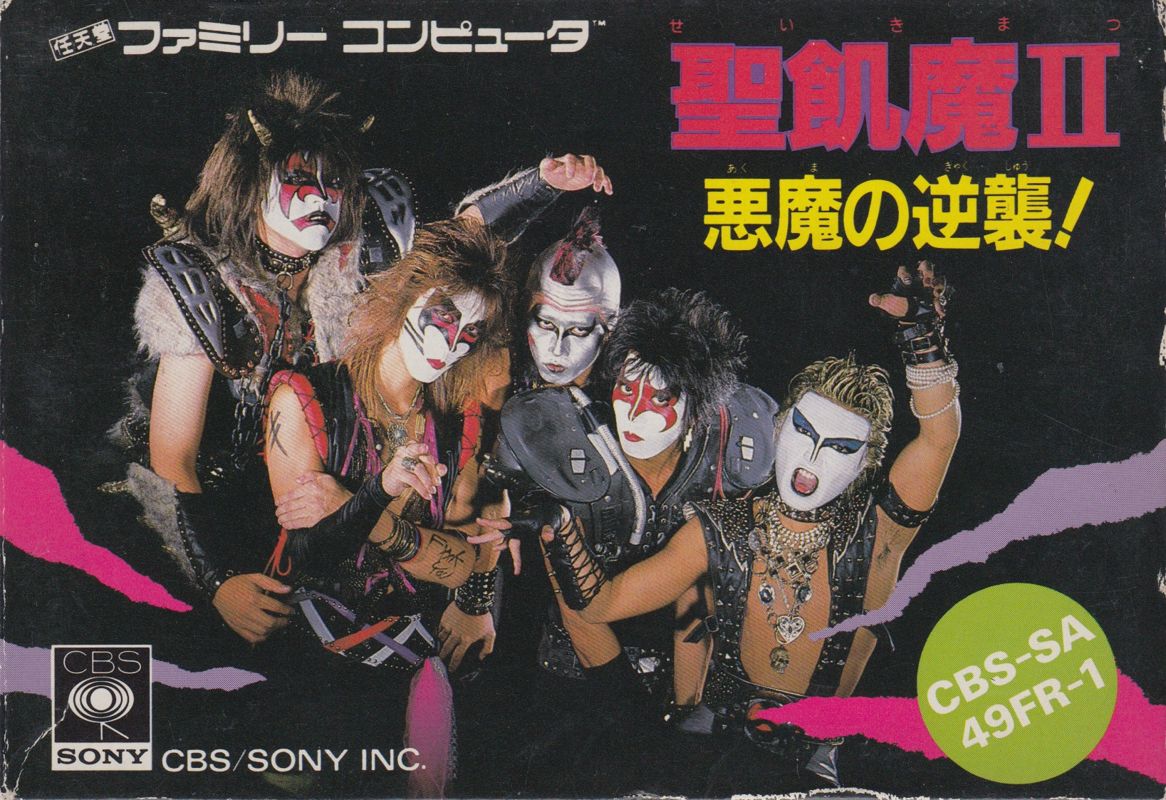
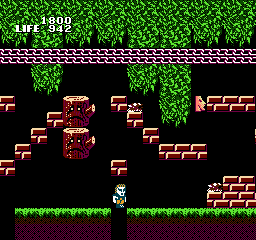
The story is gloriously direct: Demon Kogure sets out to rescue fellow Seikima-II “demons” imprisoned by Zeus. Using a real Japanese heavy metal band as the foundation gives the journey a more distinctive hook than a generic rescue mission, even if the game keeps its attention on action and collection rather than elaborate plotting.
Each freed bandmate supplies a small but welcome sense of progress. You are not just clearing a stage; you are working through a sequence of prison breaks, one zone at a time. The instruments sold in shops also tie the band theme back into the adventure, rather than leaving it as a name on the box.
Do not come in expecting the narrative to carry the experience on its own. Its job is to give the repetitive structure a fun, oddball reason to exist, and it succeeds at that. For more background on the game’s place in Seikima-II history, see this Seikima II: Akuma no Gyakushū overview.
Overall Experience
Seikima II: Akuma no Gyakushū is compelling in short bursts because it turns a basic platform-action loop into a tense cleanup operation. The need to collect everything, dodge or shoot enemies, and manage a life bar that never stops falling creates a clear, immediate challenge. When you finish an area with enough health left to continue, it feels earned.
Its limits show up as the same loop stretches across four zones of eight areas. Repeatedly vacuuming up every object while under continuous pressure can feel less like thrilling action and more like compulsory housekeeping. If you dislike games that punish careful exploration with a ticking survival cost, frustration will set in early.
Still, there is personality in the combination of demon-metal license, Zeus as the captor, bandmate rescues, and shop-bought instruments. Give it a chance if you enjoy demanding 1980s action games with a strict, repeatable structure and can accept some abrasion as part of the deal. Everyone else may admire the premise more than the moment-to-moment trek.



Reviews
There are no reviews yet.