 Retro Replay Retro Gaming History, Reviews & Emulation

Retro Replay Review
Gameplay
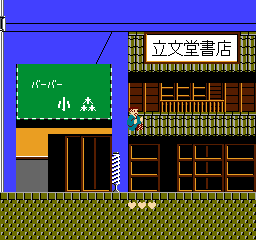
The first stretch of Takeshi no Chōsenjō grabs you because it refuses to behave. You are dropped into an urban side-scrolling world as a regular salaryman who has heard about island treasure, yet the obvious response to almost every encounter is not neatly signposted. You can jump, throw punches, enter indoor spaces, and wander, but the game’s real character emerges when you realize that its world is packed with opportunities to make very bad decisions.
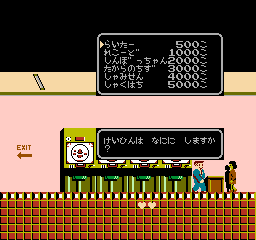
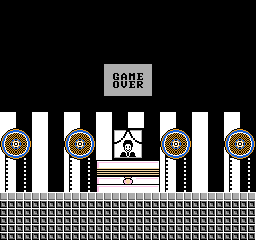
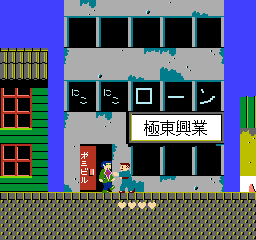
Punching people is the clearest example. Hostile characters can hurt you, and your hearts put a hard limit on how much trouble you can absorb, but most people you meet are harmless. Treat every screen like a brawl and you are likely to create problems rather than solve them. The password-screen old man is the cruelest joke of all: hitting him leads to a game over. It is funny once you know it, and exasperating when you learn it the hard way.
Progress is a collage of activities rather than a steadily deepening action system. Seeking a divorce, singing through the Famicom second controller’s microphone, and taking on a side-scrolling hang-glider shooting section make this feel like several unruly game ideas jammed into one cartridge. That unpredictability is the point, but it can also leave you feeling less like a clever explorer and more like the target of a long prank. Patience and a willingness to experiment matter far more than reflexes alone.
Graphics
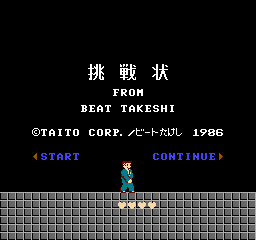
The game spends much of its time in side-scrolling city streets and indoor locations, with the office-worker hero moving among crowds of people he can either ignore or punch. The hang-glider sequence at least breaks up that on-foot view with a shooting segment in the air, giving the journey a change of pace on screen as well as in play.
Story
The treasure hunt is deliberately mundane at its starting point: an office worker hears there is treasure hidden on an island and decides to pursue it. That simple setup leaves room for the game’s stranger detours, and the contrast between salaryman routine and reckless adventure gives the premise its comic bite.
Rather than treating its hero as a conventional noble adventurer, Takeshi no Chōsenjō lets him behave like a nuisance. The possibility of punching passersby, combined with the divorce-related task, gives the journey a sour, mischievous edge. You are not being asked to inhabit a polished hero story; you are stuck with a man whose treasure quest can become spectacularly ill-mannered.
The karaoke requirement is the most memorable expression of that comedy. On original Famicom hardware, you use the second controller’s microphone to perform a song, an absurdly physical interruption to an otherwise side-scrolling adventure. It makes the game’s humor feel inseparable from its demands on you, for better and for worse.
Overall Experience
Takeshi no Chōsenjō is fascinating because its hostility is not an accident around the edges; it is woven into the joke. A password attendant who can be punched into ending the game and a quest that veers from divorce to karaoke to aerial shooting make every step feel unstable. The first hour can be equal parts laughter and disbelief.
Whether that becomes entertaining depends on your tolerance for being toyed with. If you want a cleanly communicated action-adventure, this will feel aggravating fast. If you enjoy eccentric old games that dare you to discover their logic through failure, its messiness has real personality. The best approach is to accept that the game may be laughing at you and decide whether you want to laugh back.
There is a genuine payoff in seeing how far this office-worker treasure chase will push its strange ideas, but it is not a universally welcoming one. Takeshi no Chōsenjō earns a recommendation as a notorious comedy oddity, especially for 8-bit explorers with patience to spare. Everyone else may admire the audacity more than they enjoy the trip.


Reviews
There are no reviews yet.