 Retro Replay Retro Gaming History, Reviews & Emulation
Retro Replay Review
Gameplay
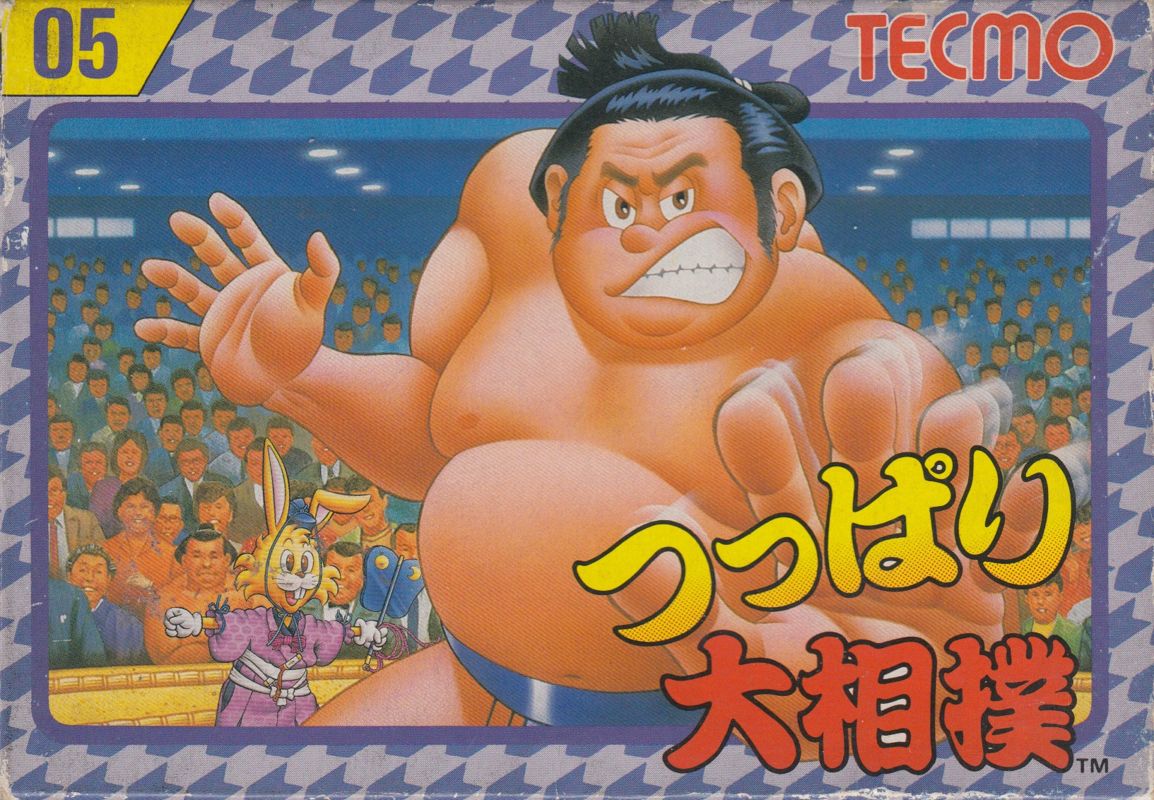
Tsuppari Ōzumō has the kind of premise that needs no warm-up. You and an opponent occupy a sumo ring, and the win condition is brutally clear: get the other wrestler out before you are the one taking the embarrassing step backward. That immediate focus gives the game a strong first-hour pull. You are not managing a roster or settling into a sprawling sports mode; you are learning how to survive the next confrontation.
The important wrinkle is that moves come from button and directional combinations. That turns the game from a simple pushing contest into a matter of execution. At first, you can enjoy the clarity of the objective and experiment freely. As opponents become tougher, though, sloppy inputs stop feeling like harmless mistakes. The ring leaves very little room to recover, so you need to be deliberate rather than merely aggressive.
That escalating opposition is where the game earns its longevity. Each harder opponent asks you to tighten up your timing and make better use of the moves available to you. Frustration can set in if you want a sport game that explains itself gradually or gives you lots of breathing room between challenges. But if you like short, repeatable contests where improvement comes from getting cleaner with the controls, Tsuppari Ōzumō has a satisfying, no-nonsense rhythm.

Graphics
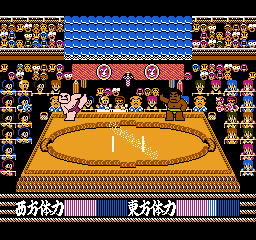
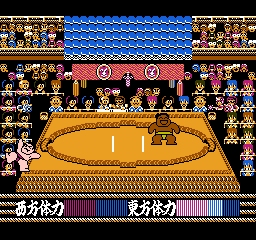
The action is built around fixed, flip-screen bouts, keeping the ring and the two wrestlers at the center of every match. That compact view suits the game well: you can concentrate on spacing, movement, and the danger of the ring boundary without visual clutter getting in the way.
Story
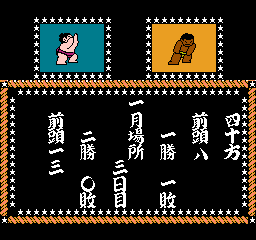
Tsuppari Ōzumō finds its momentum in competition rather than a plot. The basic journey is the climb through increasingly difficult opponents, and that is enough for a game whose matches are so immediate.
There is a small but effective dramatic arc in going from early confidence to realizing that later wrestlers demand more care. A bout that begins as a straightforward test of pushing power gradually becomes a test of whether you have actually learned the move combinations.
That stripped-down approach will suit you if you want the stakes to come from the next match, not from narrative scenes or character development. The payoff is personal: getting farther because you have become more precise, rather than because the game has changed the rules around you.
Overall Experience
This is a lean sumo game with a clear strength: it understands that a ring-out contest can be tense when the space is tight and the controls have some depth. Tsuppari Ōzumō does not need to overcomplicate the sport to create pressure. The objective is always visible, and the harder competition gives that objective teeth.
Its age and simplicity are part of the deal. You are committing to repeated one-on-one matches and a control scheme that rewards practice, not a broad sports package. If that sounds limited, it probably will feel limited. If that sounds like a welcome challenge, the directness becomes a virtue.
Give it a chance if you enjoy vintage competitive games that ask you to learn through repetition and accept defeat as instruction. The payoff is worth it for anyone who can appreciate a small, demanding arcade-style sports contest; everyone else may find the climb through tougher opponents too unforgiving for the amount of variety on offer.



Reviews
There are no reviews yet.