 Retro Replay Retro Gaming History, Reviews & Emulation

Retro Replay Review
Gameplay
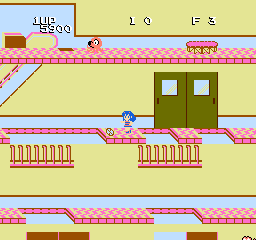
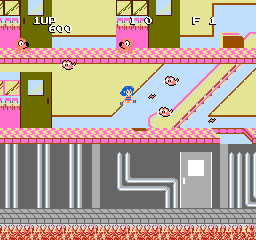
The first climb tells you exactly what sort of game this is. Lum heads upward through a building while fire relentlessly rises from below, so standing still is rarely an option. You are always weighing the next route up against the enemies trying to clog it, and that ticking pressure gives the game more bite than a standard, leisurely platformer.
Lum’s lightning bolts are the clean answer to the alien invaders in her way. Shooting is not a side attraction here; it is what keeps a crowded path from becoming a dead end while you push toward the UFO at the top. The basic climb-and-shoot loop is easy to grasp, but the fire means you need to commit to moving forward rather than treating each floor as a safe place to clear at your own pace.
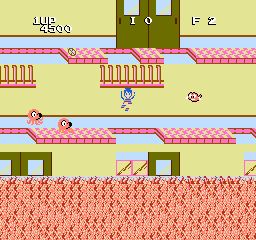
Power-ups add useful swings to that urgency. Score boosts reward a more arcade-minded run, temporary invincibility can create a welcome opening, and the bonus stages change the task into shooting down flying enemies. None of this turns the game into a deep adventure, but it does break up the repeated ascents and gives you reasons to stay alert beyond simply reaching the next floor.
Frustration is part of the bargain. A constantly rising hazard leaves little room to recover if enemies hold up your progress, and the focus on repeated vertical runs may wear thin if you want lots of changing objectives. But if you enjoy compact arcade games that demand immediate decisions, the pressure is the point rather than a flaw.
Graphics
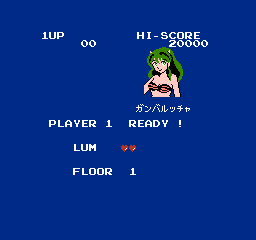
The action uses a side view built around floors of a burning building, with Lum climbing toward a waiting UFO while alien enemies block her route. That clear upward layout suits the central race: you can quickly see the destination above and the flames gaining below.
Story
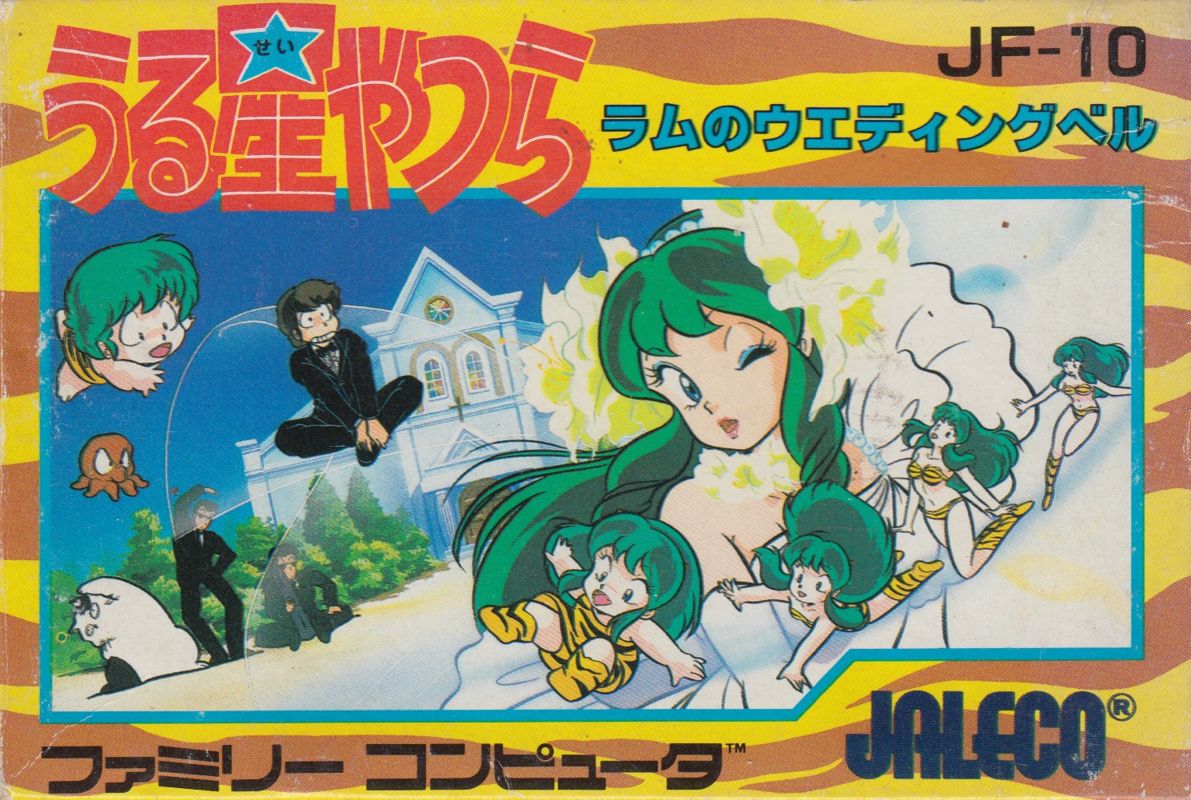
This is a light license-driven framework, not a story-heavy campaign. You play as Lum, the alien princess from Urusei Yatsura, across stages representing her life from childhood to adulthood. The final goal—becoming old enough to marry Ataru—gives the sequence of action stages a more personal endpoint than a generic rescue mission.
That structure is charming because it keeps Lum at the center rather than using the series only as decoration. Still, the storytelling is mainly there to connect the arcade action and the life-stage progression. Come for Lum and the comic setup; stay because the burning-building climbs ask you to keep your nerve.
If you want another game tied to the series, Urusei Yatsura: Dear My Friends is worth knowing about. It is a useful follow-up for fans interested in seeing the franchise in another game, while Lum no Wedding Bell remains the more immediate, action-first proposition.
Overall Experience
Urusei Yatsura: Lum no Wedding Bell works because it wastes no time. You climb, shoot, grab the power-ups that matter, and try not to let the fire dictate the end of your run. That simplicity is its strongest quality: the game creates a clear crisis and asks you to solve it quickly.
The Urusei Yatsura connection adds personality, especially for anyone already fond of Lum, but you do not need franchise knowledge to understand what to do. The core challenge stands on its own. Its arcade roots are especially apparent in the score items, bonus shooting sections, and the way repeated attempts can become about squeezing a cleaner run out of a familiar climb.
Give it a chance if a short, demanding side-view platform shooter sounds more inviting than a sprawling NES quest. The payoff is not narrative depth or a huge set of systems; it is the satisfaction of getting through a hostile ascent when the screen is pushing you onward. For the right mood, that is enough.


Reviews
There are no reviews yet.