 Retro Replay Retro Gaming History, Reviews & Emulation
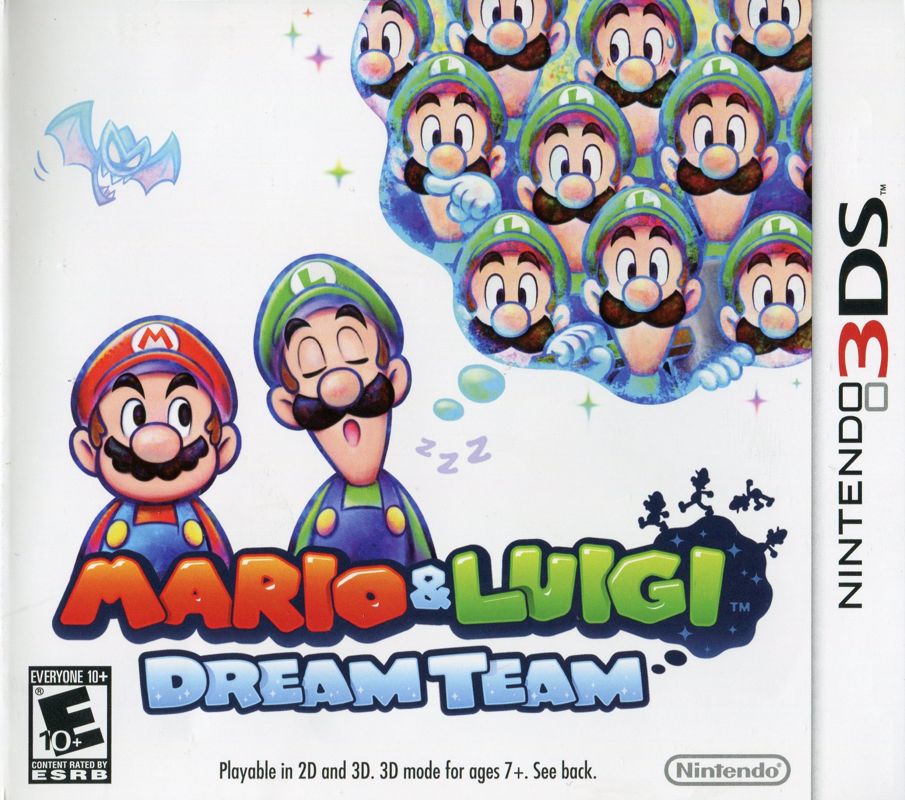
Retro Replay Review
Gameplay
The first hour quickly reminds you why the Mario & Luigi games work: battles are turn-based, but they never feel passive. Mario uses A, Luigi uses B, and the timing of each press matters on offense and defense. A well-timed jump earns extra damage; a sharp reaction can evade or counter an attack outright. You are not simply choosing commands and watching numbers rise. You are learning an enemy’s rhythm, then putting that knowledge to work.
That foundation carries the usual RPG progression well. Winning fights brings experience, levels, and stat increases, with a slot-machine-style chance to push one chosen stat further. Rank-ups are more interesting because they force a useful choice, such as more HP or another equipment slot. Equipment, found items, beans, rescued Pi’illo people, and Expert Challenges give you plenty of reasons to poke around rather than march straight to the next objective. If you enjoy gradually tuning a party, Dream Team gives you a lot to work with even though that party is always built around the brothers.
The real hook is the divide between the top-down real world and Luigi’s side-scrolling dream world. In the real world, Mario and Luigi travel and battle together. In dreams, Mario partners with Dreamy Luigi, whose ability to merge with the environment turns puzzle-solving into a touch-screen back-and-forth with the sleeping Luigi outside the dream. These Luigination—or Luiginary—moments make the dream sections feel distinct rather than like a simple change of camera angle.
Combat changes with them. Mario fights alongside Dreamy Luigi, whose clones echo Mario’s moves and help power Luiginary Attacks in place of standard Bros. Attacks. It is a smart way to preserve the series’ timing-focused personality while changing the setup. The giant battles go further, asking you to turn the 3DS sideways and use the stylus as enlarged Dreamy Luigi takes on huge foes. They are a deliberate change of pace, and their attack, dodge, and counter inputs keep them tied to the rest of the game rather than making them detached cutscenes.
Graphics
Dream Team alternates between a top-down real world and side-scrolling dream stages, so the view changes often enough to keep exploration from looking flat. The most memorable visual shift comes in the giant boss fights: holding the 3DS like a book frames Dreamy Luigi as the enormous combatant, with Mario assisting from his shoulder.
Story
The setup is cheerfully strange in the way Mario RPG stories should be. A holiday invitation brings the Mushroom Kingdom crew to Pi’illo Island, where an ancient stone pillow sends Luigi to sleep and opens the door to a threat inside his dreams. Peach is kidnapped, Mario heads in after her, and the adventure gets to make Luigi’s sleeping mind into an actual place to explore.
That premise matters because it lets Luigi occupy more than his usual supporting position. The dream world is literally built around him, and Dreamy Luigi becomes Mario’s partner there. The story’s broad rescue mission is familiar, but the central idea gives the game a stronger excuse for its puzzles, clone-filled attacks, and giant confrontations than a standard trip across the Mushroom Kingdom would.
Do not come in expecting a grim fantasy epic. This is a light, playful Mario story centered on travel, dreams, and a villainous intrusion into them. Its real strength is how closely the premise and the action stay connected: when you are manipulating the sleeping Luigi through the touch screen or fighting as a giant Dreamy Luigi, you are engaging with the story’s core joke instead of stepping away from it.
Overall Experience
Mario & Luigi: Dream Team is an easy recommendation if you want an RPG that keeps your hands busy. Its best moments come when a battle asks you to read an attack correctly, nail the timing, and turn defense into a counterattack. The real-world and dream-world structure also prevents the adventure from relying on one format for too long, with exploration, puzzles, regular fights, special attacks, and giant battles taking turns in the spotlight.
There is a lot going on. Stat bonuses, ranks, equipment, collectibles, Expert Challenges, Bros. Attacks, Luiginary Attacks, touch-screen dream puzzles, and sideways giant fights can make the game feel busy, particularly if you only wanted a simple, breezy RPG. But the systems generally point toward the same goal: making you more involved in every encounter and giving you a reason to improve.
Give it a chance if you like Mario RPGs that reward attention and enjoy the idea of Luigi becoming the center of the adventure without abandoning Mario’s familiar platforming energy. The payoff is a substantial, playful RPG whose combat remains engaging because your timing matters from one battle to the next. For a deeper look at its release history, see Mario & Luigi: Dream Team’s game history.


Reviews
There are no reviews yet.