 Retro Replay Retro Gaming History, Reviews & Emulation
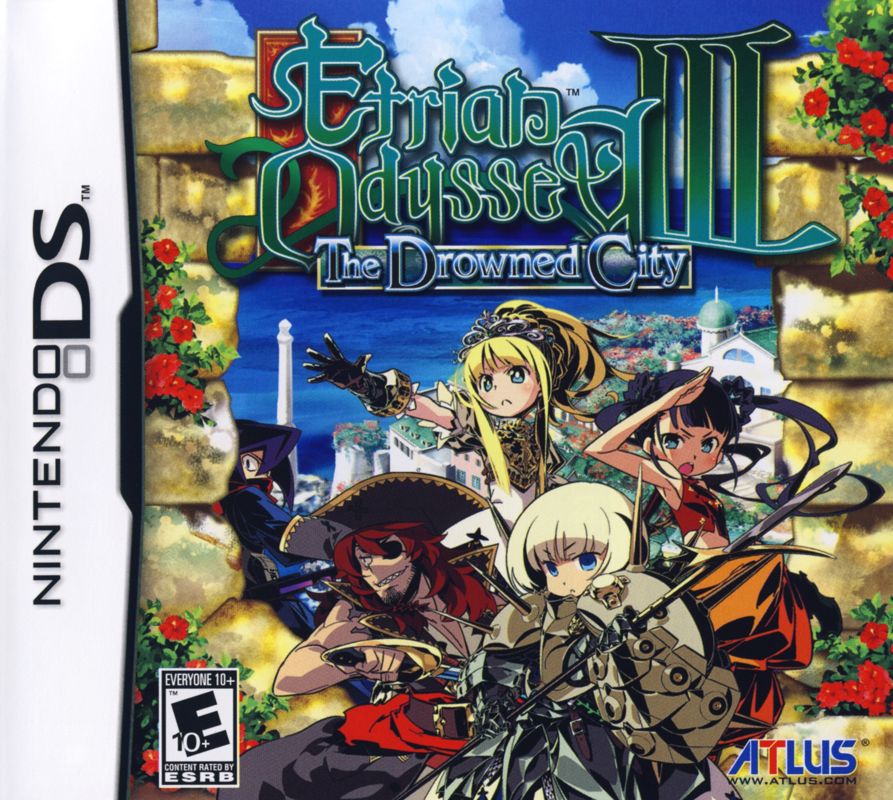
Retro Replay Review
Gameplay
The first hour is all about settling into a very particular rhythm: recruit a guild, decide who will cover damage, defense, healing, and support, buy what you can afford, then head below Armoroad with a map that is mostly your responsibility. Etrian Odyssey III does not rush you toward easy victories. You enter a floor, take a few careful steps, draw walls and landmarks with the stylus, survive some turn-based battles, and make the hard call on when to turn back. That loop is deliberate, sometimes nerve-racking, and tremendously satisfying once you stop treating a retreat as failure.
Manual cartography is the heart of the game. Auto-mapping is available, but drawing the level layout yourself and marking notable finds, dangerous encounters, and points of interest turns dungeon crawling into active problem-solving. The lower screen stays devoted to the map while the upper screen handles first-person exploration and battles, so you are constantly planning rather than merely following corridors. If you enjoy making your own notes and gradually mastering a hostile space, this is the hook. If you want to push ahead without stopping to think, the constant map work can become a chore.
Combat is turn-based, with enemies shown on the upper screen and your party represented through health and tech-point bars rather than visible character models. That stripped-down setup puts the emphasis squarely on decisions. Classes such as gladiator, hoplite, monk, zodiac, ninja, arbalist, and wildling offer radically different directions for a party, and each level grants a skill point to invest. Skills can be enhanced through ten ranks, while many later options require earlier investments, so a character build has real momentum and real opportunity cost.
That depth is Etrian Odyssey III at its best and most frustrating. It is exciting to tune a party around the skills you actually want, then improve weapons through forging to reinforce the plan. But bad choices, an underprepared group, or a greedy push beyond your resources can send you back to town empty-handed. The one-slot save system and infrequent save points add weight to every expedition. You need patience, and you need to accept that the game is happier teaching lessons through setbacks than cushioning you from them.
Armoroad gives the dungeon work a useful structure. The inn restores the group and stores items, the shop handles gear and forging, the bistro offers town quests and information, and the explorers guild lets you recruit or reorganize members. Sea quests from Inver Port are a welcome change from the labyrinth routine, while the registers for monsters, items, and discoveries reward thorough play. There is always another practical reason to revisit town, adjust your lineup, and take one more measured trip underground.
Graphics
The dungeon view is first-person, while battles place enemies on the upper DS screen and keep your party to compact health and tech-point rectangles. It is a functional, no-nonsense layout that makes the lower-screen map the star: your hand-drawn walls, icons, and notes become the clearest picture of your adventure.
Story
Armoroad begins with a strong piece of fantasy adventure framing: half of a once-advanced city lies beneath the sea, and explorers arrive to delve into underground labyrinths in search of answers and the mythical Yggdrasil Tree. It gives the crawling a sense of purpose without distracting from the day-to-day business of survival and exploration.
The story’s main developments are tied to the Senatus, but much of the game’s character comes from the city’s working routines. You hear rumors and accept requests at the bistro, prepare the guild at the inn and shop, and return from the labyrinth with new discoveries to add to your records. That makes Armoroad feel less like a backdrop and more like a base camp you gradually come to rely on.
Do not come in expecting your own party to carry scenes through visible character performances; your adventurers are never shown during battle. Instead, their identity comes from the classes you choose, the skills you commit to, and the disasters or victories they survive together. For a game built around player-made parties, that is a fitting trade: less authored personality, more ownership over the guild’s story.
Overall Experience
Etrian Odyssey III: The Drowned City is rewarding because it asks you to participate in the adventure rather than simply consume it. You build the party, map the dungeon, choose the skills, manage dwindling resources, and decide whether the next room is worth the risk. When a route finally makes sense or a revised build starts working, the payoff feels earned.
Its rough edges are inseparable from that commitment. Mapping manually, navigating skill prerequisites, and losing progress after an overconfident expedition will test your patience. The limited saving is especially unforgiving. Yet the game has the confidence to make preparation matter, and that is increasingly rare in party-based RPGs.
Give it a chance if you want a substantial dungeon RPG that rewards caution, planning, and experimentation with a broad class roster. Skip it if you need a relaxed pace or a game that protects you from costly mistakes. For the right kind of strategist, Etrian Odyssey III turns every return to Armoroad into a chance to rethink the plan—and every successful trip back from the depths into a genuine victory.



Reviews
There are no reviews yet.