 Retro Replay Retro Replay gaming reviews, news, emulation, geek stuff and more!
Retro Replay Review
Gameplay
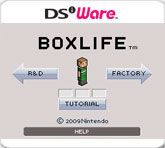
The first few minutes of Art Style: Boxlife feel almost disarmingly tidy. You are looking at paper squares from an isometric angle, cutting and folding them until their sections become boxes. The tutorial eases you through the basic idea, and that is important: once you understand how a flat shape can be divided and folded, the game stops looking like a strange paper-craft exercise and starts feeling like a compact spatial puzzle.
R&D is where that premise is at its cleanest. Each stage hands you a predetermined paper shape and asks you to turn all of it into boxes. There is a satisfying, fussy logic to working out how not to strand a section of paper. You will likely enjoy the deliberate pace if you like puzzles that reward looking at the whole board before committing to a cut. It can be frustrating when an inefficient choice leaves material unusable, but that frustration is part of the lesson rather than empty punishment.
Factory changes the mood completely. With unlimited paper and a time limit, you are no longer simply solving a shape; you are trying to produce as many boxes as possible while wasting as little paper as you can. Then the bombs arrive. A bomb has to be enclosed in a box quickly, or its explosion ruins paper around it. That is a smart complication because it forces you to interrupt your best-laid plan without abandoning the central folding-and-cutting idea.
The end-of-level scoring makes your efficiency matter from several angles: formed boxes, wasted paper, and exploded bombs all count. This gives Factory a sharper replay pull than a one-and-done puzzle mode, though it also means the game asks you to stay calm while the board becomes less orderly. If the R&D stages are about satisfying solutions, Factory is about salvaging good decisions under pressure. For another compact entry in the same line, see Art Style: precipice.
Graphics
The isometric game field suits the paper-box concept well. You can see the flat squares and the emerging box forms clearly enough to follow the transformation, while the angled view gives the board a small, toy-like sense of depth. The cubic country-like home area is a pleasant visual reward for earning money, with decorations gradually filling out the protagonist’s living space.
Story
Boxlife is not driven by a plot so much as a framing idea: you earn money through your box-making results and spend it decorating a cubic, country-like place described as the protagonist’s home. That light structure gives successful runs a little more purpose than simply posting a score.
Do not come in expecting characters or dramatic turns to carry you forward. The progression is personal and visual instead: do well in the puzzles, then use the rewards to enrich the home environment. It is a gentle fit for a game about turning plain paper into something useful.
That modest framing works because it stays out of the way. The real story is the one you create in play, from a carefully rescued bomb to a production run where you finally stop wasting the paper you thought you had mastered.
Overall Experience
Art Style: Boxlife earns its 7.2 with an unusually focused puzzle premise and two modes that pull useful weight in different ways. R&D lets you enjoy the slow click of spatial reasoning, while Factory makes the same knowledge feel urgent once bombs begin dropping. It is not merely a game about making boxes; it is about using every awkward section of a limited material before time or disaster turns it into a liability.
The biggest hurdle is that its core task can feel abstract before the folding logic clicks. Give the tutorial room to do its work and resist treating early mistakes as a sign that the game is arbitrary. Once you start seeing potential boxes in the supplied shapes, the tension between tidy planning, paper waste, and sudden bomb disposal becomes much more compelling.
Give Boxlife a chance if you want a DSi puzzle game with a practical, hands-on rhythm rather than a large adventure wrapped around easy challenges. Its decorative reward loop is a nice extra, but the payoff is really in mastering the board: turning a messy sheet into efficient boxes, then doing it again when the clock and bombs refuse to let you be comfortable.


Reviews
There are no reviews yet.