 Retro Replay Retro Gaming History, Reviews & Emulation
Game Overview
Gameplay
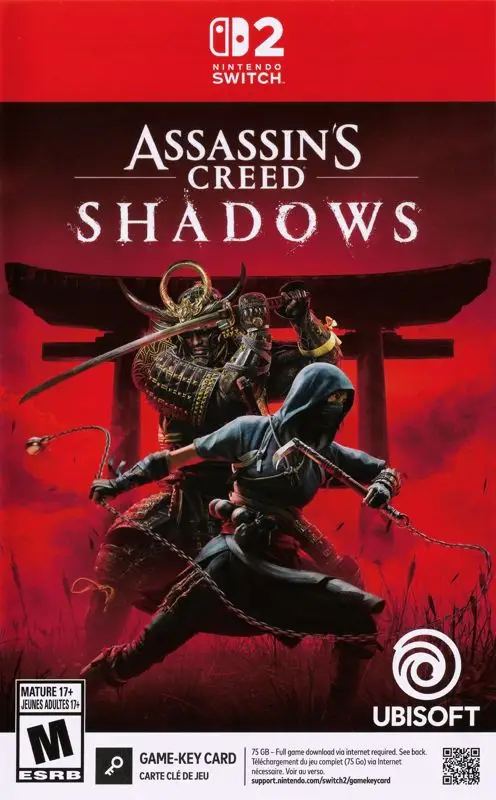
The best moments in Assassin’s Creed: Shadows come when you stop treating a fortress like an item on a map and start treating it like a place to study. Naoe can crawl prone, slip through shallow water with a bamboo breathing tube, move across rafters, and use darkness as cover at night. Breaking a lantern to deepen a hiding spot is the kind of small, practical choice that makes stealth feel active. You are not just looking for the nearest wall to climb. You are looking for the safest route, the darkest corner, and the right moment to strike.
That focus gives the game a welcome sense of flexibility. Observe can be used from a high point or while crouched to gather information, while spies and bribes offer alternate ways to track down targets. Vantage points now serve reconnaissance rather than automatically filling the map with chores, a change that better suits a game asking you to investigate. The non-linear mission structure should reward curiosity, though it also means you need to enjoy doing some legwork instead of being led straight to every answer.
Once Yasuke joins Naoe, the game lets you choose between two sharply different answers to trouble. Naoe is the better fit for careful stealth, relying on her hidden blade, kusarigama, shuriken, speed, and concealed attacks. Yasuke is slower, sturdier, and built to smash through resistance with a katana, kanabō, or arquebus. Being able to switch during missions is more than a novelty because it lets you decide whether a situation deserves patience or brute force. Skill trees for weapon proficiency add room to shape both fighters, but the core choice remains satisfyingly simple: disappear as Naoe, or make the walls shake as Yasuke.
Story
Set from 1579 onward in late Sengoku Japan, Shadows ties its Assassin Brotherhood and Templar conflict to a period of political and military upheaval. Naoe and Yasuke provide two perspectives on that conflict, while Oda Nobunaga’s assault on Iga and the presence of Portuguese traders and Jesuit missionaries ground the setting in a turbulent historical moment. Kyoto, Kobe, Osaka, and Iga give the journey a broad canvas, with castles and strongholds serving as major spaces for conflict and infiltration.
Overall Experience
Shadows understands why feudal Japan has long felt like such a natural home for Assassin’s Creed. It is not merely the chance to play an assassin alongside a samurai. The setting supports the game’s strongest habits: climbing into a guarded stronghold, collecting information, choosing an approach, and escaping when the plan goes wrong. Seasonal changes also promise more than a cosmetic backdrop, since frozen lakes and spring foliage can alter how you move through the world.
The tradeoff is that this remains a large open-world action RPG, complete with skill progression, major cities, and a lot of territory to work through. If you want a compact, tightly directed stealth game, the scale and multiple investigative options may feel like extra friction. You will get more from it if you enjoy lingering over a target area and experimenting with routes, rather than rushing mission to mission.
For longtime Assassin’s Creed fans, this is a strong course correction toward stealth that does not abandon direct combat. Naoe’s toolkit sounds like the sharper half of the package, while Yasuke gives the game a convincing way to embrace open conflict without pretending every problem needs a silent solution. The result is most compelling when you let each protagonist do what they do best and allow the world’s changing conditions to shape your plan.


Reviews
There are no reviews yet.