 Retro Replay Retro Gaming History, Reviews & Emulation
Retro Replay Review
Gameplay
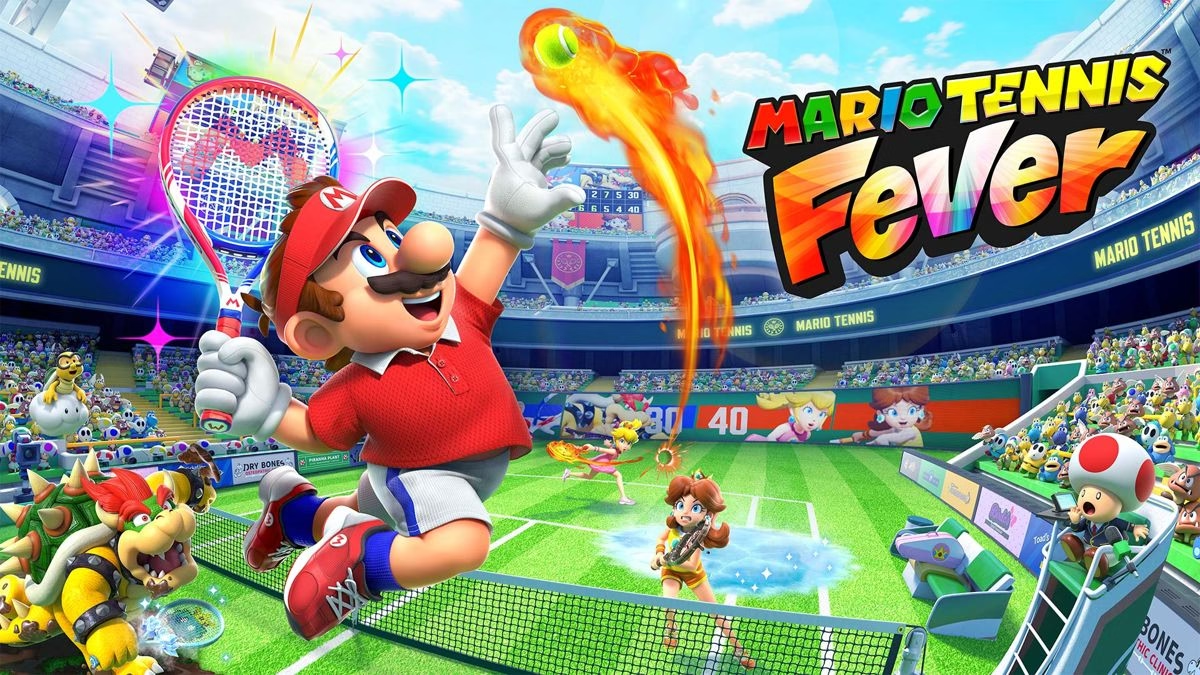
Mario Tennis Fever starts from tennis fundamentals you already understand. Topspin, slices, and lobs give a rally different shapes, and that matters because the Fever Gauge rewards you for staying in the exchange. Rather than treating every point as a quick race to the winner, you are encouraged to build pressure and decide when a charged Fever Shot is worth spending.
That meter is where the game earns its name. Fever Shots change according to the Fever Racket you have equipped, so the choice has real tactical consequences. The Ice Racket can create slippery ice, the Flame Racket scatters fire, and the Lightning Racket can temporarily stun another player. You are not simply picking a favorite character and repeating the same plan. You are picking the kind of disruption you want to introduce once a rally gets dangerous.
Thirty rackets is enough to make experimentation part of the fun instead of a one-time novelty. A player who likes to control space may gravitate toward one set of effects, while somebody who wants sudden chaos can chase another. The risk is that special-shot interference can turn a clean tennis exchange into a scramble, which will frustrate anyone who only wants strict, traditional shot placement. For a Mario tennis game, though, that tension is the point.
The 38-character lineup gives those racket decisions a lot of possible pairings. The smart way to approach it is to settle on a few racket effects you enjoy, then see which characters feel right alongside that plan. Mario Tennis Fever seems most promising when you treat combinations as matchup tools rather than assuming one loadout should solve every opponent.
Graphics
The diagonal-down court view puts the action on a familiar game-like angle, with both sides of the court visible as rallies develop. It is a practical fit for a tennis game built around tracking ball placement, court coverage, and special-shot hazards.
Story
The story of a match is the real draw here: a steady rally builds the Fever Gauge, one side commits to a Fever Shot, and the court becomes harder to navigate. That rising sequence gives individual points a natural arc even before special racket effects enter the picture.
Ice, fire, and lightning also make each match tell a different kind of competitive story. A slippery patch can change where it is safe to stand, scattered fire can reshape the space around a return, and a temporary stun creates an opening that demands an immediate response. The details may be playful, but the underlying drama is familiar tennis pressure.
That makes Mario Tennis Fever better suited to gamers who enjoy talking through a wild point afterward than to anyone demanding a purely sober sports simulation. Its strongest drama comes from momentum, counterplay, and the consequences of the racket combination on the court.
Overall Experience
Mario Tennis Fever has a strong competitive hook because it does not stop at recognizable tennis shots. It asks you to manage a gauge, select a racket effect, and adapt when the court itself becomes part of the contest. When that loop clicks, the special moves should feel like a reward for surviving and shaping a rally, not an interruption detached from the sport.
The 30-racket pool is the reason the concept has staying power. A few effects might be enough for a novelty mode, but this many potential choices suggests a game that wants you to keep revisiting your tactics. The 38-character roster further supports that experimentation, especially if you enjoy finding a combination that fits your own rhythm.
Its tradeoff is clear. Fever effects can complicate the clean geometry that makes tennis satisfying in the first place. If you want every point decided solely by conventional placement and timing, the ice, fire, and stun effects may feel like too much interference. If you want Mario sports competition with real strategic texture and a willingness to get unruly, the mix is easy to recommend. For additional game details, see Nintendo’s Mario Tennis Fever page.

Reviews
There are no reviews yet.