 Retro Replay Retro Gaming History, Reviews & Emulation


Retro Replay Review
Gameplay
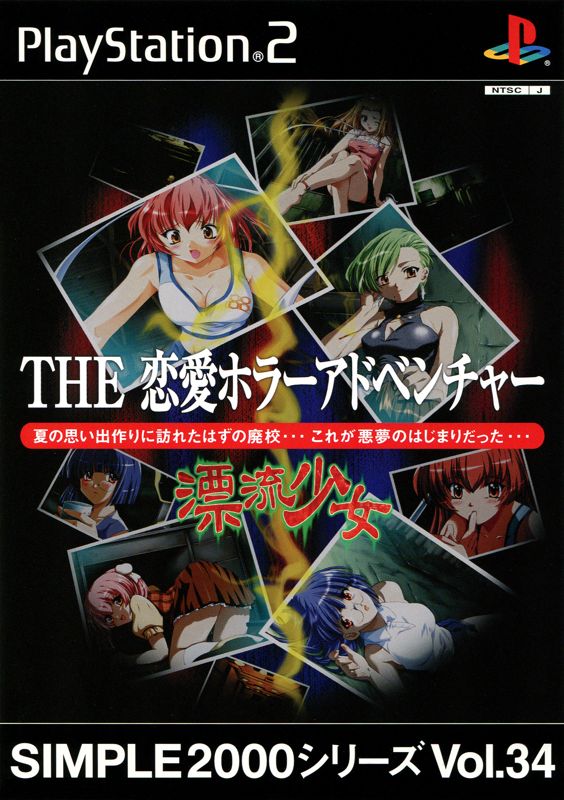
The first stretch gives you a clear, nasty problem: six students are trapped in dangerous ruins, food is finite, and nobody can afford to be ignored for long. Hyōryū Shōjo turns that premise into a steady survival routine. Every day you ration food, then pick one girl to accompany you while you search for supplies and clues. That simple cycle creates more pressure than the modest setup initially suggests, because a bad call is not just an abstract failure state. Hunger drains health, and continued neglect can leave someone incapacitated or dead.
The partner system is where the game finds its personality. Different companions are useful in different ways: one is better at locating food, while another can sense ghosts. You are constantly weighing immediate need against uncertain danger and the relationship you want to pursue. Taking the food specialist sounds sensible when supplies are tight, but taking the ghost-sensitive partner may prevent a disastrous trip. That is a much more interesting decision than blindly selecting whoever you like most.
Investigation is deliberately straightforward: move between locations, inspect the area, or talk with the partner at your side. It has the focused, command-driven pace of an older visual novel, which can be good when you are absorbed in managing the group but can also make repeat searches feel methodical. The haunting spirits add danger to the expeditions, and the need to avoid or confront them keeps searching from becoming a completely safe checklist.
Patience is required. This is not an action-heavy horror game, and the satisfaction comes from planning around limited resources, learning which companion suits a job, and living with the consequences. If you want a fast stream of scares, its slower loops may wear thin. If the thought of a survival puzzle wrapped around character choices sounds appealing, the systems have enough bite to keep you making one more careful trip.

Graphics
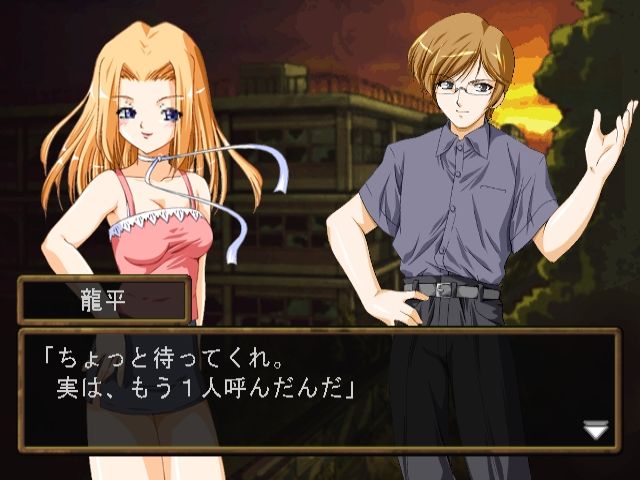
The first-person viewpoint keeps the abandoned school ruins close and claustrophobic, fitting a story about being trapped under a collapsed building. Its anime and visual-novel framing suits the high-school cast and the mix of horror with relationship drama.

Story
The opening is efficiently grim: a group of high-school students enters an abandoned school building to hunt for ghosts, an earthquake collapses it, and the ghosts turn out to be real and hostile. It is a familiar horror setup, but it gets quickly to the part that matters. The students are cut off, frightened, and forced to make daily choices that determine whether everyone survives.
What separates the story from a standard school ghost tale is that survival and affection are tangled together. Choosing a partner for expeditions gradually develops your relationship with her, while that same choice has practical consequences for the group. Romance under this kind of pressure can feel uneasy in exactly the right way: caring about one person may be emotionally rewarding, but you still have a whole group depending on you.
The branching conclusion gives the story some genuine replay value. Who remains alive matters, and so does the girl with whom you have formed the strongest bond. That means the route is shaped by more than a final dialogue choice; your rationing, expeditions, and alliances all feed into the ending. It is a strong reason to revisit the ruins after an imperfect first escape.
Overall Experience
Hyōryū Shōjo is most compelling when it makes you feel responsible for a group rather than merely curious about the next horror reveal. Food is not just a meter to refill, companions are not just romance routes, and every excursion asks you to choose between safety, supplies, information, and closeness. That combination gives the game a tense, slightly cruel edge.
Its limitations are tied to its strengths. The investigation structure is simple and paced at a measured visual-novel rhythm, so it will not satisfy you if you expect elaborate exploration or constant action. The romance angle also shares space with grim survival management, a blend that will either make the cast dynamics more involving or feel tonally odd depending on your taste.
For fans of Japanese horror visual novels, it is an easy recommendation with caveats: come for the trapped-school premise, stay if the daily survival decisions start getting under your skin. The payoff is the way its endings reflect who you protected and who you grew close to, rather than treating the cast as disposable horror fodder. It is a rough-edged but smartly structured genre hybrid.


Reviews
There are no reviews yet.