 Retro Replay Retro Gaming History, Reviews & Emulation
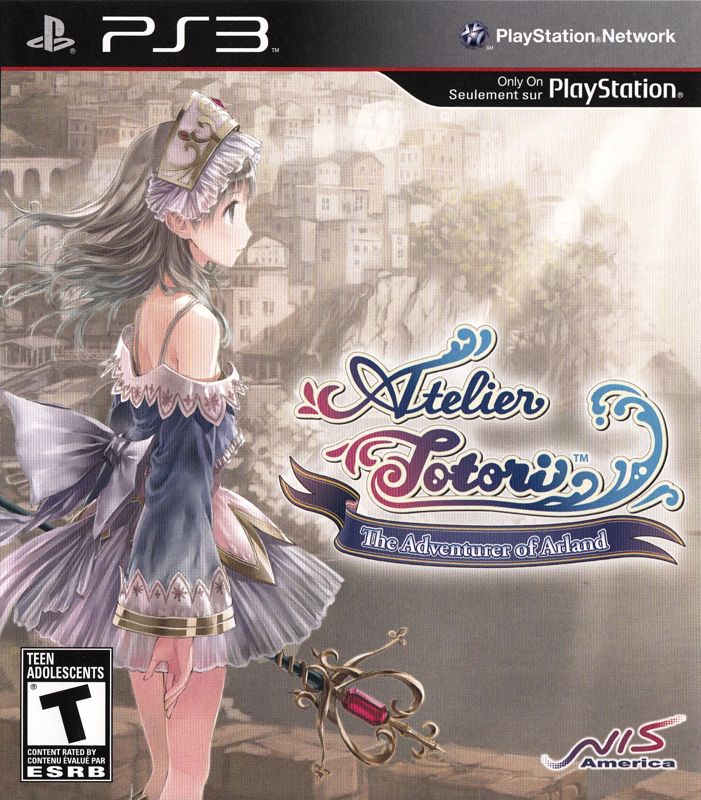
Retro Replay Review
Gameplay
The first hour asks you to settle into Totori’s life as an aspiring adventurer, and that humble scale is one of the game’s strengths. You take quests, head out from town, gather what you find, and return with materials, experience, recipes, and License Points. It is a deliberately cyclical RPG, but not an empty one: every trip can push your crafting options forward or bring another route on the world map within reach.
Alchemy is the center of that loop. Recipes are not a side distraction; they determine what Totori can synthesize, and synthesis gives your exploration a concrete purpose. If you enjoy RPGs where a pile of found ingredients feels like future leverage rather than vendor trash, Totori has an easy pull. You are frequently working toward the next useful item while also building the credentials needed to access harder territory.
Exploration has two distinct rhythms. Individual areas use a third-person view, with enemies visible on the field, while long-distance travel is laid out as a node map with discrete connecting paths. Random encounters can interrupt travel on that map, so expanding outward is not just menu bookkeeping. Early on, few nodes are available; earning License Points to reveal more difficult places gives the adventure a clear, gradual structure.
Combat is turn-based and grid-based, but it is more positional in targeting than in movement. Both sides occupy opposed square grids that determine line of sight and attack areas, yet party members do not move around during battle. Totori is permanently in the rear row and is the only one who can use items or synthesize them, while up to two companions fill the front. That restriction can frustrate anyone expecting broad party freedom, but it also makes item preparation and companion selection matter. Hire allies for their strengths, choose the front line with care, and do not treat crafting as optional busywork.
Graphics
The game alternates between third-person 3D locations and cleanly abstract world-map nodes connected by paths. In battle, the opposed square grids make line of sight and area attacks easy to follow, even though the formation itself stays fixed.
Story
Totori’s search for her missing mother gives the adventure a personal reason to leave home. Her mother was once a famous Adventurer, while Totori begins in a small fishing village without having known her. It is a straightforward hook, but it fits the game’s progression well: gaining recognition as an adventurer and exploring farther into Arland both feel connected to the search.
The wider setting has also changed since the earlier Arland game. The kingdom has become a republic, and citizens stepped into exploration and land-taming because the Knights were comparatively weak. That background neatly explains why adventuring has become a respected profession instead of merely a convenient RPG excuse for fighting monsters.
Story-minded players should know what carries this journey: Totori’s personal goal is woven through a game chiefly built around quests, exploration, combat, and alchemy. The narrative gives direction to the routine rather than replacing it. If you want the search for Totori’s mother to motivate a long crafting-driven climb, it works; if you need every hour to be propelled by plot alone, the slower practical rhythm may wear thin.
Overall Experience
Atelier Totori is most rewarding when you accept its unhurried bargain. You do not simply march from plot point to plot point. You build a career, unlock routes, gather materials, make items, and gradually prove you belong in a wider, more dangerous world. The payoff is the feeling that Totori’s growing reach came from your planning rather than a sequence of automatic upgrades.
Its rougher edge is the narrow battle formation. With no repositioning on the grid and Totori locked into the rear, combat lacks the tactical freedom its square-based layout may initially suggest. The game asks you to find expression through preparation, item use, targeting, and the two allies you bring instead. For some, that focused structure will be pleasantly manageable; for others, it will become repetitive.
Give it a chance if crafting, quest work, and measured exploration sound more inviting than a relentless story sprint. The opening is modest, but the loop starts to click once recipes, materials, companions, and License Points all feed into the same goal: getting Totori farther from home and closer to an answer. For game-specific history and release context, see this Atelier Totori overview.



Reviews
There are no reviews yet.