 Retro Replay Retro Replay gaming reviews, news, emulation, geek stuff and more!
Retro Replay Review
Gameplay
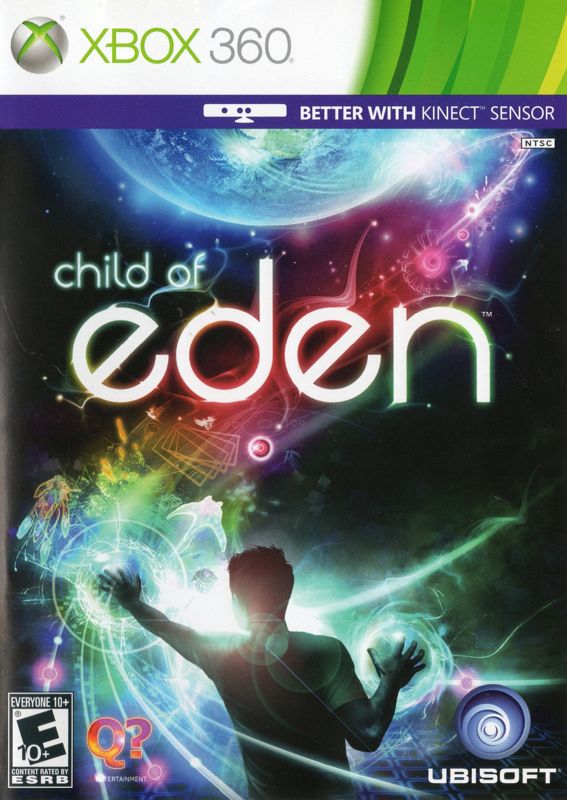
The first few minutes of Child of Eden make a convincing case for playing with your hands rather than a traditional controller. You move through fixed, on-rails stages and paint targets with a reticule, then send attacks into clusters of enemies. Every successful string of hits feeds into the music, so a good run feels less like simply clearing a shooting gallery and more like playing along with a track that is constantly reacting to you.
Its strongest trick is how naturally the action builds from simple gestures. On Kinect, the right hand marks targets and fires with a forward thrust, while the left hand operates a purple homing laser for defense. Raise both hands and you trigger Euphoria, a huge screen-filling attack that provides a genuinely satisfying release when the stage starts crowding you. The motions are easy to understand, but getting accurate and fast enough to maintain a strong run is where the game starts to bite.
There are only five stages, so you can reach the end before the initial rush has much time to wear off. That brevity would be a larger problem if the scoring structure were flimsy, but Purification percentages and one-to-five-star rankings give you clear reasons to return. Stars unlock further stages, while filters, galleries, and other unlockables add extra targets for committed runs. If chasing a cleaner route through a short arcade game sounds like work, the package may feel slight; if it sounds irresistible, the repeat play is the point.
Graphics
This is a colorful, wildly imaginative shooter built around enemies and environments that pour across the screen in dense waves. The rail-bound camera keeps the action moving forward, while Euphoria fills the screen at key moments and gives the game’s biggest attack a fittingly extravagant look.
Story
The story has the same technological-inner-space framing as Rez, but gives the journey a more specific emotional anchor. Lumi, the first person born in space, has her memories preserved after death and recreated two centuries later inside Eden, the future internet containing humanity’s accumulated knowledge.
Viruses and hostile entities threaten both Lumi and Eden, and you enter this digital world to save them. It is a clean, direct setup for a game that wants your attention on rhythm and targeting, not a dense science-fiction plot that stops the action to explain itself.
That focus works. Lumi gives the abstract trip a human point of reference, even if the narrative mainly functions as a reason to push deeper into Eden. You should come here expecting a stylized rescue mission wrapped around an arcade shooter, not a sprawling character drama.
Overall Experience
Child of Eden is most memorable when your movements, shots, and soundtrack lock together. Q Entertainment understands that a rail shooter can be more than aim-and-fire repetition: it can feel musical, physical, and strangely calming even as enemies flood the view. A rough run can be frustrating when your gestures lose precision, but a recovered rhythm makes the next attempt hard to resist.
The small stage count means value depends heavily on your interest in replaying for better Purification and star ratings. Fortunately, the structure is honest about that from the start. This is not an expansive adventure stretched across dozens of hours; it is a compact score attack game asking you to learn its stages and improve.
Give it a chance if you want an action game where performance matters as much as completion, especially if you have motion controls and enjoy the idea of physically conducting a shooter. Fans of Rez will recognize the foundation immediately, but Child of Eden earns its own place through its more exuberant sensory rush and satisfying gesture-driven play. Its scope is limited, yet the best runs make that limitation feel like arcade discipline rather than a lack of ambition.


Reviews
There are no reviews yet.