 Retro Replay Retro Replay gaming reviews, news, emulation, geek stuff and more!
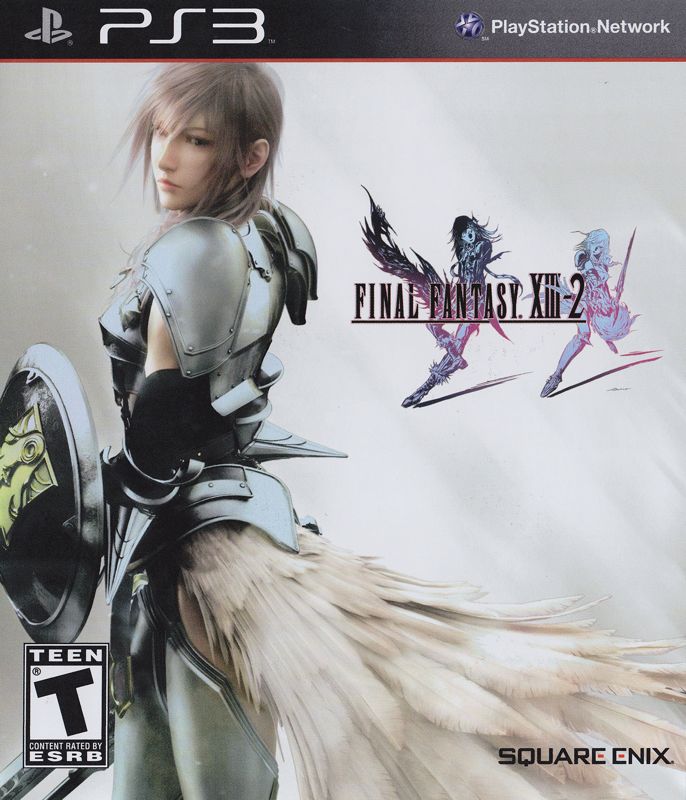
Retro Replay Review
Gameplay
The first hour throws you into a familiar kind of Final Fantasy XIII pressure: battles move quickly, enemies demand attention, and your success rests less on selecting every individual attack than on changing the whole party’s job plan at the right moment. Command Synergy Battle returns with its ATB structure intact, and Paradigm Shift remains the heart of it. When a fight turns ugly, swapping from offense into a setup that includes healing or defense feels immediate and satisfying rather than like a pause for menu housekeeping.
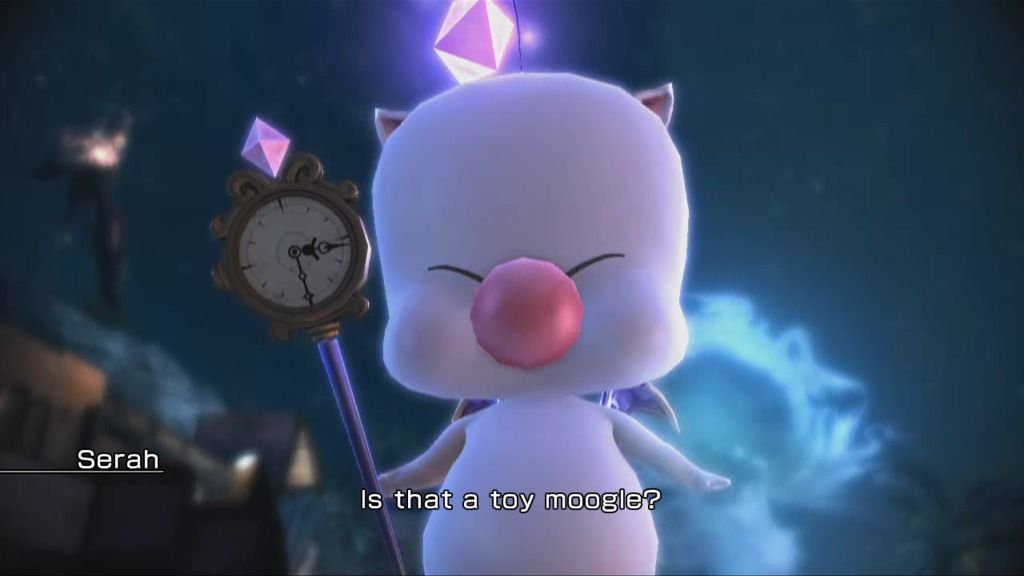
What makes XIII-2 easier to recommend than a straight repeat is the third party member. Serah and Noel form the fixed core, but a captured monster joins them in battle and can be developed and equipped with items. That small shift creates room to tinker with your Paradigms: a monster is not merely another body on the field, but part of the role combination you are asking to work. Since each monster has its own leveling limit, you are encouraged to think about which recruits deserve investment instead of assuming every capture will grow the same way.
The combat rhythm still revolves around building an enemy’s chain gauge until it staggers, then cashing in on that opening for heavy damage. It is a good loop because it gives every role a reason to exist: pressure the chain, sustain the party, weaken the opponent, strengthen allies, or absorb danger long enough to reset your plan. Battles can frustrate when you cling to a failing Paradigm for too long, but that is also where the system comes alive. You need to read the fight and switch.
Random encounters appear on the map before combat begins, so you can trigger them or avoid them. That simple bit of control matters. If you want to test a new monster or build momentum through fights, they are there; if you are trying to move on, you are not forced to stop for every encounter. Anyone who enjoyed XIII’s role-driven battles should find more to chew on here, while anyone who disliked that basic structure probably will not be converted.

Graphics
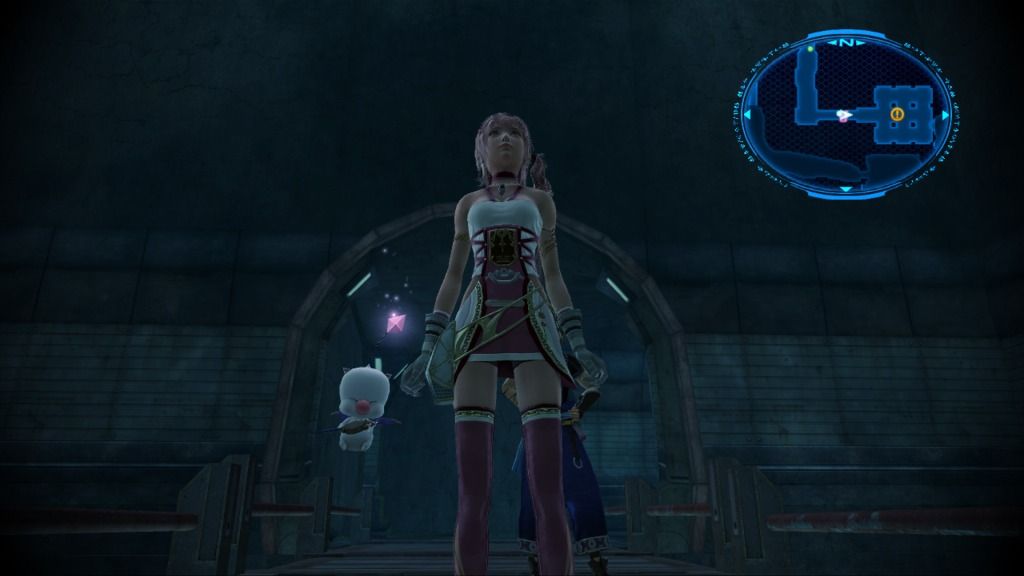
This is a behind-view JRPG with anime-styled heroes, fantasy and science-fiction locations, and monsters appearing directly on the map before combat. Serah, Noel, and the recruited creature fighting alongside them give the party a more varied on-screen lineup than a fixed trio would.
Story
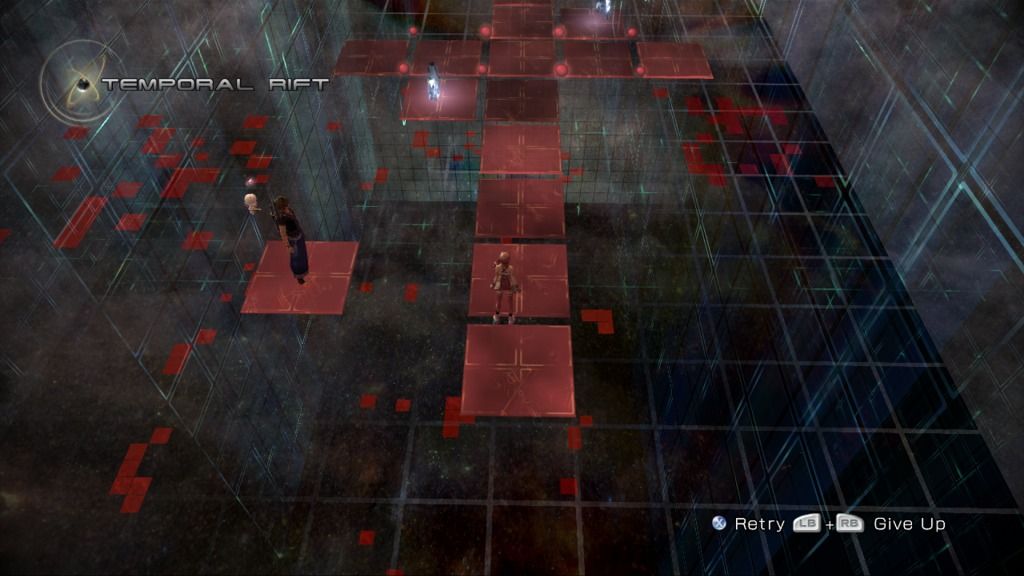
Set three years after Cocoon’s fall in Final Fantasy XIII, XIII-2 puts Serah—Lightning’s sister—at the center alongside Noel, a newcomer who says he has arrived from 700 years in the future. Their goal is to repair paradoxes in the timeline, a premise that lets the sequel move through time and space via Valhalla, the realm at the end of time.
That is unapologetically large-scale Final Fantasy material: family stakes, cosmic mythology, damaged history, and a plot built around fixing what should not have gone wrong. If you finished XIII and wanted a direct continuation of its world, this is the reason to play it. The game does not step away from Fabula Nova Crystallis mythology; it leans into it.
Newcomers can follow the basic motivation—Serah and Noel are trying to set the timeline right—but the emotional pull is naturally stronger if Lightning, Cocoon, and the ending of XIII already mean something to you. For broader context around the release, the game’s history and release information is useful, while fans collecting this branch may also want the Final Fantasy XIII-2 Collector’s Edition.
Overall Experience
Final Fantasy XIII-2 is a worthwhile follow-up because it understands exactly what was compelling about XIII’s combat and gives you more ways to shape it. Paradigm switching stays brisk, stagger remains rewarding, and monster recruitment adds a practical layer of customization without changing the identity of the battle system.
Its time-travel story is aimed squarely at people willing to meet Final Fantasy on its own heightened, myth-heavy terms. You are not here for a small, self-contained adventure; you are stepping back into a world still dealing with the consequences of XIII. Serah and Noel give that return a focused pair of protagonists, even as the stakes stretch across eras.
At 7.4, this lands as a good sequel rather than an essential one for every RPG fan. Give it a chance if XIII’s ATB-and-Paradigm combat almost had you, or if you want to return to Cocoon’s aftermath with more freedom to choose and build a third combatant. Skip it if role switching and stagger management already felt like work: XIII-2 refines that foundation, but it does not replace it.


Reviews
There are no reviews yet.